






Abstract
This study seeks to conceptualize supply chains that use funding from large donors or governments for long‐term recovery following a disaster, or more generally, for economic development in a region. We call these development‐aid supply chains (DASC) distinct from commercial or humanitarian supply chains. With little available formally on DASCs in the literature, we carried out a field study across five solar lantern supply chains in Haiti set up for recovery following the massive 2010 earthquake. Stakeholder resource‐based view allowed us to use stakeholder theory, utility theory, and the resource‐based view in analyzing how these supply chains work. We observed how donor cash in these supply chains brings together global original equipment manufacturers; national‐level distributors; impact investors; microfinance institutions; retailers; and micro‐entrepreneurs. Many of these entities are social enterprises that bridge development‐minded donors with commercially oriented retailers and micro‐entrepreneurs. The result of these bridging efforts is the flow of goods, cash, and social impact data. Our conceptual model flags the problem that donor funding, while crucial for reducing deprivation in the short term, may increase the dependence on aid rather than reduce it.
Keywords
Introduction
Many people worldwide face extreme chronic poverty, in part due to war or natural disasters. The United Nations (UN) Sustainable Development Goal (SDG) 1 seeks to end poverty in all its forms everywhere. SDG 8 aims to promote sustained, inclusive, and sustainable economic growth, full and productive employment, and decent work for all. For regions such as post‐2010‐earthquake Haiti, with only 44% of the population having access to electricity, SDG 7—seeking to ensure access to affordable, reliable, sustainable, and modern energy for all—is also relevant (World Bank, 2020). Governments and international charities or development agencies make funds available to provide products and services to the people affected while hoping to generate enough economic activity to eventually do away with the need for any aid.
Humanitarian supply chains bring products and services to the people displaced or otherwise affected by disasters. The supply chains needed are different when donors or governments seek to strengthen the local economy and “reduce dependence on external support” (Kretschmer et al. 2014: 996). Such supply chains offer researchers opportunities to build new theories about how multiple stakeholders, including donors and beneficiaries, come together to make a supply chain function. Like the need to develop a "science of humanitarian logistics" (INSEAD, 2016), we need a science of supply chains for post‐disaster recovery or, more generally, economic development. As a starting point for theory building for such a science, this study seeks to conceptualize
We used the Stakeholder Resource‐Based View (SRBV) (Sodhi, 2015) as our theoretical lens to complement the resource‐based view with stakeholder theory, and for normative analysis, utility theory. We carried out our fieldwork in Haiti, which was impoverished further by the disastrous 2010 earthquake. The study comprised a multi‐case study approach (Eisenhardt 1989, Yin, 2018) of five supply chains of solar lanterns to consumers. Understanding the entire system's functioning requires studying all its components (Holguín‐Veras et al. 2012, p. 494). Therefore, we sought to understand DASCs as functioning supply chains comprising nodes and flows with materials, information, and money flowing through a set of supply chain stakeholders (Carter et al. 2015). Using cross‐case analysis, we developed a composite view across all supply chains to bring out the various elements for our conceptualization. We thus provide an understanding of what DASCs are and present a conceptual model for how such supply chains might help donors meet their two objectives for economic recovery or development: reducing deprivation and reducing dependence on aid.
Our findings reflect how different categories of supply chain participants with diverse objectives came together in the supply chains we studied, with donors playing a central role in seeking development by reducing both deprivation and dependence on aid. Global original equipment manufacturers (OEMs), national‐level distributors, retail chains, and micro‐entrepreneurs created material flows from sourcing to the beneficiaries in these solar lantern supply chains. A big part of the ecosystem pertained to cash‐for‐information flows; besides donors, there were impact investors, microfinance institutions, and others who accepted funds to provide social impact information in return. The flows of cash, information, and materials between the DASC participants helped satisfy their individual needs. These donors wanted to reduce deprivation, the beneficiaries wanted cheap and clean lighting and power, and the micro‐entrepreneurs wanted an income opportunity. Many of the organizations in the DASCs were social enterprises that played a bridging role between donors and commercial supply chain partners. They used funds from donors to source products and worked with commercial or social enterprise partners for distributing these goods through micro‐entrepreneur vendors. Overall, DASCs reduced deprivation in the region with necessary goods for beneficiaries, livelihoods for micro‐entrepreneurs, and supply chain or retail capability in the community. However, as our conceptual model indicates, aid‐based supply chains exist because of aid and could, therefore, further entrench dependence rather than reduce it. Many questions arise on reducing the dependency in the long run, and these require further research.
In the rest of the study, Section 2 provides some pertinent streams of the supply chain literature and this study's contribution to these streams. Methods and materials are the focus of Section 3, with the findings in Section 4. Section 5 provides our conceptualization of DASCs based on the results with testable propositions, and Section 6 concludes with a discussion and ideas for further research. Appendix provides the interview protocols that we used.
Literature
There are related topics in the operations literature but not specifically about supply chains created to recover or develop an entire region or country with development aid. The following streams in the literature are relevant to our work:
Supply Chain Conceptualization
The extant supply chain literature has examined partnerships and non‐commercial interactions in particular organizations' commercial supply chains serving low‐income customers (Hahn and Gold, 2014) and humanitarian supply chains (Beamon and Balcik, 2008, Oloruntoba and Gray, 2006, Pettit and Beresford, 2009). In
Economic Development
In the economics literature, a fundamental question is the benefit of aid. Clemens et al. (2012) have reviewed and replicated the significant studies on the effectiveness of aid as the subsequent growth of gross national income (GNI), using “country” as the unit of analysis and aid as a percentage of GNI. They find empirical evidence suggesting that “on average—[across] all countries, over many decades, and regardless of the regression specification—aid has had a modest positive effect on growth” (p.614). We contribute by focusing on one possible means of deploying aid, that is, with DASCs, with the unit of analysis being the DASC and not the country. Our work allows for benefits to be relatively fine‐grained and broad compared to just the growth of GNI. Our conceptual model shows
Socially Responsible Operations
Some of the literature on commercial supply chains deals with alleviating poverty (Sodhi and Tang, 2016, White et al. 2011) or addressing institutional voids in low‐income markets (Parmigiani and Rivera‐Santos, 2015). There is also the social sustainability literature centered on the (western) corporation promoting social responsibility in developing country suppliers (Gold et al. 2013, Huq, Stevenson, and Zorzini, 2014), partnering with non‐commercial entities like NGOs (Dahan et al. 2010, Hahn and Gold, 2014), or purchasing from bottom‐of‐the‐pyramid producers (Mahapatra et al. 2019). Such literature recognizes stakeholders beyond buyers and suppliers (Gualandris et al. 2015), believing that managers in the corporation must deliver on social responsibility (Matos and Silvestre, 2013, Silvestre, 2015), not just profits. Still, the focus is generally on a single organization's supply chain. We expand this literature with a broad canvas highlighting donors' role in impacting an entire region with multiple supply chains rather than a single organization's socially responsible supply chain.
Social Enterprises with Supply Chains
Social enterprises can orchestrate supply chains to help alleviate poverty by meeting specific needs (Dillard et al. 2013, Hall and Matos, 2010, Lee and Tang, 2018, Pal and Altay, 2019, Pullman et al. 2018, Sodhi and Tang, 2011). We contribute to this literature by highlighting a very different role that social enterprises can play other than being the focal organization even though the aim of poverty reduction—mainly using micro‐entrepreneurs—remains the same. In the present DASC context, the role social enterprises play is to bridge the development goals of the donors and income or profit goals of retailers and micro‐entrepreneurs.
Humanitarian Supply Chains
The humanitarian supply chain literature focuses on getting much‐needed goods and services to people right after a disaster. Here we are looking at supply chains that, besides supplying needed goods and services, aim to strengthen the local economy and reduce dependence on external support (Kretschmer et al. 2014: 996). Thus, we complement the emerging literature on humanitarian supply chains focusing on long‐term recovery rather than immediate relief following a disaster (Çelik's 2016, Ibrahim and El Ebrashi, 2017, Sodhi and Tang, 2014). Although there is the common goal of reducing deprivation in the near term for both humanitarian and DASCs, our work brings out the critical difference of seeking—successfully or not—to eventually reduce dependence on aid.
Overall, we contribute to the supply chain literature broadly, theorizing on supply chains comprising donors, social enterprises, and commercial actors, driven by the donors' development agenda. Research on such supply chains can help governments and international NGOs meet the UN SDGs by co‐creating such supply chains with social and commercial enterprises.
Methods and Materials
Theoretical Lens
Similar to Mahapatra et al. (2019), we use the Stakeholder Resource‐Based View (SRBV) (Sodhi, 2015) to investigate DASCs. SRBV builds on the resource‐based view (RBV), which researchers use to conceptualize commercial supply chains in the empirical supply chain literature. SRBV adds elements of stakeholder theory used in the sustainability literature and of utility theory used in the analytical literature.
SRBV is useful as a theoretical lens to study DASCs for two reasons.
SRBV serves as “a previously identified theoretical framework” that “can provide insight, direction, and a useful list of initial concepts” (Corbin and Strauss, 2008, p. 41) for our analysis of DASCs. Under SRBV, we consider stakeholders "whose utility depends significantly" on the operations. Each stakeholder “is treated on par with other stakeholders from a research perspective regardless of power and material differentials." The utility of these stakeholders “refers to preferences among choices with uncertain outcomes.” SRBV allows researchers "to focus on and differentiate stakeholder‐specific drivers of effort" (Sodhi, 2015, p. 1381–82), which helps us to analyze how DASCs work in terms of each stakeholder's resources and capabilities (Sodhi, 2015, p. 1382).
Research Question and Research Objectives
Our
Research Design
We conducted a multi‐case study (Eisenhardt, 1989, Yin, 2018) of five supply chains, the
Research Setting
We chose supply chains for solar lanterns sold to low‐income consumers in Haiti. Here, donors have funded different participants in the supply chain for economic recovery following the disastrous 2010 earthquake. Solar lanterns help households reduce deprivation by meeting the basic need for lighting in homes and replacing kerosene. Using kerosene for lighting is expensive and causes harmful indoor pollution with carbon monoxide and dioxide. Therefore, solar lanterns have financial, health, and environmental benefits (Chaurey and Kandpal, 2010, SolarAid, 2014). The solar lanterns are sold, not donated, through micro‐entrepreneur networks to support local commerce to realize economic self‐sufficiency (Bardouille, 2012, Graf et al. 2013, Miller, 2009). Thus, Haiti provided us an ideal setting to study DASCs. Also, we had senior professional contacts in Haiti, which enabled us "to open doors where necessary" to access key informants (Voss et al. 2002, p. 206).
Overall Approach
We followed case study analyses of humanitarian supply chains (e.g., Dube et al. 2016) and grounded theory research principles (Corbin and Strauss, 2012). Our research process was iterative: We analyzed data as we collected it and used it to inform further data collection. We theoretically sampled cases within this setting (Eisenhardt, 1989) using the World Bank's Lighting Global list, which had 46 such companies in December 2016. Lighting Global is a "platform supporting the sustainable growth of the international off‐grid lighting market as a means of increasing energy access to people not connected to grid electricity" (The World Bank & International Finance Corporation, 2016). The list has companies that make approved, high‐quality solar lanterns and solar home systems.
We conducted Internet‐based research on the 46 companies on the Lighting Global list and identified four OEMs selling solar lanterns in Haiti: (1) d.light, (2) Greenlight Planet, (3) Nokero, and (4) ovSolar. A fifth OEM, Ekotek, not on the Lighting Global list, was identified later for its reputation for high‐quality products and social mission.
Data Collection
We collected data through interviews, fieldwork in Haiti, and archival research.
Interviews
We conducted 82 semi‐structured interviews with 78 different supply chain stakeholders for the five products (Table 1). We interviewed informants over three successive rounds using interview protocols (Appendix): Between late 2014 and mid‐2015, we contacted experts from Africa, Asia, and Haiti, by phone regarding solar lanterns and home systems. These informants included CEOs and co‐founders of the companies that made the products in our study, who would have a deep understanding of the whole supply chain, from manufacturers to in‐country distribution and sales. We asked these expert informants questions related to their expertise. Their answers helped us anticipate topics to cover in future interviews and confirm or clarify what we had found in previous interviews. Additionally, we identified essential stakeholders of supply chains for solar lanterns in Haiti during this first round of interviews. For example, Kiva and USAID emerged as providers of subsidized investment and grants, respectively, to some of the supply chains for solar lanterns (and solar home systems) in Haiti. In the second round of phone interviews in Spring 2016, we targeted supply chain stakeholders identified during the first round of interviews, including NGOs and donor agencies, in‐country distributors, and impact investors. In each interview, we asked what the stakeholder contributed to the supply chain and what they received in return. We also asked who they interacted with—who they bought from, sold to, donated to, borrowed from, partnered with, etc., and if they received any particular type of funding from whom. It became clear that fieldwork was necessary to interview the micro‐entrepreneur vendors who sell to the end customers in Haiti. These vendors are the critical "last mile" link of the supply chains. Interviews with these stakeholders, along with others based in Haiti, constituted the third round of interviews we conducted in our fieldwork.
Informants for our Study
All micro‐entrepreneur in our study also owned and used the products they were selling.
Competing products include low‐quality solar lanterns, kerosene lanterns, candles, and cell phone charging services.
We recorded all interviews and transcribed them.
For the second and third rounds of interviews, we had to overcome some challenges.
We did not include the suppliers to the contract manufacturers or even the contract manufacturers supplying to the global OEMs in our study. The contract manufacturers, typically based in China or India, sell widely and do not have a particular “stake” in the supply chains we studied, except for Nokero. The same applies to the steel or solar panel suppliers of these contract manufacturers.
Fieldwork
We conducted our fieldwork over two weeks in August 2016, interviewing in‐country distributors and the micro‐entrepreneur retail vendors of solar lanterns sold through the five supply chains in our study (
Archival Data
Before and during our fieldwork in Haiti, we conducted extensive archival research of Internet sources like press releases, industry blogs, organization web pages, and research reports by reputable organizations. We did this to identify additional supply chain stakeholders of interest for our study and triangulate data that we had received from the interviews to ensure internal validity (Yin, 2018). Using archival information to triangulate with data from our field observations and interviews in Haiti was especially crucial for the Ekotek supply chain to identify relevant stakeholders and to ensure the validity of what we were learning from our interviews.
Collecting data from three different sources strengthened the robustness of our research. We were able to refine our interview protocol during each successive round of interviews, particularly to probe "emergent themes" further (Eisenhardt, 1989, p. 539). We were also able to triangulate across data sources for confidence in the collected data's objectivity and reliability (Voss et al. 2002).
Data Coding
We coded the interview‐and‐archival data during and after each round of data collection at two levels:
We used each successive round of data coding to validate the categories and the relationships between them that had emerged from the inductive coding earlier (Eisenhardt, 1989). The authors discussed each code and emergent category to agree on their respective meanings, relationships, and fit with the data. We also triangulated between interview data and archival materials during the coding processes, prioritizing categories that appeared in multiple sources (Jick, 1979) and across the five supply chains in our study. This iteration between our data, the identified categories, and the relationships between these categories enabled us to form robust underlying arguments that contribute to theory building (Eisenhardt, 1989).
Analysis
Our results build on within‐case and cross‐case analyses, although we refer to their composite. The within‐case analysis enabled us to "become intimately familiar with each case as a stand‐alone entity" (Eisenhardt, 1989, p. 540). We identified the stakeholders involved in each case, their resources and objectives (utility preferences), and how they worked together to create a functioning supply chain. We constructed maps of each such supply chain, showing the flows or interactions between stakeholders, thus providing insight into how a DASC operates.
Cross‐case analyses helped us understand whether and how first‐order concepts and second‐order themes apply to the different cases. These analyses prevented overemphasis of any one aspect, improved groundedness, and enhanced the findings' generalizability (Dube et al. 2016, p. 50). In within‐ and cross‐case analyses, we focused on the stakeholders involved in the DASC, their resources and capabilities, and their utility preferences to understand the flows of materials, information, and money. We also sought to explain how a donor uses DASCs to reduce deprivation and dependence on aid using the different stakeholders' activities as concepts. The result was a conceptual model with testable propositions.
Findings
We present the results corresponding to our first three research objectives in Sections 4.1 (supply chain stakeholders and the supply chain flows between them), 4.2 (the stakeholders' utility preferences), and 4.3 (their resources and capabilities). A conceptualization of how DASCs work, the fourth research objective, follows in Section 5.
Supply Chain Stakeholders and Flows
OEMs in our supply chains were companies based in the United States and India that bought solar lanterns from Chinese contract manufacturers and sold products to low‐income countries worldwide. Importers and distributors were the in‐country partners for the OEMs. All but one OEM (Vistle Group) and all but one importer (Total Haiti) were social enterprises (Table 2).
The typical supply chain's material flows had importers and distributors sourcing solar lanterns from the global OEMs. Retail chains and stores, in turn, bought solar lanterns from importers and distributors and sold them to consumers or micro‐entrepreneur vendors. The micro‐entrepreneur vendors in the “last mile” bought solar lanterns from the retail networks of importers and distributors and sold them to consumers. On the finance side, donors varied from private foundations and charities to multilateral development organizations. Impact investors provided financing to social enterprise organizations along the supply chain. Microfinance institutions provided small loans to the micro‐entrepreneur vendors.
Overall, stakeholder groups 1‐5 (Table 2) interact with the supply chains through the physical movement of finished products, information, and money in the usual supply chain sense. Stakeholder groups 6‐8 are the donors in this study. They provide direct financial support to the supply chains through grants, donations, and subsidized investment (social impact investment and microfinance) in return for social impact data.
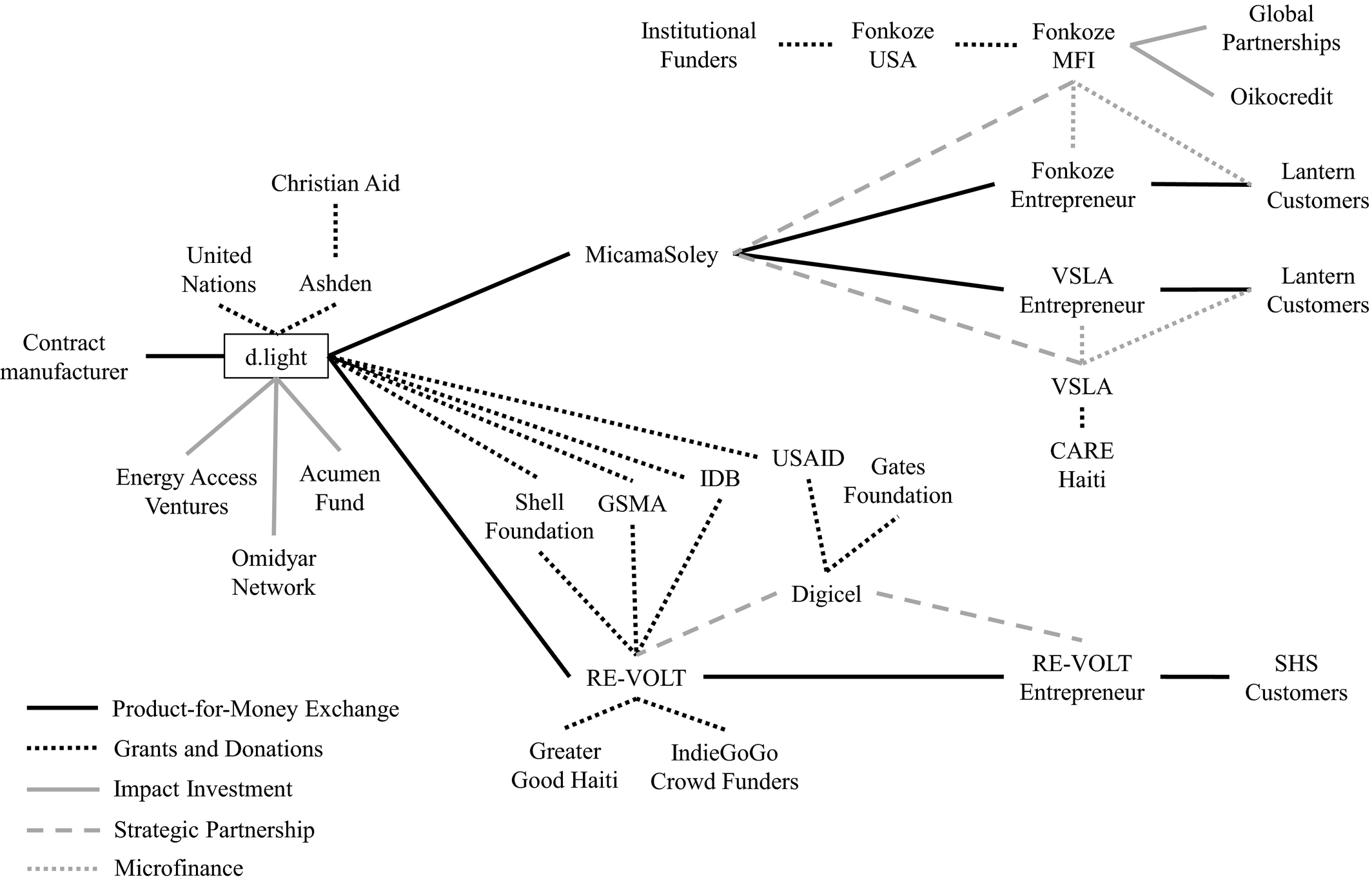
Stakeholders and Flows for d.light
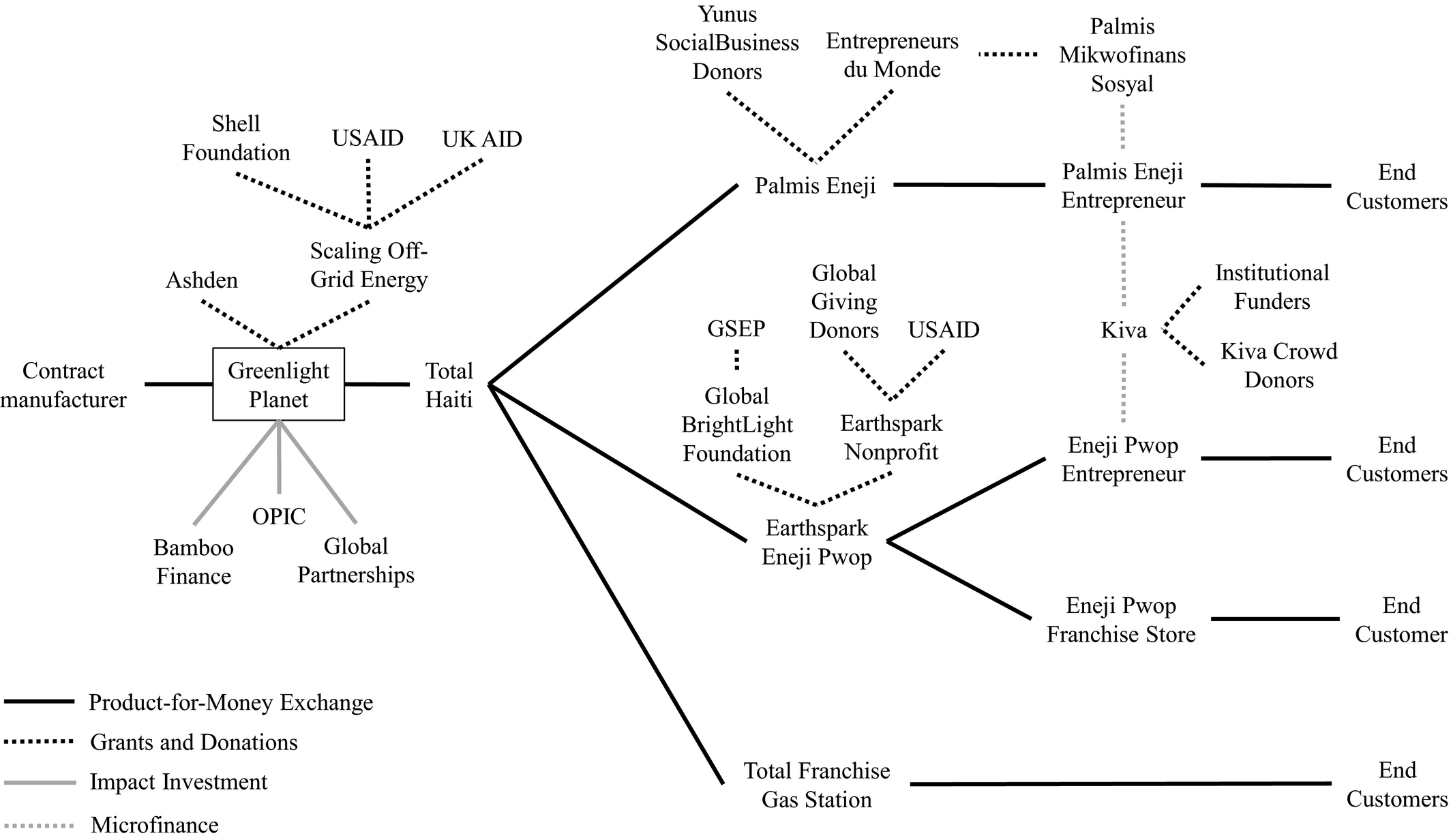
Stakeholders and Flows for Greenlight Planet
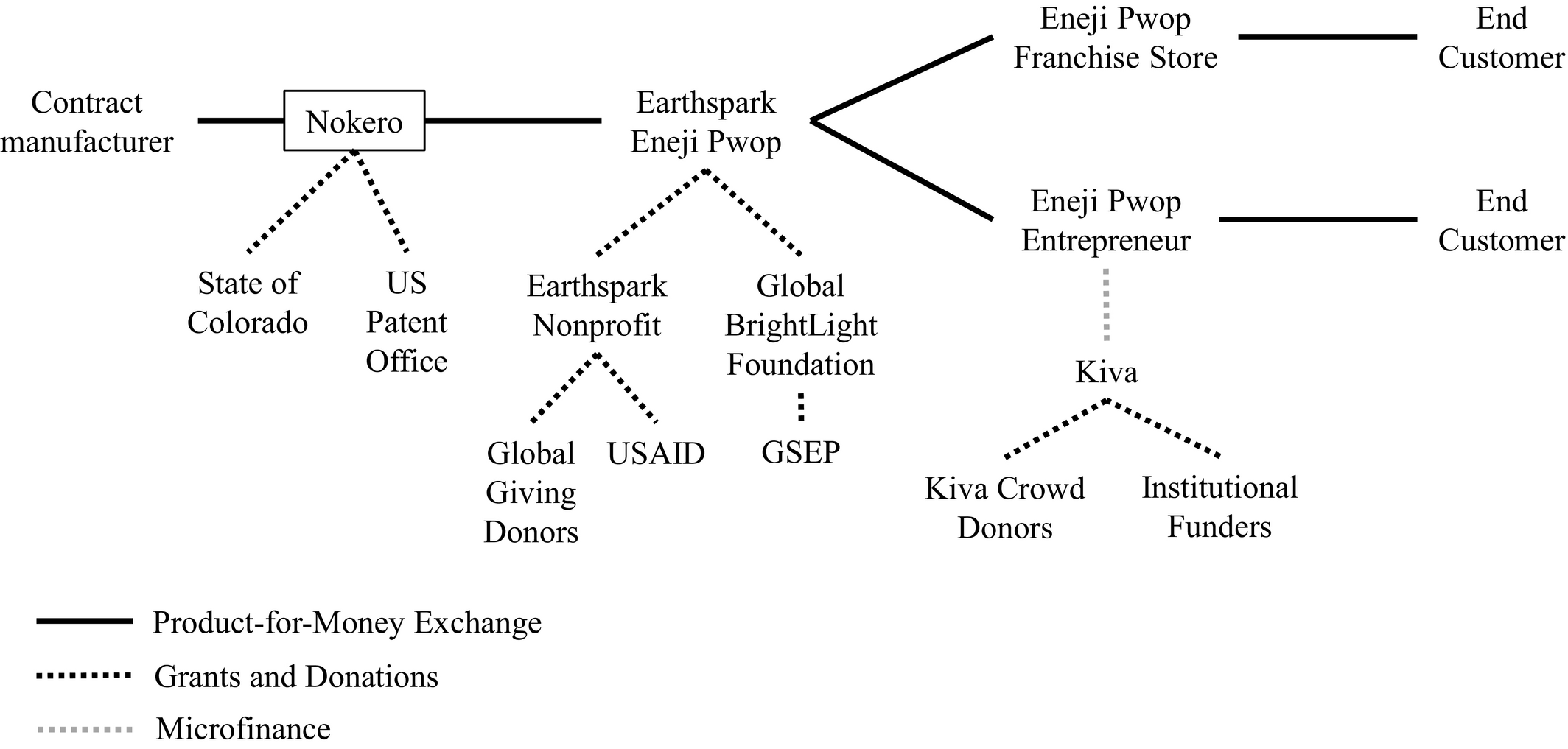
Stakeholders and Flows for Nokero (“no kerosene”)
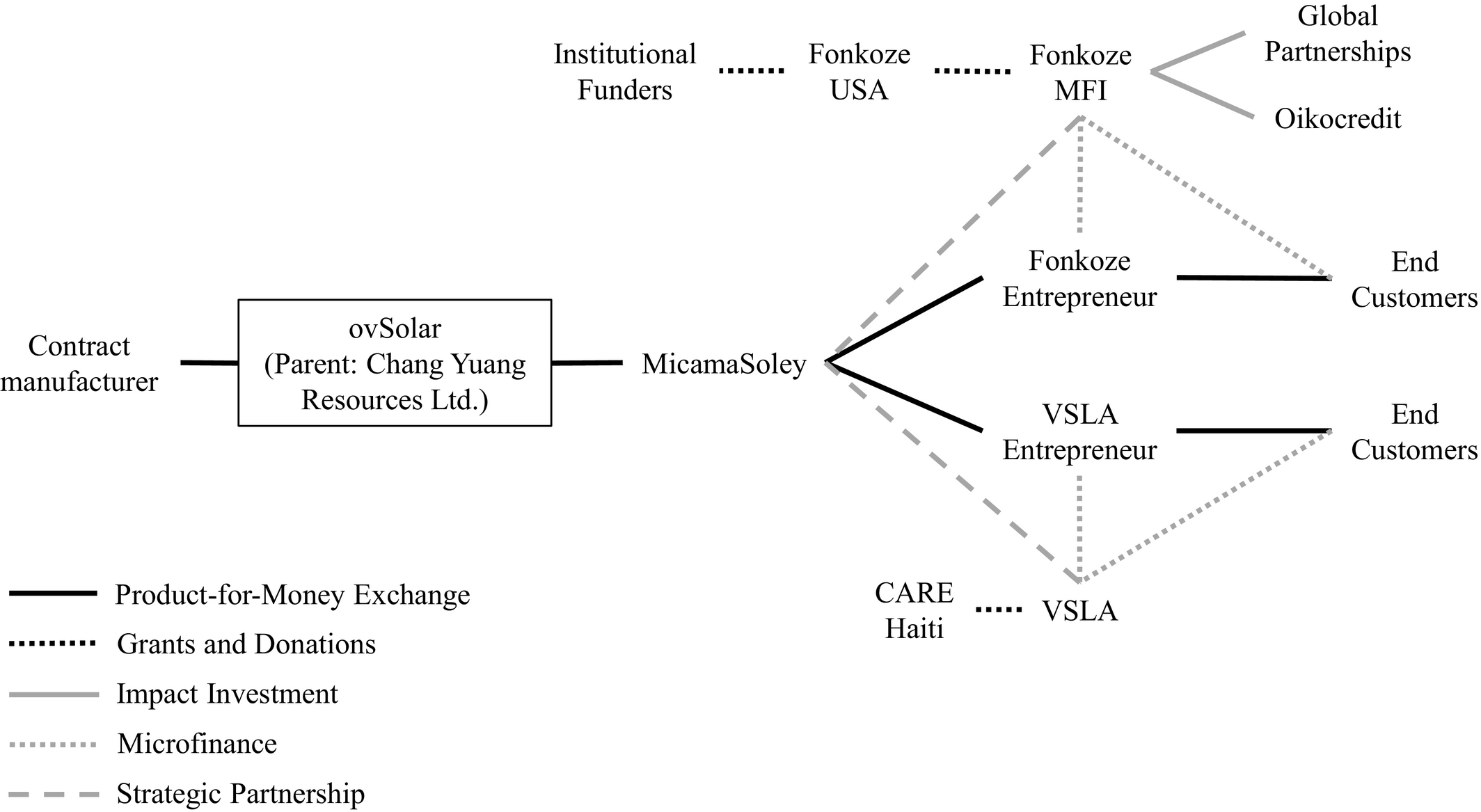
Stakeholders and Flows for ovSolar
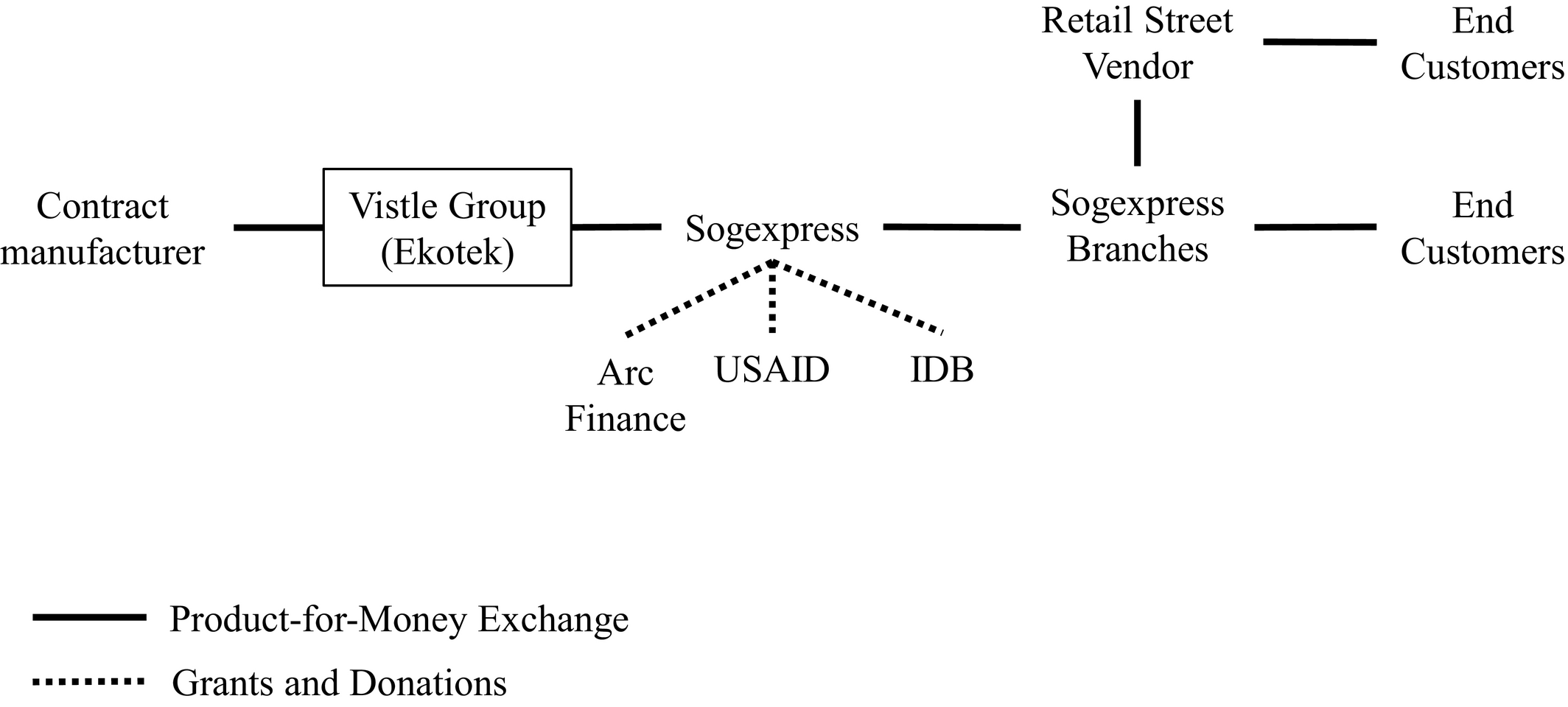
Stakeholders and Flows for Vistle Group (Ekotek)
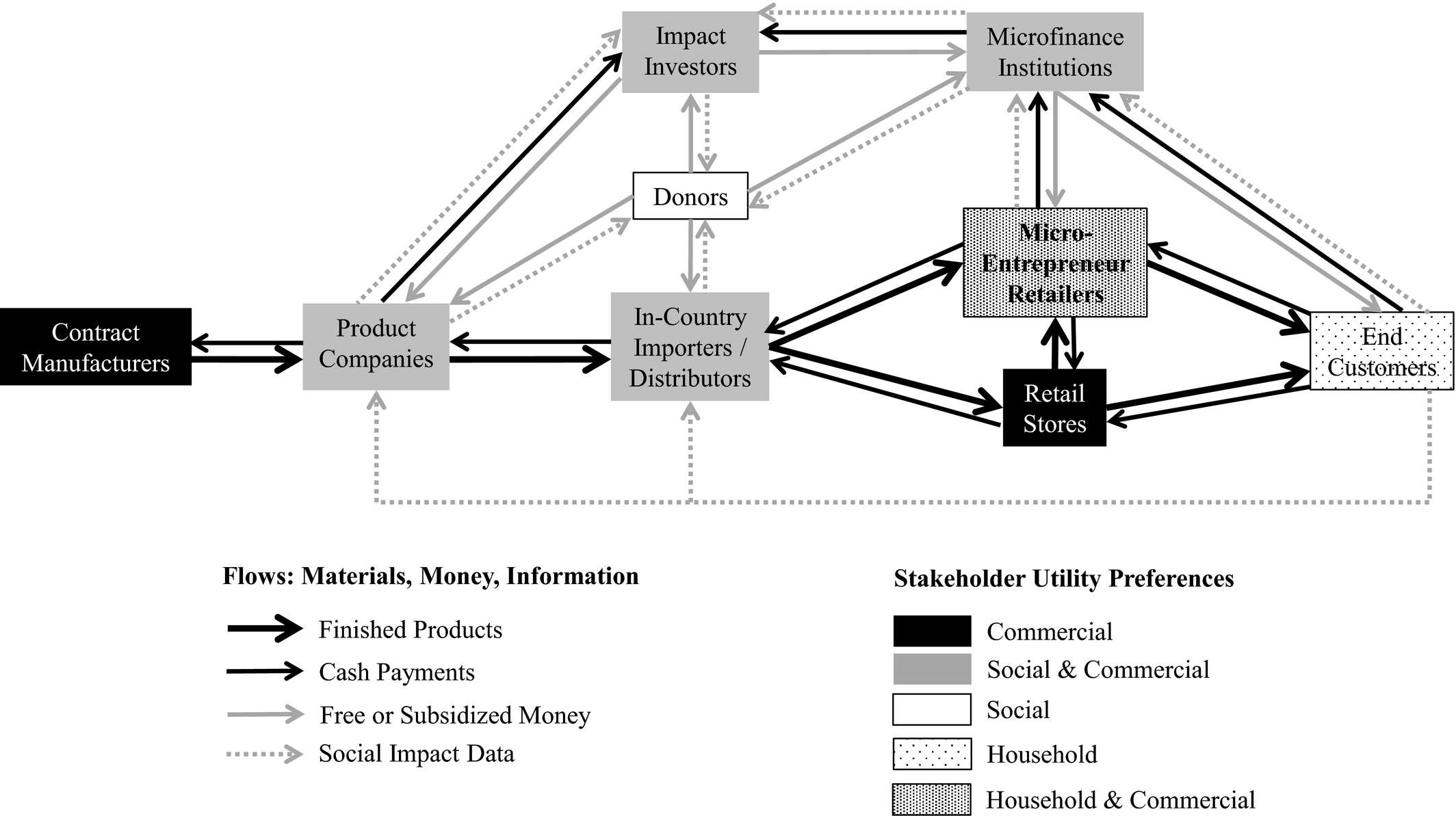
How DASCs Work—a Flow Model
The
Stakeholder Utility Preferences
We next analyzed stakeholders' objectives or, in SRBV terms, utility preferences and identified three high‐level categories of utility preferences (Table 3):
Stakeholder Utility Preferences (Objectives)
These objectives illustrate how DASCs are a hybrid supply chain with profit‐minded actors—as in any commercial supply chain—and development‐minded actors with beneficiaries' survival objectives as in any humanitarian supply chain. Different categories of stakeholders pursued other goals. Contract manufacturers and retail stores exhibited a
Social enterprises' mixed preferences
Four stakeholder groups held
By pursuing commercial and social utility preferences through the organization's core activities, stakeholders in these four groups satisfy the definition of a social enterprise: An organization established primarily to address a social problem while earning revenues to sustain itself financially (Battilana and Lee, 2014, Besharov and Smith, 2014, Dacin, Dacin, and Tracey, 2011). These organizations play an important bridging role between the socially driven donors and the commercially driven supply chain participants such as retailers.
Resources and Capabilities
For most stakeholders, the resources and related capabilities are straightforward. For donors of any type, one resource is the money allocated for development initiatives and the ability to find "like‐minded partners" that can put the donors' money to distributing needed goods and provide credible social impact data. Likewise, the social enterprises develop resources (1) to seek donors to get money in return for credible social impact data and (2) to use their money to fund the manufacture and distribution of desired goods that appeal to donors. The retail stores must find importers (or distributors) to buy the products and consumers to sell. The micro‐entrepreneurs themselves must be able to source products (and apply for microloans) to sell and serve their customers well. The end customers must pay the (subsidized) price for these products and use them effectively.
These social enterprises are central to the overall functioning of DASCs with their unique resources and capabilities. Social enterprise OEMs source high‐quality products to help low‐income customers meet basic needs. They operate distribution channels that are central to the supply chain. Overall, these social enterprises have developed resources to support the flows of materials, information, and money necessary for the DASC to function. We identified the following higher order (second‐order) resource categories from our analysis of resources and related capabilities: Resource 1) Sourcing and selling high‐quality products that reduce the conditions of poverty Resource 2) Managing a distribution channel to support the local economy via micro‐entrepreneurs Resource 3) Collecting social impact data and packaging it for donors.
We discuss each resource in turn.
Sourcing and selling high‐quality products that reduce conditions of poverty
The product companies and in‐country distributors participated in these supply chains by offering high‐quality solar lanterns or solar home systems to reduce the beneficiaries' deprivation. Product quality was of particular importance to stakeholders with social (or social and commercial) sustainability objectives. A low‐quality lantern that did not work well or broke after only limited usage eroded the financial and other benefits meant to accrue for beneficiaries.
The social enterprise product companies and in‐country distributors developed specialized resources and accompanying capabilities to produce, buy, and sell a high‐quality, poverty‐reducing household solar product with a commercial aim. Simultaneously, their social objectives led them to ensure that the products were affordable and of high quality. These products were not cheap, and the various stakeholders recognize the importance of the funds:
Let us briefly consider each of these resources ( These social enterprise product companies developed The social enterprise product companies and in‐country importers had The social enterprise product companies (OEMs) developed These product companies and in‐country importers had in‐depth knowledge of translating product use into social impact data, or SID. The most common benefits were financial savings and improvements to health and safety. The product companies used this knowledge when designing the products and the importers when selecting products. Both types of social enterprises used this knowledge to inform their social impact data collection (
Producing and Selling High‐Quality Products that Reduce Deprivation
Distribution channel that supports the local economy
In‐country distributors set up distribution channels in a way that helped reduce poverty. They did so by promoting local economic activity via the channel or selecting channel partners with social sustainability objectives. We identified two resources: The first resource was an The distributors' second resource was the relationships with, and access to,
Distribution Channel that Supports the Local Economy
The network‐based distribution channel that leveraged micro‐entrepreneur retailers enabled in‐country importers and the product companies who did not have a physical presence in Haiti to reach the “last mile” beneficiaries, that is, low‐income customers. Product companies sought out in‐country importers that had access to a network of resellers, as a senior manager at an OEM explained:
Selling the solar household products through micro‐entrepreneur networks enabled the product companies and in‐country importers to sell more products to low‐income households. The micro‐entrepreneur retailers increased their commercial sustainability as well as their household sustainability:
Each stakeholder could maximize its respective utility preference using micro‐entrepreneurs, materials, information, and money along the supply chains. An aid organization could have bought solar lanterns from an OEM, distributed them using their employees, and donated them to low‐income households as in a humanitarian supply chain. In that case, no additional local economic activity would take place. Supporting local economic activity through the product and distribution companies was crucial for the donors:
Therefore, such channels are another way that the product and distribution could demonstrably create social impact as social enterprises.
Collecting and packaging social impact data for donors
We were surprised to see the different grants, donations, and subsidized investment flowing into the DASCs at various echelons without any apparent coordination (Figures 1–5). Funds were being given upstream in the supply chain to product companies and social impact investors and downstream to the microfinance institutions and micro‐entrepreneurs within the same product's supply chain. The flow of free or subsidized money ultimately made the solar lanterns more affordable for the beneficiaries and sustained the different organizations and micro‐entrepreneurs.
The social enterprises had to demonstrate they were eligible to receive donations or subsidized funds by demonstrating their ability to reduce poverty. One informant at a donor organization described this requirement as
As a result, the social enterprises we interviewed had developed capabilities to record social impact data to present it to donors (Table 6).
Collecting and Packaging Social Impact Data for Donors
Therefore, all the social enterprise OEMs and distributors published their social impact on their websites (Table 7).
Social Enterprise OEM Impact Reporting and Corresponding Donor Statement
Conceptualizing Development‐Aid Supply Chains
We combined the five DASCs in our study to get a composite flow diagram comprising the stakeholders of interest here—the donors, the OEMs, and in‐country importers/distributors who are social enterprises, retailers with a network of micro‐entrepreneur vendors, and end customers. The links depict flows of materials, information, and cash between them. These links emphasize the bridging role played by social enterprises in this DASC. Each stakeholder's utility depends directly on the flows that it receives and sends to other stakeholders and indirectly on the flows between other supply chain stakeholders, which gives any stakeholder a “stake” in the supply chain (Figure 6).
How Development‐Aid Supply Chains Work
Now we ask the fundamental question underlying the identification of the components of DASCs and their interactions:
To recap, the social enterprises doing production and distribution enable flows in the DASC. They do so by developing resources for sourcing and distributing high‐quality products for the poor, managing sales‐and‐distribution channels that also help decrease poverty, and collecting and processing social impact data for the donors. The supply chain flows then work as they would in any supply chain to meet the stakeholder‐specific utility preferences. Similarly, the impact investors and microfinance institutions also play a bridging role between donors and the commercial players to whom they give microloans or grants.
A Conceptual Model of DASCs and Their Goals
To help set the theory‐building stage for development‐aid supply chains, we now offer some relevant concepts and their links as propositions for testing in empirical studies. Our purpose is to relate the donors' and the other stakeholders' activity level (Figure 6) to the donors' (and the supply chain's) eventual goals. We have the
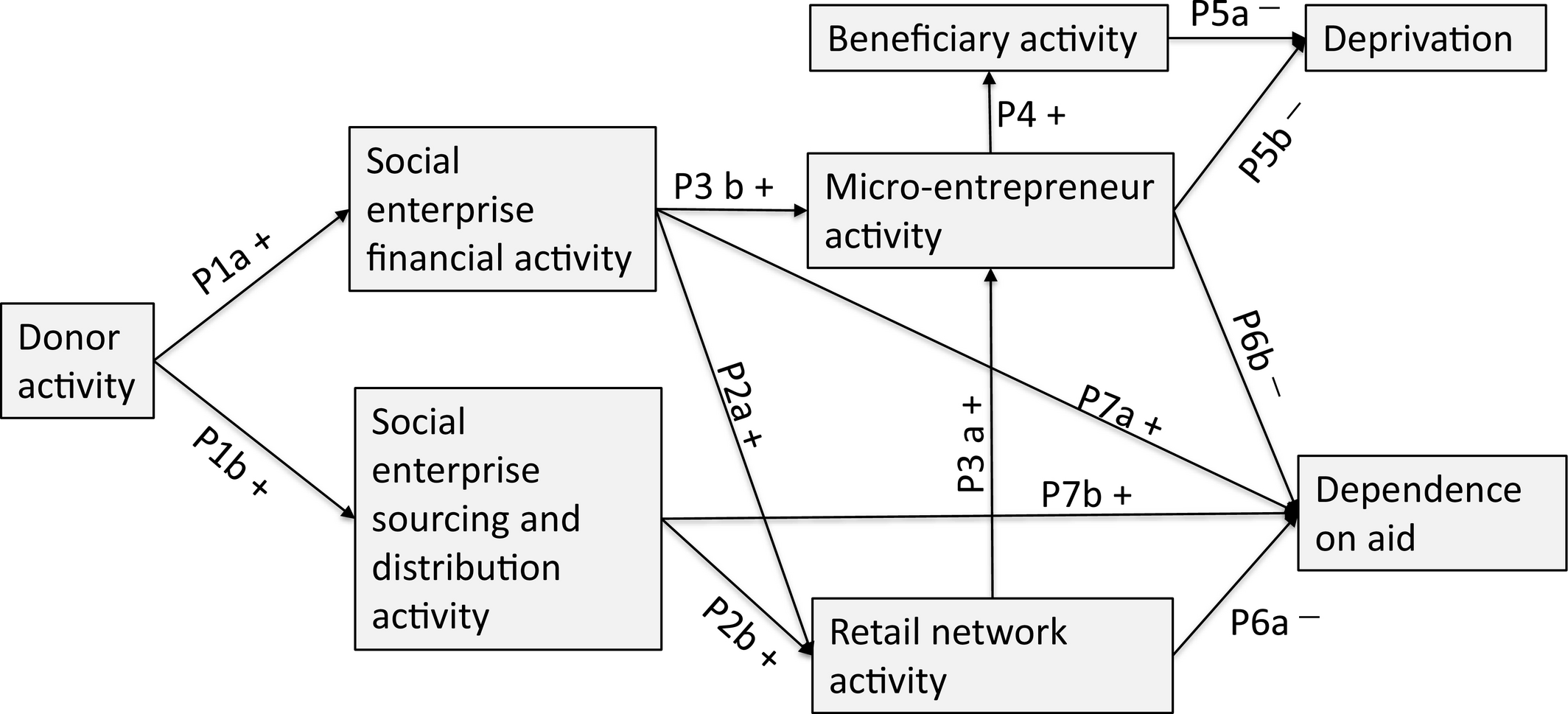
A Conceptual Model of How Donors Use DASCs to Achieve Their Goals of Reducing Deprivation and Dependence on Aid
P1. Increased donor funding increases the social enterprises' (a) financial activity and (b) sourcing and distribution activity.
More funding attracts more social enterprises to step in. It also encourages existing social enterprises to increase their production and distribution efforts.
P2. (a) Increased social enterprise financial activity and (b) increased sourcing or distribution activity increases the activity of retail networks.
The retail networks get more liquidity from impact investors and microfinance institutions and can get more products from the importer or distributor.
P3. (a) Increased retail network activity and (b) increased social enterprise financial activity increases micro‐entrepreneurs' activity.
As retail networks seek more outlets, they attract more micro‐entrepreneurs, which can also sell more quantity.
P4. Increased micro‐entrepreneur activity links to more beneficiary activity
More effort by micro‐entrepreneurs leads to more beneficiary activity, which comprises new purchases and hence more use of the products.
P5. (a) Increased beneficiary activity and (b) increased micro‐entrepreneur activity increase the reduction in deprivation.
More beneficiary activity possibly increased economic activity through cellphone charging, light, money saved on avoiding kerosene purchase, etc. More microeconomic activity means more income for these vendors as they earn profit from the sales of solar lanterns and other products.
P6. (a) Increased retail network activity and (b) increased micro‐entrepreneur activity reduce dependence on aid.
Retailers and retail networks build resources and capabilities to carry out retail in any supply chain, whether development aid or commercial.
P7. Social enterprise activity, whether (a) financial or (b) sourcing and distribution, increases dependence on aid.
The social enterprises' complex ecosystem emerges solely to convert donor funds to reducing beneficiaries' deprivation. It does so by engaging with commercially minded retailers and micro‐entrepreneurs. Most links are cash for social impact data, so the resources developed are not valuable for a commercial supply chain. As such, increased social enterprise activity engenders dependence.
Propositions P6 and P7 highlight the tension for a socially minded donor: reducing deprivation requires the use of means that increase dependence on aid.
Conclusion
Supply chains to support long‐term recovery following disasters exist and are essential, but such supply chains had not been studied formally in the literature before. We carried out a field study of five supply chains of solar lanterns in post‐disaster Haiti using the SRBV as our theoretical lens to conceptualize such supply chains. In these supply chains, we identified the stakeholders and their utility preferences, resources, and capabilities. In particular, as part of our findings on how DASCs work, we showed the central role that donors' funds and social enterprise OEMs and distributors play in enabling the supply chain flows. Our main conclusion, important from both theoretical and practical viewpoints, is that while aid enables flows in the supply chain to reduce deprivation, it also engenders an ecosystem dependent on assistance with many cash‐for‐information transactions.
Implications for Research
We have proposed a conceptual model to show how donors' funding makes DASCs work to help foster economic recovery by reducing deprivation and dependence. A natural question is how this model can incorporate different types of entities with diverse objectives, whether we need a more fine‐grained approach to the entities in the model, and the implications for both.
Different Types of Entities with Different Objectives
For instance, we could ask if the model can explain a purely commercial supply chain without any donor entities or financial social enterprises. The path from the sourcing‐and‐distribution entity through the retail network to the micro‐entrepreneur vendors would represent a purely commercial supply chain, indicating that it is possible to reduce deprivation without any aid and hence no dependence on it. So, why not just have purely commercial supply chains for development without any aid? Our model cannot answer that, but a multiple‐stage supply chain would expose the consumer (beneficiary) to double marginalization, making it difficult for most consumers to purchase goods to reduce their deprivation.
Government Aid to Industry
Yet another supply chain could be one with a government donor but with no other financial institutions. Entire sectors such as aerospace and defense have depended on government subsidies even in advanced economies. Witness the calls in the United States from the industry in 2021 for the government to invest in electronic chip manufacturing. Thus, we would have a donor providing funds to a supply chain ending with the end customer filled with profit‐maximizing entities. Rather than reducing deprivation, we could talk about maximizing revenues, but the question of dependence on government aid remains.
Different Types of Donors with Different Positioning
Regarding developing a more fine‐grained model than what we proposed (Figure 7), note that we did not distinguish the donors' different roles or position themselves (Figures 1–5). Nor did we look for intended outputs other than deprivation and dependence. There are different types of donors. These include humanitarian organizations like CARE that also play the role of donor, potentially using cash‐based assistance. There are also the more traditional donors like USAID and Shell Foundation, who position themselves differently in the supply chain. The various types of donors may have different impacts, requiring us to have a more fine‐grained output than just
Relationships between the Entities and Their Diverse Objectives
We have glossed over at least five differences across the supply chains we studied: (1) One of the OEM companies—d.light—had two different importer partners in Haiti, the others had just one. (2) Vistle Group was primarily commercial, while in all other supply chains, the OEMs were social enterprises. (3) Greenlight Planet products' supply chain was the only one with a large multinational corporation as a distributor, the France‐based Total's gas stations, and its social enterprise subsidiary, Awango. (4) Nokero's contract manufacturers in China were also equity shareholders in Nokero, whereas the four OEMs had standard contractual relationships. (5) ovSolar was the only OEM that had pivoted from completely unrelated business lines involving steel production to supplying solar lanterns. In contrast, the other four OEMs emerged specifically to sell solar household products to poor consumers in low‐income countries. Given these differences, we need to consider the different utility preferences when private entities wholly or partly own the social enterprises in the DASC. Indeed, many large companies now have their own NGOs and social enterprises, and this study could be relevant in other contexts too.
Multiple Donors Working Independently
Along with there being different types of donors, the donors work independently at different parts of the supply chain. The absence of coordination showed up in the five supply chains, but our model does not capture it. Having different donors work thus can only increase the number of cash‐for‐information links and potential dependency. However, studying multiple donors this way would require a more fine‐grained conceptual model and further study.
Normative analysis
Our work primarily uses the descriptive and instrumental aspects of SRBV to understand the effectiveness of DASCs in terms of the social impact. Any normative analysis would also require measures to improve, possibly motivated by social impact data collected in DASCs. For micro‐entrepreneurs and end customers, Sen's (2006) work defines and measures poverty in terms of capabilities. An example of normative analysis is Yu et al. (2020), who characterize “optimal” subsidies motivated by this study's setting.
Capabilities and Resources
We used SRBV as our theoretical lens and did not closely examine resources (RBV) or capabilities (dynamic capabilities). A better understanding of reducing dependence may warrant extending the conceptual model by distinguishing effort into developing these separately. We also did not differentiate resources as being tangible or intangible or capabilities as being static or dynamic. While one could look at sustained competitive advantage driving decisions for some entities, external factors may also play an essential role in line with the industrial organization literature. For instance, it may well be that while resources are helpful in the near term for reducing deprivation, developing capabilities is better for weaning the beneficiaries off aid. Alternatively, it may well be that just removing constraints is enough to reduce both deprivation and dependence. Thus, capabilities and resources require further nuanced study.
Competing Products
We have discussed building resources or capabilities for selected products, but donors could be funding the destruction of resources and capabilities for competing products. For high‐quality solar lanterns that we studied, competing products included kerosene lanterns, candles, and low‐quality solar lanterns. The supply chains for their products did not receive donor support, so the micro‐entrepreneur vendors suffered collateral damage and reduced their household economic sustainability. Destruction of the capability to make local products will increase dependence on aid even though the imported solar lanterns reduce deprivation. Our model needs to expand to cover this aspect.
Implications for Practice
Our study has practical implications for donors and for managers of social enterprises that participate in DASCs to make these supply chains work more effectively. For the first goal, that is, to reduce deprivation, donors must develop the resources (and capabilities) of the social enterprises, given their bridging role in the functioning of the DASC. The ability to collect credible data on the positive social impact is critical to the social enterprise's success, not only to generate further funds but also to direct effort to more rewarding areas. Not raising adequate funds would also impair the overall functioning of the DASC, so collecting social impact data is crucial.
At the same time, our conceptual model suggests that the means to reduce deprivation may well increase or at least not reduce dependence. Therefore, donors have to be especially conscious of achieving their second goal of reducing dependence. Simply tracing the paths of propositions in the conceptual model (Figure 7) suggests that not having the social enterprises for financial activities can potentially help in reducing dependence. Donors could ensure retailers, retail networks, and micro‐entrepreneurs build long‐term capabilities suitable for commercial supply chains from the outset. The commercial aspect of the DASC would be emphasized and lead to freedom from aid, but this requires further research.
Having many types of donors working independently from each other suggest a need for coordination to achieve both goals, rather than just deprivation. In Haiti, there are donors still working in the mode of humanitarian relief and focused solely on reducing deprivation.
Further Research
This study is a step toward theory building on DASCs. As seen from the above implications for research and practice, several limitations in our research offer further research opportunities:
We hope researchers will find that DASCs opening up another front in the supply chain literature. Moreover, we hope companies, governments, and international NGOs will find such supply chains to help achieve many UN SDGs.
