






Abstract
International humanitarian organizations (IHOs) always strive to improve their operational performance in the field. While anecdotes from practice suggest that IHO field office leadership plays a crucial role in this regard, these claims have not been deeply substantiated by primary data. In response, we collected survey data from 125 humanitarian workers, concentrated in disaster response and development programs, on the issues of field office leadership and operational performance. Building on the operations management and organizational behavior literature, we find that leaders who adopt an intergroup leadership style can significantly improve operational performance via enhancing cooperation between local and expatriate subgroups inside a field office. Notably, we find that the intergroup leadership style becomes more effective as humanitarian workers become more entrenched within cohesive subgroups. These results should help IHOs to better select and train their field office leaders and achieve higher operational performance.
Keywords
Introduction
From the Indian Ocean Tsunami to the Haiti earthquake to the Ebola outbreak in West Africa, humanitarian workers have identified leadership as one of the single most important constraints to effective operations (Knox‐Clarke 2013). Indeed, several field reports indicate that leadership in the humanitarian sector often fails to engender optimal operational performance because resources at hand are not always used wisely (i.e., inefficiency) and beneficiaries’ needs are not fulfilled effectively (Knox‐Clarke et al. 2018, Stoddard et al. 2015, Taylor et al. 2012). With rising relief and development needs continuing to outmatch available IHO resources (Kunz and Reiner 2012), as well as recent estimates suggesting that IHOs’ programs can only reach less than half of the estimated beneficiaries globally before on‐hand resources (e.g., donations, volunteers, etc.) run out (Fisher et al. 2018), it is pivotal to address the leadership aspect as an important lever for improved humanitarian operations.
Yet, even though real‐life behavioral dynamics such as leadership are known to impede operational performance (Buchanan‐Smith and Scriven 2011), current humanitarian operations research has traditionally taken an optimization‐modeling perspective that is often not sufficiently grounded in empirical observations (Pedraza‐Martinez and Van Wassenhove 2016). Consequently, some have argued that much of the operations research literature tends to ignore humanitarian workers’ real‐life problems, thereby making the research findings too hypothetical for practical use (Besiou and Van Wassenhove 2015). This does not allow establishing a relevant theory in humanitarian operations management. Therefore, calls for data‐driven research on humanitarian operations are growing (Gunasekaran et al. 2018, Starr and Van Wassenhove 2014).
In response, our study draws on relevant organizational behavior (OB) and operations management (OM) literature in order to investigate the association between leadership and operational performance with actual field data. In doing so, we focus on a real‐life, albeit seldom explored behavioral challenge that seems key: intra‐organizational cooperation between local and internationally recruited (i.e., expatriate) humanitarian workers in field offices (Mukasa 1999, Webster and Walker 2009). Although practitioner experience suggests intra‐organizational cooperation as a key enabler of how leadership improves operations, such experiences remain largely anecdotal and are not yet empirically substantiated.
Recent field reports indicate that expatriates’ cooperation with local colleagues is crucial for successfully performing operations (CHS Alliance 2015; Lattimer 2016). For example, expatriates in the Haiti earthquake needed the local staff's unique knowledge of affected people and route conditions to deliver aid on time and to the most needy people in the disaster‐stricken regions (Holguín‐Veras et al. 2012). Other references illustrate the importance of local‐expatriate cooperation in operational tasks such as needs assessment (UN‐OCHA 2017), local sourcing (Kovács and Spens 2009), and last‐mile transportation (Kovács and Spens 2009, Pedraza‐Martinez et al. 2011). Accordingly, we focus on the impact of cooperative relation between expatriate and local humanitarian field office workers on operational performance. Here, we define cooperative relation as members of subgroups having close interactions, mutual trust, and a perception that their joint relationship is necessary and useful (Montoya and Pittinsky 2011, Pittinsky and Simon 2007).
The major impediment, however, is that humanitarian workers, on either side, do not always seem open to cooperate. In a 3‐year field survey, Carr and McWha‐Hermann (2016) found, for instance, that locals and expatriates often cluster in siloed and separate subgroups at work. In turn, this separation impairs cooperative relations between subgroups inside IHOs (cf. Salem et al. 2018). The reason, according to social and organizational psychological research, is that easily noticeable surface differences, such as those in ethnicity, culture, language, etc. between local and expatriate subgroups, often facilitate the formation of subgroup identities (Abrams and Hogg 2010). The deeper and more salient the differences of such subgroups, the more individuals affiliate with these subgroup identities, which then produce higher levels of tension and conflict between subgroups (Hogg 2015).
In recognizing this challenge, some IHOs have turned to leadership as an important means of managing relational conflicts among the field‐level workforce (e.g., see WHO field leadership manual in Annunziata and Ockwell 2008; see also emergency team leadership programmes in Inter‐Agency Standing Committee 2018). Although leaders are thought to play an essential role in the humanitarian operations (Webster and Walker 2009), sector‐wide reviews for humanitarian response operations still point to a lack of effective leadership (Stoddard et al. 2015, Taylor et al. 2012). Case in point: Recent reviews of response operations in Myanmar and Somalia clearly highlight that “what is often missing is strong leadership to create enabling environments and incentives for staff to work together” (Mowjee et al. 2015, p. 9).
Drawing on a recent stream of research on Intergroup Leadership Theory (Hogg et al. 2012, Pittinsky and Simon 2007), we argue that uniting subgroups in the service of desired operational performance requires leaders to proactively recognize and respect distinct subgroup identities inside IHOs (instead of treating them as either non‐existent or as part of one collective). In doing so, leaders can subsequently engage in intergroup leadership, which refers to leading distinct subgroups so that they understand that maintaining a positive subgroup identity requires a successful relationship with the respective other subgroup (Hogg et al. 2012). Specifically for cases such as IHO field offices where there is a deep divide between subgroups, intergroup leadership is considered advantageous because it does not invoke identity threat (concerns about dominance of one subgroup over the other); instead it highlights the need for unique, if not equal, contributions from all subgroups while acknowledging their very real differences.
Against this background, our study extends the humanitarian operations literature in three directions. First, our test of Intergroup Leadership Theory with survey data from various IHO field offices is a timely response to calls for interdisciplinary research by examining behavioral factors in humanitarian operations (Gunasekaran et al. 2018) and testing them with empirical methods (Starr and Van Wassenhove 2014). Second, our study offers a behavioral theory that underpins the association of leadership with operational performance—a conceptual relationship that has thus far been neither clearly specified nor substantiated with field data in the humanitarian operations literature. As such, we also align with arguments that position OB research as one of the key avenues for meaningfully expanding OM's scope (Loch and Wu 2007). Third, we analyze intra‐organizational cooperation, which is a relevant problem for practitioners, but has not yet been systematically explored in the humanitarian operations literature (Mukasa 1999, Webster and Walker 2009); this serves to complement the largely inter‐organizational focus of research on cooperation (Altay and Pal 2014).
Relatedly, our study contributes to OB, and more specifically, leadership research. Major leadership theories (e.g., Charismatic–Transformational Leadership Theory) do not address the challenges of leading multiple subgroups in the organization (Hogg et al. 2012). Intergroup leadership offers a theoretical framework to address these intergroup challenges, but it so far has only been studied with an experimental design and a European student sample (see Rast et al. 2018). By offering empirical field insights from the context of humanitarian operations, where the odds against cooperation due to clear subgroup demarcation are greater than in any regular company/student contexts, our results not only provide suitable external validation and generalizability (Simons et al. 2017) but can also be extended to extreme contexts that may be of interest to leadership research (cf. project collaboration among competitors; government‐coordinated, multi‐stakeholder workshops; industry‐wide best practice forums; cooperation in high‐performing teams, etc.). For this reason, the choice of humanitarian setting also provides both a novel theoretical and empirical contribution to the existing leadership literature.
Our paper is organized as follows: Section 2 integrates humanitarian field reports with the OM and leadership literature in order to conceptualize our research model. Section 3 explains our method. In sections 4, we present the results of our data analysis and the associated discussion. In section 5, we specify the implications of our findings. In section 6, we summarize the study findings, highlight the study's limitations, and indicate the opportunities for future research.
Literature Review
Operational Performance in Humanitarian Organizations
Humanitarian operations are characterized either by short duration, high urgency, and large uncertainty (i.e., disaster relief), or by long duration, moderate urgency, and relatively low uncertainty (i.e., development programs) (Pedraza‐Martinez and Van Wassenhove 2016). In both cases, humanitarian operations mainly involve the performance of logistical tasks for delivering aid to the people in need (da Costa et al. 2012). However, IHOs face tight operating constraints such as deteriorating local infrastructure, obstructed access to beneficiaries in rural areas, security risks, and inadequate information for operational planning (Besiou et al. 2018). Not surprisingly, in many situations like the Haiti earthquake, “logistics and the lack of transport remain the key constraints to the delivery of aid” (McLachlin and Larson 2011, p. 32). For IHOs, effectiveness (e.g., aid provision‐level) and efficiency (e.g., cost) are the most crucial indicators to judge the quality of humanitarian operations (Besiou et al. 2014, da Costa et al. 2012). Defining operational performance in terms of these two indicators, we consider
Field observations indicate that operational performance critically hinges on the cooperation between the subgroups centrally involved in delivering the aid (World Disasters Report 2015). For example, high‐performing humanitarian programs are usually the ones that seek the participation of local colleagues (Abramowitz et al. 2015). The reason, according to an expatriate humanitarian worker, can be that, “You have got to be close enough to the local reality and to be independent enough to be able to respond to that and know the local needs” (Webster and Walker 2009, p. 27). In this light, we posit that intra‐organizational cooperative relations between local and expatriate subgroups constitute a key predictor of operational performance in humanitarian aid.
Cooperation Between Local and Expatriate Humanitarian Aid Subgroups
Humanitarian workers emphasize that successful operations come down to the people, and particularly the nature of people's intra‐organizational work relations (Munthali et al. 2010). Local and expatriate colleagues may have expertise in one task, but lack capacity in another, and if their complementary expertise is brought into cooperation, operational tasks are more likely to be performed effectively and efficiently during humanitarian operations (Webster and Walker 2009). For example, reports from Haiti (Holguín‐Veras et al. 2012) and Nepal (World Disasters Report 2015) suggest that locals’ cooperation (e.g., via sharing their contacts to reliable truck drivers) enabled their expatriate colleagues to plan aid delivery with higher levels of performance. Accordingly, we define cooperative relations as situations wherein members of subgroups have close interactions, mutual trust, and a perception that joint relationship is useful and as such valuable (Montoya and Pittinsky 2011).
However, the setting in which IHOs operate leaves little space for local‐expatriate cooperation to flourish because their relation is “a site where inequality becomes most visible and embodied” (Abramowitz et al. 2015, p. 16). Accordingly, we define this lack of cooperation as mutual interactions that are characterized by frustration and uselessness (Montoya and Pittinsky 2011). For example, expatriate humanitarian workers often go on field missions with little or no understanding of local knowledge and language (Holguín‐Veras et al. 2016). Yet, many of them usually have higher decision‐making power vis‐à‐vis the local staff (Pedraza‐Martinez et al. 2011). Expatriates also earn more than their local colleagues and receive a range of benefits (e.g., paid leave, accommodation, health insurance, and school fees for their children) for which locals with the same job title are often not eligible (Global Development 2017). Moreover, mutual interaction remains limited outside the office because expatriates hang out in bars that locals either cannot afford or do not consider culturally appropriate to join (Rodon et al. 2012). Taken together, these differences often encourage expatriates to look down on their local colleagues and, as such, perceive their cooperation as unnecessary (e.g., see field reports in Shevchenko and Fox 2008).
The social identity theory of intergroup behavior (Abrams and Hogg 2010) explains that, rather than being merely surface‐level labels, local and expatriate differences create deeply demarcated intra‐organizational boundaries between subgroups. It is inevitable that individuals constantly categorize and define themselves as a member of subgroups because such memberships give them a positive sense of security, status, and belonging (Hogg 2006). People's identification with their respective subgroups only increases as the differences between members in a larger collective become more salient. For this reason, humanitarian workers naturally tend to cling to their immediate local and expatriate identities even though they formally belong to a single organization (Salem et al. 2018). This identification with subgroup identities is especially problematic when one subgroup (e.g., expatriates) has a monopoly on resources and decision‐making power. Here, members of other subgroups (e.g., locals) perceive their marginalization as an identity threat to their individual self, which spurs them into powerful emotional self‐defense responses in the form of conflict with the dominant group (Mummendey and Wenzel 1999). In this way, local and expatriate subgroups quickly lose sight of their overarching objective to deliver aid for the sake of defending and favoring subgroup goals and interests. Take the case of one Uganda‐based MSF field office: The more its expatriate management minimized locals’ involvement in planning the distribution of healthcare, the more the local staff became uncooperative and opposed the management, which led to frequent interruptions in the overall process of aid delivery (Redfield 2012). Thus, we hypothesize: Cooperation between local and expatriate subgroups in humanitarian field offices is positively related to higher operational performance of humanitarian field offices.
Intergroup Leadership as a Predictor of Cooperation between Subgroups
Commonly, IHOs advise their expatriate field leaders to understand the culture and religion of the local people (Oliphant 2016) because being mindful of the cultural differences can help them better navigate the unfamiliar cultural contexts during humanitarian operations (Dickson et al. 2003). Although such cross‐cultural competence certainly helps (Shaheen et al. 2017), it does not address the fundamental problem that extends beyond the leader: Namely, reducing mutual resentments that can leave the local‐expatriate subgroup relations ripe with conflict, which in turn undermines operational performance.
Against the background of strained local‐expatriate subgroup relations, recent theoretical advancement in the form of Intergroup Leadership Theory bears particular relevance (Hogg 2015, Hogg et al. 2012, Pittinsky and Simon 2007). This theory posits that, if multiple subgroups cannot be sensibly merged into a bigger collective, then the effectiveness of intergroup relations rests on creating an intergroup relational identity, which defines one's individual self in terms of his or her subgroup's relationship with other relevant subgroups (Rast et al. 2018) (e.g., being an expatriate subgroup member would then, by definition, mean having a cooperative relationship with local peers). Leadership in these contexts thus becomes an intergroup role. It is in this role that a leader uses rhetoric and behavior to highlight that each subgroup's success in achieving organizational objectives critically depends on its relation with other subgroups (Pittinsky and Montoya 2009). In other words, the conveyed logic is that a subgroup can perform better—and thus, from an identity point of view, be better—when it embraces its relationships with other relevant subgroups.
The underlying social psychological perspective is that individuals usually cling to their very immediate subgroup identities, which are a set of surface (e.g., culture, salary levels, national origin, etc.) and deeper attributes (e.g., norms, values, and ideals) that define who they are as a subgroup member (Castano et al. 2002). In contrast, an intergroup relational identity involves subgroup members defining their identity primarily in terms of their relationship with members of other subgroups, rather than any subgroup attributes (Hogg et al. 2012). For example, intergroup relational identity in the humanitarian context would imply that respecting and supporting locals (or expatriates) defines the core aspect of expatiate (or local) identity. From this perspective, the intergroup relational identity is not bound to a specific subgroup, which also means that its promotion does not create perceptions of dominance and marginalization by one (powerful) subgroup over the other. On the contrary, promoting intergroup relational identity implies that each subgroup can only harness its full identity potential if it cherishes the relationship with the other subgroup, irrespective of potentially deep‐seated differences that separate the subgroups.
According to the Intergroup Leadership Theory, leaders can successfully cultivate this identity if they use every opportunity in team meetings, personal conversations, or after‐work occasions to describe desirable operational outcomes that are only achievable via intergroup relationships. Such leadership rhetoric encourages members of all subgroups to recognize the mutual benefits of cooperation and thus internalize cooperative relations as a core part of their identity (Ernst and Yip 2009, Yip et al. 2008). But rhetorical efforts are not enough. Leaders should likewise portray a physical sense of the envisioned intergroup relational identity via personally exemplifying cooperative behaviors and actions (e.g., devoting equitable time and attention to members of both subgroups) (Johnson and Duxbury 2010, Salem et al. 2018). To borrow an example from the successful UN mission to Somalia, the UN Resident Coordinator did this when he began to partake in the planning meetings for both the relief and development programs. His cooperation‐oriented rhetoric, backed up by actual behavior, encouraged members of both programs to replicate him and sit together to address aid delivery challenges despite the traditional silos and divergent agendas that normally characterize their relations (Mowjee et al. 2015). Hence, an intergroup leadership approach can help conflicting subgroups perceive themselves as distinct, yet valued parts in an entwined relationship (Pittinsky 2010). In short, the leader's rhetorical and behavioral efforts to instill a relational identity are indispensable dimensions of intergroup leadership. Thus, we hypothesize a mediation: Intergroup leadership by humanitarian field offices leaders fosters cooperation between the local and expatriate worker subgroups in the field office, which ultimately informs operational performance of the humanitarian field office.
Subgroup Cohesion as a Critical Qualifier
As outlined above, members of local and expatriate subgroups often come from culturally distinct backgrounds. For examples, a 2014 survey of major IHOs showed that 57% of expatriate humanitarian workers belong to global North societies, and are thus disproportionately Caucasian and often without deep religious affiliation (Knox‐Clarke 2013). Yet, most operations carried out by IHOs happen in global South countries, where local staff—who are usually non‐white and have stronger religious affiliations—comprise the great majority (95%) of field workers (Taylor et al. 2012). Such differences inform people's identification with different cultures—not just national cultures, but cultures that represent and propagate “a system of collectively held values” (Hofstede 1981, p. 24). As a result, the cross‐cultural composition of humanitarian staff sharpens boundaries between subgroups. Moreover, given general theorizing on cultures (Dickson et al. 2003), it seems safe to say that locals and expatriates not only feel more drawn to their respective subgroup members, but also tend to separate themselves from the respective other subgroups in the field office.
Further, the more homogeneous cultural dimensions are within the subgroup, the more its members feel internally cohesive (Wright and Drewery 2006). Such cohesion emerges even in a subgroup whose particular cultural orientation (e.g., expatriates’ individualist dimension) may not necessarily encourage sticking together as a collective. In fact, organizational research (Wright and Drewery 2006) highlights that a combination of uncertainty (such as in the case of the humanitarian operating environment) and circumstantial proximity (e.g., expatriates living at collective compounds (Mitlin 2014) and having their own clubs and restaurants (The Guardian 2016)) makes even individualistic people more likely to stick together as a group. That is especially true if they are “surrounded” by a very different (aka alien) out‐group. For example, the cultural background of (largely individualistic) European expatriates involved in a response operation in Afghanistan is distinct enough to saliently distinguish them from their Afghan colleagues, thus creating a sense of internal cohesion among them on more than just surface attributes.
As a result, members of cohesive groups tend to be more cooperative within their own subgroup and more competitive towards out‐group members (Effron and Knowles 2015). This happens because members of cohesive groups, in an effort to uphold their own positive identity, are prone to subscribe to negative out‐group misperceptions that usually emerge via stereotypes and prejudice and, as such, intensify intergroup conflict and division (Mummendey and Wenzel 1999). These social psychological findings map squarely on humanitarian operations. Indeed, field evidence shows that, as locals and expatriates form tighter bonds within their own subgroups, they tend to have more tense and conflicting relations with each other (Carr et al. 1996), thereby leaving little space for intergroup cooperation.
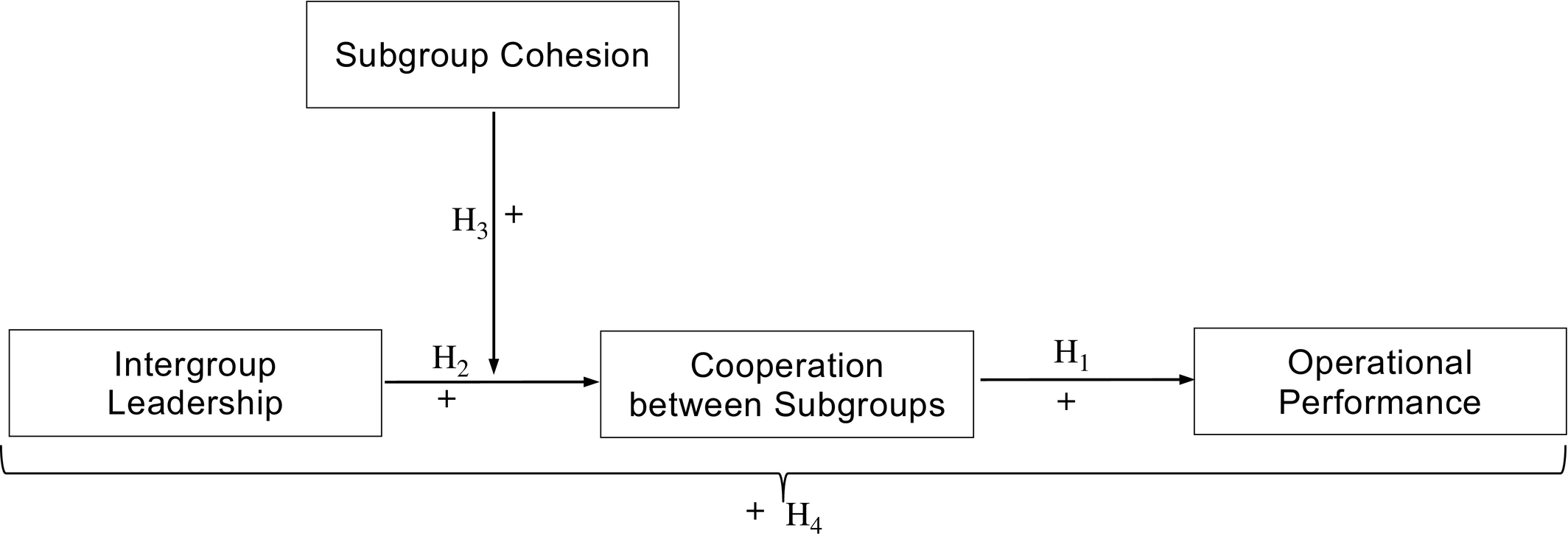
Under these circumstances of high subgroup cohesion, intergroup leadership may have the greatest ability to bridge the divide and foster cooperation. Put differently, while intergroup leadership may be generally effective for any type of multi‐group setting, we expect it to have the most benefit when natural subgroup dynamics result in conflict, which cannot be managed by ignoring subgroup differences or merging the subgroups into a bigger collective identity. Therefore, with our third and fourth hypotheses, we seek to test the moderating effect of subgroup cohesion on the aforementioned dynamics (H1 & H2). Doing so not only extends the theoretical argument in the extant leadership literature, but also underlines its practical relevance for humanitarian field operations, which are characterized by multiple cohesive subgroups having to work with each other.
The more cohesive the local and expatriate humanitarian subgroups in a field office are, the stronger the positive effect of field office intergroup leadership on cooperation between the local and expatriate subgroups in the field office.
The more cohesive the local and expatriate humanitarian subgroups in a field office are, the stronger the positive effect of field office intergroup leadership on cooperation between the local and expatriate subgroups in the field office, which ultimately informs operational performance of the humanitarian field office.
The complete moderated mediation model spelled out in Hypothesis 4 is also depicted in Figure 1.
Methodology
Data Collection and Sample
We investigated our hypotheses using a sample of 125 humanitarian field workers, who voluntarily and anonymously responded to an online survey. We first identified 542 practitioners in different contact lists obtained from humanitarian clusters (e.g., Humanitarian Aid database (OCHA)) and practitioner conferences (e.g., Health and Humanitarian Logistics Conference and Fleet Forum), and then invited them via personalized emails to participate in the online survey. With this strategy, we surveyed field practitioners who were directly involved in humanitarian operations and could therefore provide responses that were less riddled by perception biases that occur at a distance (Podsakoff et al. 2012). In the email invitation, participants received the online survey link, a brief research description that expressed altruistic appeal (Fazekas et al. 2014), information about the time needed to complete the survey, as well as assurances of anonymity and confidentiality. Furthermore, commonly used practices in survey research suggest that linking survey response to the promise of a monetary donation to a charity of choice (e.g., a $5 donation incentive Laguilles et al. 2011) improves respondent motivation because “beyond their monetary value, they are perceived as unconditional tokens of appreciation, which increases trust” (van Veen et al. 2016, p. 3; Gendall and Healey 2010). Accordingly, we offered to donate $5 to an IHO of the participants’ choosing to further incentivize survey participation and completion. Such a diversification of motivators for participation (e.g., altruistic appeal and incentive to donate money to a charity of choice) usually increases respondent engagement especially if the participation time is short (Deutskens et al. 2004). Data collection lasted from March to May 2015. During this period, we sent two reminders; the first reminder was sent 2 weeks after the initial invitation, and after 2 weeks another reminder was sent to boost the response rate.
To avoid responses from those who did not have local or expatriate colleagues, we presented a filtering question (“
Respondent Characteristics
All survey participants were field‐level humanitarian workers who belonged to 56 different IHOs, including United Nations agencies (20%), international non‐governmental organizations (43.2%) such as Doctors Without Border (MSF) or the International Committee/Federation of the Red Cross/and the Red Crescent Societies (ICRC/IFRC), as well as development agencies (28%) such as Oxfam. Eleven respondents (8.8%) did not disclose their organization's name. At the time of the survey, 52% of participants worked in an armed conflict setting (like Afghanistan, Yemen, and South Sudan). Moreover, 42% were exclusively engaged in disaster response (e.g., jobs in medical emergencies), while 30% were focused on development projects (e.g., jobs in justice advocacy, and logistics and procurement for community development). Furthermore, a notable 26% were active in both settings simultaneously, indicating that their job focused on (i) preparedness, (ii) linking relief, rehabilitation, and development (LRRD), and (iii) cash for work projects. Two percent labeled their work focus as “other.”
In terms of participants’ location, 36% were located in Afghanistan, 24.8% were located elsewhere in Asia, 30.4% in Africa, 4.8% in Europe, 3.2% in the Americas, and 0.8% in Oceania. Participants also expectedly came from diverse cultural backgrounds: 42.4% Asians (of whom 28.8% were Afghan), 28% Europeans, 13.6% Africans, 12% North Americans, 2.4% Australians/New Zealanders, and 1.6% South Americans. The participants who were part of the local subgroup made up 40.8% of participants, and most locals belonged to global South countries (i.e., 22% Africa, 74% developing Asia, 2% South America, and 2% Southern Europe). On the other hand, 59.2% of participants were expatriates, who mainly came from global North nations (i.e., 46% Northern and Western Europe, 20.3% North America, 24.1% developed parts of Asia including Australia/New Zealand, 8.11% Africa, and 1.35% South America). Note that global North and South do not specifically refer to the hemispheres; rather, the former typically refers to industrially developed countries, while the latter refers to developing countries across any continents (Wolvers et al. 2015). Female humanitarian workers constituted 37% of the sample, with a mean age of 39 years (
Measures
We reviewed the OM and leadership literature to identify measurement scales that would correspond to the theoretical constructs in our research model. Given their knowledge and familiarity, subject matter experts can identify questions that produce higher item non‐response rates and higher levels of inaccurate reporting (Olson 2010). Hence, we asked two humanitarian practitioner experts to test our online survey in advance and help us adapt measurement scales to the humanitarian operational setting (e.g., correcting ambiguous language, simplifying technical terms, etc.), thereby increasing our measurement scales’ content validity and reliability. This expert evaluation revealed no major concerns regarding the clarity of the questionnaire; however, based on their recommendations, we revised the wording of some items in a more practitioner‐friendly style. The expert evaluation also recommended decreasing the estimated length of the survey while keeping measurement scale lengths to a minimum (cf. why we use single items) because Internet connections are usually slow in the field, and humanitarian workers may not have devices with larger screens or much time available for the survey. As participants could be locals or expatriates, we asked them a question at the survey's outset (“
List of Measurement Scales and Individual Item Factor Loadings
Note
Factor loading indicates the correlation between each scale item and the latent construct that the item is measuring (see section 3.3).
We modified these items in the online survey so that locals and expatriates got to see only “their” version (see section 3.3).
To measure intergroup leadership, we used a 9‐item scale adopted from the Intergroup Leadership Scale developed by Rast (2013) and theoretically conceptualized by Hogg et al. (2012). We separately asked expatriate and local participants to describe whether their field office manager (i) shows behaviors that advocate cooperation between subgroups (e.g., “
To measure subgroup cohesion, we used a single‐item measure, adopted from Hogg et al. (2007), that is frequently used in the organizational behavior literature (e.g., Lickel et al. 2000). A single‐item question is not repetitious and time‐consuming, and can effectively measure one‐dimensional and concrete constructs like subgroup cohesion because a single‐item makes it easy for participants to evaluate and capture the essence of the construct (Hoeppner et al. 2011). Local and expatriate participants were separately asked about their respective subgroup: “
We measured the state of cooperation between subgroups by assessing the degree of positivity or negativity that local and expatriate participants assigned to the relationship between subgroups. To this end, we adopted a scale from Gaertner et al. (1989), which has been used to measure intergroup cooperation in leadership research (Montoya and Pittinsky 2011). We separately asked expatriates and locals about their perspective on whether their relations were
To measure operational performance as the dependent variable, we developed a two‐item measurement scale that indicates the extent of successfully helping beneficiaries (effectiveness) and running cost‐efficient response operations (efficiency), which together form a measure of operational performance (e.g., Beamon and Balcik 2008, Gralla et al. 2014). Since operational performance is assessed by a variety of different and context‐specific metrics (Haavisto and Goentzel 2015), we followed Krishnan et al. (2006) and Moshtari (2016) in relying on humanitarian workers’ judgment regarding the level of operational performance (as they are directly involved in operations in the field). To collect and meaningfully analyze their judgments across IHOs, we required humanitarian workers to compare their own field office's operational performance with that of other IHOs in the region. This measurement strategy relieved us of the problem of collecting data on a specific metric of operational performance that may be understandable within the logic of one IHO but unclear in its value to others. Hence, as the best feasible way for evaluating the operational performance in this context, we asked participants for a comparative assessment to obtain comparable responses across different IHOs. Namely, we asked: (i) “
Additionally, we accounted for theoretically relevant control variables in order to address endogeneity issues caused by omitted variables, which in principle correlate with independent and dependent constructs (Ebbes et al. 2017). In this regard, the extant leadership research (de Cremer and Van Knippenberg 2004) explains that followers will exhibit favorable attitudes toward leaders who they perceive as task‐effective. Accordingly, previous empirical research has controlled for leader task effectiveness when assessing the outcomes of leader behavior (Grossman et al. 2016). Hence, we also measured leader task behavior as a control variable to make sure that intergroup leadership does not solely tap into an overall halo leadership perception. To do so, we used a single‐item measure adopted from the leadership effectiveness scale by Van Knippenberg and Van Knippenberg (2005) Given our space constraints, a single‐item question kept the survey short and the measurement concrete to leave little room for ambiguity in the mind of respondents. Participants were asked about their agreement with the following statement: “
Means (M), Standard Deviations (SD), Intercorrelations, Fornell‐Larcker, and Heterotrait‐Monotrait (HTMT) Criterion Results
Notes
Furthermore, we controlled for differences in the local and expatriate subgroup size, the field office location, the type of humanitarian operations, leader–follower tenure, and subgroup membership to prevent other possible confounds from affecting relations in our research model. We included subgroup size differences to make sure that intergroup leadership is not just a derivate of different subgroup constellations. Similarly, we tested the field office location (i.e., a man‐made or natural disaster region) because it is likely to influence the quality of subgroup interaction and contact. For example, local–expatriate relations may face deeper boundaries (such as physical barriers) in a man‐made conflict due to security challenges (e.g., Holguín‐Veras et al. 2016). Moreover, the length of interaction between locals and expatriates may also affect our model. While we did not specifically measure this variable, we did assess whether participants were active in relief operations (which are usually short term) or development programs (which usually last longer). In the same vein, leader–follower tenure was controlled to make sure that the effect of intergroup leadership does not stem from personal familiarity between leader and follower in their IHO. Lastly, subgroup membership was included as a control variable because members of different subgroups with different status may behave according to different norms and conventions. For example, prior organizational research (Dovidio et al. 2009) shows that members of higher‐status subgroup are often less willing to cooperate with lower‐status subgroup members.
Analysis and Results
Prior to the analysis, we took two steps: First, to make the interpretation of involved coefficients comparable, we
Measurement Model Reliability and Validity
To begin with, and as already alluded to before, we used expert evaluations of two humanitarian workers to ensure that measurement scales possess content validity, that is, scale items are worded in practitioner‐friendly language and are clearly understandable. Second, we examined convergent validity—that is, whether the scale items that purport to measure a construct are internally correlated. To do so, we calculated the average variance extracted (AVE) of
Measurement Properties of Constructs
Next, we examined discriminant validity, which indicates whether multi‐item constructs are empirically independent from each other and are representative of the intended behavior or judgment. We did so using two methods: Fornell and Larcker's criterion and Heterotrait‐Monotrait (HTMT) criterion. In line with Fornell and Larcker's (1981) recommendation, we observed that the square root of each construct's AVE is higher than the correlations among any pair of constructs, thereby confirming discriminant validity. Table 2 shows the means, standard deviations, intercorrelations of variables, and square roots of AVEs on the diagonal of the correlation matrix. Recently, Henseler et al. (2015) suggested that Fornell and Larcker's criterion is not, by itself, a sufficient test of discriminant validity. They recommended that researchers also use HTMT criterion, which examines if “relationships of the indicators within the same construct are stronger than those of the indicators across constructs measuring different phenomena” (Henseler et al. 2015, p. 121). The HTMT is 0.59 between
Lastly, we also examined the values of Cronbach's Alpha (CA) and Composite Reliability (CR) to ensure that reflective measurement scales are internally consistent and reliable.
Moderated Mediation Analysis
We tested the study's hypothesized relationships via a moderated mediation analysis, which is based on a covariance‐based structural equation modeling (CB‐SEM) approach. CB‐SEM is the relevant analytical approach because we aim to explain how well the empirical data fits our conceptualized theoretical model (Edwards 2011). The key requirement for implementing this approach is for all constructs to be operationalized as reflective constructs in the model (Peng and Lai 2012). Through moderated mediation, we estimated the significance and strength of an indirect effect (i.e., effect of a third variable (mediator) that explains the relations between independent and dependent variables), as well as whether this indirect effect is conditional on another (moderator) variable (Hayes 2013, Preacher et al. 2007). In order to meet the prerequisites for a moderated mediation model, we first examined the inter‐correlations between the constructs in Table 2. The independent variable
Next, we calculated the moderated mediation based on OLS regression models. First, to test the mediation hypotheses, we first regressed
Coefficients of Moderated Mediation Model for Operational Performance as Dependent Variable (DV) with Control Variables
Note
Coefficients of Moderated Mediation Model for Operational Performance as Dependent Variable (DV) without Control Variables
Note
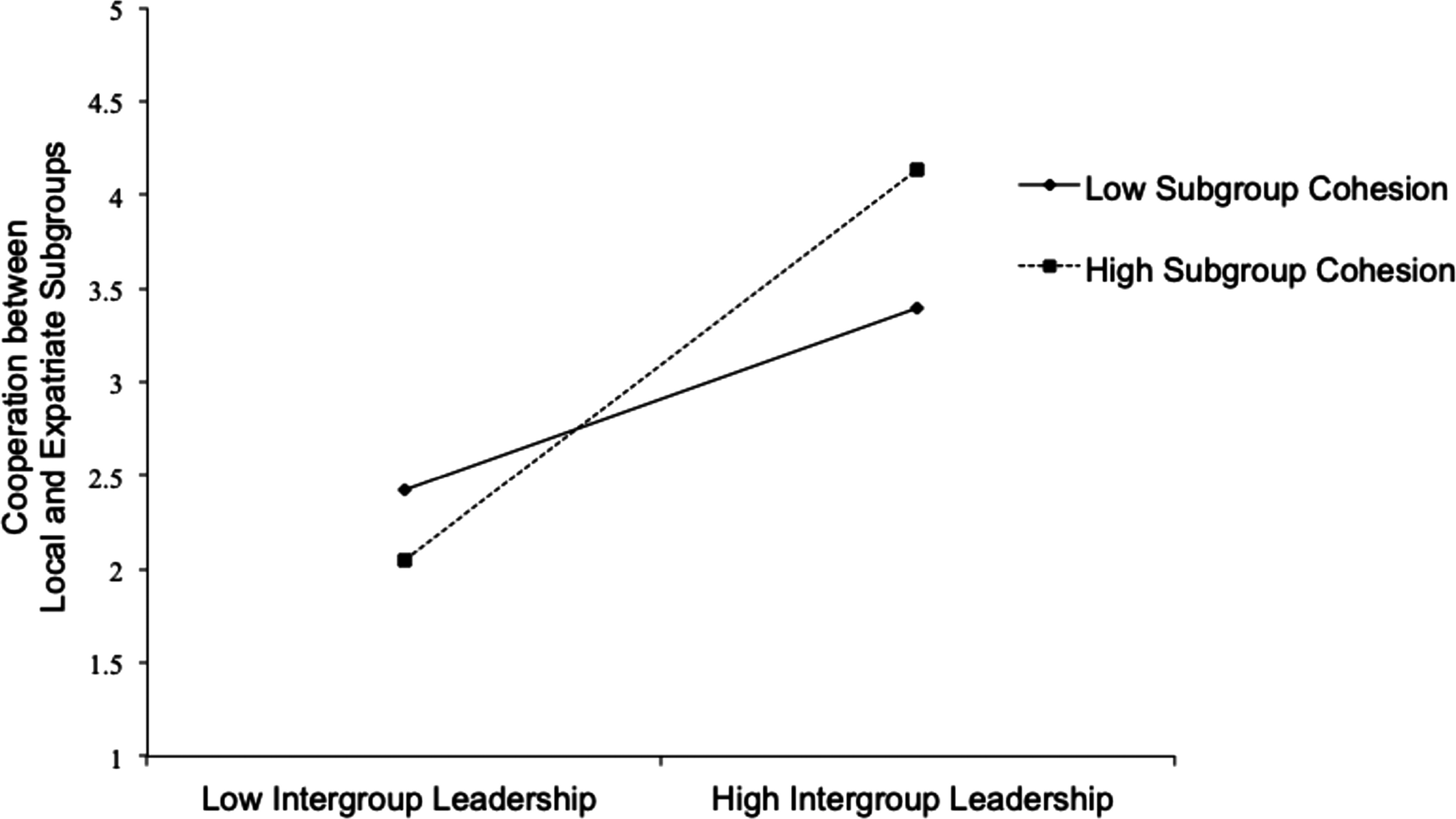
Simple Slopes at −/+ 1 SD of the Mean: Intergroup Leadership has Greater Impact on Cooperation When Subgroups are Perceived as Cohesive
With the basic interaction hypothesis confirmed, we estimated regression coefficients to investigate if intergroup leadership improved operational performance (through cooperation between subgroups) at varying levels of subgroup cohesion. We used a bootstrapping procedure, which generates k (i.e., 10,000 at 95% significance level) subsamples from the original dataset to produce bias‐corrected confidence intervals for hypothesis testing. According to Hayes (2013), bootstrapping requires no assumptions regarding the shape of the sampling distribution when conducting moderated mediation tests. With this method, we can determine that the indirect effect of intergroup leadership on operational performance is different from zero for any level of subgroup cohesion if the bias‐corrected confidence intervals do not contain zero (i.e., it allows us to reject the null hypothesis of no indirect effect) (Preacher et al. 2007). The top half of Table 6 presents the estimates for the conditional indirect effects deriving from 10,000 bootstrapped samples for low (mean −1 standard deviation), medium (mean), and high (mean +1 standard deviation) levels of subgroup cohesion, respectively. We found that, with less subgroup cohesion, intergroup leadership resulted in lower cooperation between local and expatriate subgroups, which in turn did not significantly enhance operational performance. But, consistent with our fourth hypothesis, the indirect effect of intergroup leadership on operational performance strengthened as subgroup cohesion increased. We still found the same pattern when excluding all control variables (i.e., leader task effectiveness, difference in subgroup size between locals and expatriates, field office location, tenure with leader, subgroup membership and type of program as controls), although then the indirect effect already emerges at lower levels of subgroup cohesion (see lower half of Table 6).
Conditional Indirect Effect Analysis of Intergroup Leadership on Operational Performance as Dependent Variable (DV)
To further bolster confidence, we also report the score for the newly created index of moderated mediation, which confirms the moderated mediation results (Hayes 2015). The index is significant (
Finally, to alleviate potential concerns about the nestedness effect (i.e., the data being collected from humanitarian workers who belong to the same field office), we conducted an additional test of interclass correlation (ICC). The ICC test indicates the proportion of between‐group variability in observed variance, thus determining whether the collected responses are indeed independent or are driven by the respondents’ membership in the same field office. If the ICC is small, most of the variance in the data stems from individual differences within field offices, and we can conduct a single‐level regression model. A review of leadership research suggests that any ICC values below 0.10 indicate a small nestedness effect and, as such, do not necessitate any additional multilevel modeling. In our case, the ICC (
Research Implications
Theoretical Implications
Frequently, humanitarian workers complain that “poor leadership [is] the single most important constraint to effective operations” (Knox‐Clarke 2013, p. 4). However, leadership's effect on operational performance has neither been conceptualized nor substantiated with actual field data in the humanitarian operations literature. Given that emerging OM studies hint at the crucial role of leadership in boosting manufacturing operations (de Vries et al. 2016), finding empirical support for the positive association of intergroup leadership style with performance improvements offers a relevant behavioral extension of the current literature. Likewise, finding the effect of cooperative relations between subgroups as the mediating mechanism for the aforementioned association also advances the limited and largely anecdotal knowledge on intra‐organizational cooperation and local‐expatriate relations in the humanitarian operations literature. Currently, intra‐organizational cooperation has received minimal, if any, investigation while the main focus of research has been on inter‐organizational cooperation either (a) among organizations (e.g., suppliers, government, etc.) across the supply chain (Sheu and Pan 2015), (b) between private companies and IHOs (Yaziji and Doh 2009), (c) or between different IHOs (Lu and Xu 2015). Prior to this study, our understanding of the role of local–expatriate cooperation on humanitarian operations has thus been limited to personal anecdotes and experiences often reported in after‐action evaluations (World Disasters Report 2015).
Taken together, our findings widen the scope of behavioral OM research, which is “the study of interaction among organizational behavior (OB) as well as operations management (OM)” (Sood and Sharma 2015, p. 230) in the context of the humanitarian operations. Recently, scholars have called for supplementing OM models that fail to represent “an actual situation humanitarians may face, and are based on assumptions that make little sense” (Besiou and Van Wassenhove 2015, p. 1396). To this end, we firmly rooted our research model in behavioral theorizing on social identity (Abrams and Hogg 2010) to explain an actual problem (i.e., conflicting relations between local and expatriate subgroups inside IHOs). We then drew on intergroup leadership theorizing (Hogg 2015, Hogg et al. 2012, Pittinsky and Simon 2007) to explain a new mechanism that leaders can actively leverage to create intra‐organizational cooperation. As our findings suggest, this behavioral mechanism facilitates a critical outcome in OM/humanitarian operations research; namely, operational performance (Beamon and Balcik 2008, Besiou et al. 2018, Gralla et al. 2014).
Our test of Intergroup Leadership Theory also extends the leadership literature. Current theoretical models (e.g., Charismatic–Transformational Leadership Theory) mainly focus on turning multiple subgroups inside the organization into one collective; as a result, “the specific challenges that intergroup situations pose are typically neither discussed nor acknowledged in leadership research” (Hogg et al. 2012, p. 235). In response, our study theorized a leadership strategy that is fully attuned to the dynamics of relations between subgroups and found empirical support for its effect as a significant predictor of intra‐organizational cooperation between locals and expatriates whose relations are often characterized by deep, tension‐fraught, and potentially hostile divisions in IHOs. This effect holds when controlling for (i.e., separating the effects of) external variables that may otherwise shift the outcome, including leader task effectiveness, subgroup size constellations, field office location, subgroup membership, tenure with leader, and type of humanitarian programs that indicated the short‐ vs. long‐term orientation of the aid delivery. Relatedly, current models like Charismatic–Transformational Leadership Theory (Antonakis 2012) are criticized as “black boxes” because they mix distinct dimensions together in one theoretical and often tautological framework; as a result, they are ambiguous as to what they represent and where the leader effect specifically comes from (Van Knippenberg and Sitkin 2013). In contrast, our leadership theorizing (Hogg 2015, Hogg et al. 2012) offers conceptual clarity because its effect is explained through the rhetorical and behavioral promotion of intergroup relational identity (that is, to encourage subgroups to move beyond their siloed, conflicting identities).
Additionally, our findings indicate a theoretically logical, but previously unexplored moderating relation; namely, that intergroup leadership is associated with more cooperation between subgroups when each subgroup possesses higher cohesion (i.e., the division between subgroups is deep and salient). This finding provides a noteworthy extension of the current theoretical arguments insofar as leadership research has shown that leading a cohesive subgroup is associated with more relational conflict between multiple subgroups (Effron and Knowles 2015, Pittinsky and Simon 2007). This finding thus corroborates that intergroup leadership is indeed a relevant strategy during humanitarian operations because the cohesion of subgroups is the norm more than the exception inside IHOs.
Implications for Humanitarian Aid Field Office Leaders
Organizations such as Oxfam, Red Cross, and International Rescue Committee (IRC) are actively seeking to boost field‐level operation performance (Haavisto and Goentzel 2015). Yet, practitioners frequently express “concern over the quality of operational leadership and the effects that this has on humanitarian response” (Knox‐Clarke 2014, p. 8). Disseminating guidelines and manuals do relatively little to mitigate this concern (Walton et al. 2016); in contrast, our study offers some actionable recommendations. First, we recommend adjustments in leader rhetoric: For example, leaders may consistently and repeatedly highlight the contributions of both subgroups during humanitarian operations and how success was only possible through the joint effort. Second, on the behavioral level, we suggest that leaders interact equally with locals and expatriates, as well as in a variety of forms such as asking questions and giving feedback (Ernst and Yip 2009). For instance, it seems common in meetings for expatriates to speak freely whereas the local staff members rarely say a word unless directly queried (Redfield 2012); leaders might ameliorate this situation through their own initiative. As such, our study also addresses the issue of leadership development, which has become a high priority for IHOs (Johnson 2010). Indeed, our results suggest an evidence‐based foundation for better operational performance in the field via leadership. Given our results, organizations may seek to invest more resources into field‐level leadership, with a particular focus on honing intergroup leadership skills.
Concluding Discussion, Limitations, and Future Directions
Practitioners’ experience (Shevchenko and Fox 2008) and social identity theorizing (Abrams and Hogg 2010) speak to the same phenomenon: Humanitarian workers naturally spend more time within, and construct identities around, their respective subgroups (local and expatriate). Such subgroup entrenchment then thwarts intra‐organizational cooperation and, ultimately, humanitarian operational performance. Yet it would be naïve to assume that the divide (not only in language, culture, and salary, but in religion, lifestyle, etc.) between locals and expatriates can simply be alleviated by a leader promoting a collective identity (e.g., as a humanitarian worker or field office member). This is true not only for humanitarian operations, but also for other work domains (though perhaps not as pronounced) where people entrench themselves in (departmental) silos with certain discrete identities. Against this background, the Intergroup Leadership Theory (Hogg et al. 2012) contends that subgroup identities do not always need to be merged; instead, they can be forged into a performing entity by emphasizing their identity–defining relationship. In the case of humanitarian operations, we have found the perfect ground to test this largely conceptual notion. We found full support for the notion that intergroup leadership strengthens cooperation between subgroups, and thus improves operational performance, particularly when subgroups are otherwise very cohesive.
Future studies may build on our work. For instance, according to social identity and cross‐cultural theorizing, the uncertainty that comes with many humanitarian operations—combined with the distinct cultural backgrounds of humanitarian workers—is partly responsible for the experienced cohesiveness. However, subgroups are not always as culturally distinct as they were in our sample—for instance, the locals and expatriates involved in response operations to the 2018 wildfires in Sweden and Greece were mainly Europeans. Thus, future studies could consider the moderating role of cross‐cultural difference; that is, how cohesiveness affects intergroup leadership when subgroups do not have such demarcated cultural backgrounds to rally around, as in the present study.
Similarly, cross‐sector cooperation has become a relevant problem for humanitarian operations research, particularly when it pertains to IHOs’ partnership with the private sector and military (Cozzolino 2012). Increasingly, teams from a third‐party logistics service provider or a military unit join a humanitarian country team in the field to provide available equipment, technologies, and know‐how in support of the response programs (Yaziji and Doh 2009). Cooperation in such cross‐sector contexts often appears to be uneven, uncertain, and difficult to achieve because parties operate under distinct mandates and may often have different missions, organizational cultures, ways of operating, interests, capacity, and logistics expertise (Dahan et al. 2010, Heaslip and Barber 2014). Extending social identity theorizing to cross‐sector cooperation may reveal that we have clearly demarcated organizational groups that are unlikely to be “fused” together through collective leadership of the humanitarian country team and instead need the type of leading strategy highlighted in intergroup leadership. Future studies could apply and test our theoretical model to such cross‐sector contexts with multisource data collected from independent organizational groups involved in the partnership.
Relatedly, there are rich streams of research in organizational behavior (Dovidio et al. 2011, Ring and Van de Ven 1994) and operations and supply chain management (Dwyer et al. 1987, Liker and Choi 2004) that empirically establish the benefits of extended or repeated contact for positive expectancies, attitudes, and relations between subgroups. In particular, extended contact can be a theoretically plausible predictor of cooperative relations when interacting subgroups work under conditions of joint goals or missions (Pettigrew and Tropp 2006). Linking these research streams to our theoretical model, future studies could empirically investigate whether (and if so, to what extent) extended contact between subgroups can engender a sense of an intergroup relational identity (which is much needed for intra‐organizational cooperation) in a time‐lagged or longitudinal data collection. Alternatively, future studies could take a qualitative approach (see diary research method, Ohly et al. 2010) to analyze the quality of intergroup behaviors, attitudes, and relational identity over the extended contact period. This would require them to have members of subgroups record entries about their everyday work interactions in a diary for the time period that they interact with each other.
Another promising avenue for future research is to investigate effectiveness of intergroup leadership in sudden vs. slow‐onset disruptions. Recent findings suggest that leadership strategy should be adapted to changing circumstances in order to be effective during the disruption (Shaheen et al. 2018). Likewise, operational tasks and procedures entail a different type of cooperation in sudden‐ vs. slow‐onset disruptions (Kovács and Spens 2009). For example, in a sudden‐onset disruption, leaders need to cultivate an intergroup relational identity among the subgroups that have little long‐term interdependence, yet must quickly work together to perform humanitarian operations successfully. Hence, future studies could make a notable contribution via modeling sudden‐ vs. slow‐onset response operations as a moderator to estimate under which condition and to what extent intergroup leadership is effective in engendering intergroup relational identity.
Another moderating variable to consider could be the different subgroup size constellations. In humanitarian aid field offices, the expatriate subgroup is normally smaller than the local subgroup. Such size imbalance has important consequences for subgroup relations. As a salient surface‐level difference, numerical distinctiveness inclines the members of the smaller subgroup to identify with their in‐group against relevant out‐groups (Liebkind et al. 2004). Building on this, the organizational and social psychological research consistently find that subgroups with relatively smaller size exhibit stronger negative perceptions toward larger‐size subgroups (Hewstone et al. 2002). Together, these dynamics contribute to more intergroup conflict. However, if the size imbalance is constrained or eliminated (i.e., subgroups are equal size), these dynamics may not emerge as strongly and thus the potential for conflict between subgroups may decrease. From this perspective, future studies may want to thoroughly investigate the degree to which subgroup size differences, in either direction, attenuate the effects of intergroup leadership.
Notably, our use of primary field data contributes to the growing data‐driven research that focuses on behavioral and organizational problems in humanitarian operations literature, and can thus be considered a strength of this study. Nonetheless, there are limitations that should be addressed by future studies. First, our two‐item measurement scale for operational performance captured humanitarian workers’ perceptions about their field office's effective and efficient performance. Our goal here was to elicit comparable responses, which are otherwise impractical to obtain via more objective performance measures, especially across field locations. However, we cannot demonstrate that these measurement items are precise predictors of objective performance. Although this does not invalidate our findings (Krishnan et al. 2006, Moshtari 2016), future studies could, if possible, compare subjective performance responses with objective indicators (e.g., cost of aid delivery and response time). In a similar vein, although keeping the survey length at minimum was pivotal to increase response and completion rates, we also recognize the concern about using a single‐item scale. Specifically, subgroup cohesion was measured with a single item, which is frequently used in organizational research (Hogg et al. 2007, Lickel et al. 2000). However, when the survey length is not a significant constraint, future studies may adopt a multifaceted scale to capture a more comprehensive understanding of cohesiveness (i.e., not only in terms of sticking together as a group, but also shared commitment, attraction, etc.) as perceived by subgroups inside IHOs.
Second, our use of an online survey in English may raise concerns that non‐English speaking humanitarian workers are inadequately represented. For one, this could entail a systematic bias with regard to our representation of regions (for instance, excluding French‐speaking West Africa or Spanish‐speaking South America). While this may have been the case, we have no reason to assume that the outlined dynamics would be different in these regions. Two, this choice may mean that even in the regions we assessed, we did not have full access to local humanitarian aid workers because of their level of English. However, English is the lingua franca in most IHOs in these regions. As such, many immediate local employees of IHOs are only recruited (e.g., as a driver, project assistant, community worker, etc.) if they can communicate with expatriates (Taylor et al. 2012). Thus, in most circumstances, English would also be spoken by most of the immediate local staff. That said, we concede that they may lack the English fluency needed to complete our survey. Thus, future research may seek to address whether, for instance, locals who are more vs. less fluent in English perceive the dynamics the same or differently. Doing so may also be able to address concerns that sampling in English introduces an unintentional education bias. Similarly, as in most survey research, we cannot rule out non‐response bias in our data. Although our comparison of initial and late respondents (i.e., proxies for non‐respondents) indicated that answers to survey questions did not differ among the observed and late respondents, it may be possible that the estimate of non‐response bias does not always pan out in such a comparison. Future studies may try to contact a subset of the non‐respondent sample (if available) and see whether they respond to such a request, so that researchers can compare these responses with initially collected data to have a better estimate of non‐response.
Third, the measurement of the independent and dependent constructs with the same participants may raise concerns over common source bias. This refers to a situation whereby a respondent offers consistently biased answers to survey questions that are otherwise not correlated, causing the explained variability in the model to stem from systematic errors in the data collection rather than the theorized relationships. To alleviate some of this concern, we used remedies such as placing measurement items for the independent and dependent variables more than six web pages apart in the online questionnaire; recruiting practitioners who could provide accurate responses, and filtering unreliable responses via an honesty check (Podsakoff et al. 2012). Research shows that such procedures can help constrain the impact of common source bias (Tourangeau et al. 2003). Additionally, Podsakoff et al. (2012) argue that “if a study is designed to test hypotheses about quadratic or interaction effects, rather than main effects, then method bias would not be able to account for any statistically significant effects observed” (p. 565). This means that although common source bias can either inflate or deflate observed relationships, it is less likely to systematically affect difficult‐to‐visualize relationships when testing the interaction effects of two variables on a third variable in a moderated mediation. In fact, the odds of finding the effect of an interaction greatly decrease if common source bias is present in the data (McClelland and Judd 1993). Therefore, the fact that we found a significant interaction effect in our model in spite of potential common source bias (assuming such bias is present in our data) should bolster trust in our findings (Podsakoff et al. 2012, Siemsen et al. 2010). To add to this, the Harman's single‐factor test we conducted indicated no major issues with common method variance. Likewise, controlling very conservatively for the effect of leader task effectiveness did not render the results insignificant. However, we still believe that future studies could use multisource data to add further confidence to our findings.
Lastly, we are unable to infer the direction of cause‐and‐effect relations based on our cross‐sectional measurement model. The organizational and OM literature may explain the implied direction of effects, and indeed, finding a moderation effect gives us substantial power to refute the reverse direction; yet, we cannot reject the likelihood of some reverse causality. While future longitudinal studies may address some of these concerns, the best way to resolve causality would be through a field experiment. We can only hope that, as the results of our study permeate practice, researchers may be allowed to accompany leadership development trainings in IHOs and test their results.
Footnotes
Acknowledgments
The authors thank Martin Starr, the senior editor, and the three reviewers for their insightful suggestions and comments that significantly improved the study. In addition, the lead author appreciates and thanks Friedrich‐Naumann‐Stiftung für die Freiheit for funding his PhD studies.