






Abstract
We study mechanisms to manage group purchasing among a set of buyers of a given product with a concave purchase cost function. The buyers are cost‐sensitive and willing to buy a range of product quantities at different prices. We investigate two types of mechanisms that can be used by a group purchasing organization (GPO): (a) ordering mechanisms where the buyers, without divulging private information, choose their order quantities and pay for them according to a given cost‐sharing rule or a fixed price; and (b) bidding mechanisms where the buyers announce their valuations for different quantities and the GPO determines their purchase quantities and cost‐shares according to pre‐announced schemes. Under the choice of appropriate cost‐sharing rules, we introduce a sequential joint ordering mechanism and a family of ordering strategies under which some buyers’ strategic deviations never worsen other buyers. We propose a class of bidding mechanisms with some desirable properties and show that a Nash equilibrium bid schedule always exists wherein all buyers’ profits are at least as high as those under truthful bidding. In our proposed mechanisms, some buyers’ strategic deviation from truthful bidding can only make the others better off. Thus, buyers need not worry about strategic behavior of their counterparts. We compare the performances of the system under different mechanisms and show the superiority of our proposed bidding mechanism. We show that the profits generated by our proposed bidding mechanisms under the proportional cost‐sharing rule are never dominated by the maximum profits of the first‐best fixed price.
Introduction
Group purchasing is becoming increasingly popular in both business‐to‐consumer (B2C) and business‐to‐business (B2B) environments due to advances in information technology and the development of online markets. Group purchasing generates multiple benefits for its participants: buyers can obtain better prices by increasing their purchasing power and reduce costs by consolidating their operations. The focus of this study is on group purchasing in B2B applications, which can be seen in many sectors and across various industries. The spectrum of products purchased collaboratively ranges from medical equipment and hospital supplies (e.g.,
Because implementing group purchasing requires a considerable amount of effort in aligning the interests of buyers and suppliers, it is most often organized through a third party—a.k.a. a group purchasing organization (GPO). The GPO negotiates with suppliers to obtain discount schemes, conveys available discounts to buyers, and carries out the purchasing transactions on behalf of the buyers. 1 GPOs display a wide range of ownership structures and operating modes (Hu and Schwarz 2011), and, in general, operate with the goal of maximizing their own profits or as a non‐profit organization with the sole purpose of generating surplus for their members. We call the first group intermediary GPOs and the second group cooperative GPOs. Some evidence exists suggesting that intermediary GPOs may suffer from incentive misalignment and underperformance when compared with cooperative GPOs—see, for example, DeLay (2009), Esquire (2011), and Robert and Hal (2010), among others. Cooperative GPOs, the focus of this study, usually cover their costs through fees and aim on maximizing their members’ profits. Fees can be collected either from GPO members (buyers) and/or from suppliers. Both UNA Purchasing Solutions and Essensa, the two previously mentioned GPOs, finance their operations through administrative fees obtained from suppliers.
GPOs are faced with a non‐trivial problem. On the one hand, potential members need to know the costs of products before deciding whether to use a GPO. On the other hand, the GPO needs to determine the group’s total purchase quantity (and the corresponding cost) in order to be able to answer buyers’ requests for quotes (RFQ). However, the latter cannot be accurately calculated without knowing which buyers are participating and their order quantities. Our main goal in this analysis is to provide mechanisms that GPOs can use to address this issue.
In practice, there are two common ways in which GPOs approach coordination problems (Smith 2015). In the cost‐sharing approach, the GPO announces a rule for sharing costs (or profits) according to the eventual outcome. In the fixed price approach, the GPO announces a unit price, while individual buyers make purchasing decisions. Examples of both approaches can be seen in practice and are discussed in the literature—see, for instance, Graf (2014) and
An important and often neglected factor in an analysis of group purchasing is that buyers may be willing to purchase different quantities at different costs. Evidence of this “cost‐sensitivity” in practice currently exists. In replenishment models with multiple ordering cycles, buyers’ lot sizes increase in the presence of quantity discounts. In a single‐period scenario in which buyers are faced with an unknown demand (that is, a simple newsvendor case), lower purchase costs increase buyers’ margins and consequently, motivate higher order quantities. As an illustration, consider the following example. We mentioned earlier that Herman Miller is one of the suppliers working with UNA purchasing. Suppose that one of UNA’s GPO members, with a budget of $15,000, considers upgrading some office chairs to the classic Herman Miller Aeron chair. If the member is charged full price ($759 on the Herman Miller website), his budget supports about 20 chairs; if he is offered a 10% discount, he can purchase about 22, while a 20% discount (the average savings for office supplies estimated by UNA purchasing for their members) allows for about 25 chairs. However, the literature on group purchasing usually assumes that buyers want a fixed quantity independent of the cost and that each buyer’s specific order quantity is common knowledge. This is sometimes referred to as the “single‐mindedness” assumption (Chu 2009, Chu and Shen 2008, Ledyard 2007). One of the distinguishing features of this study is a relaxation of this assumption, which allows for cost‐sensitive buyers.
As the main focus of this paper, we explore a cost‐sharing approach that a GPO can use to coordinate group purchasing. As a reference point, we start with the assumption that all information is commonly known by all parties. We first study joint ordering mechanisms wherein the buyers themselves determine order quantities, given the cost‐sharing rule implemented by the GPO. We then discuss a fixed price approach as a benchmark for the performance of our cost‐sharing mechanisms. Under a fixed price mechanism, the GPO announces a unit price for the product, while buyers choose the purchase quantities that maximize their individual profits. An appealing feature of fixed price mechanisms is that one buyer’s individual profit is no longer coupled with quantities ordered by other buyers, thus strategic competitors’ behavior poses no threats. For comparative purposes, we solve the GPO’s fixed price problem under the assumption that the organization actually knows the buyers’ valuation functions. The first‐best price obtained in this manner gives us an upper‐bound on the surplus that can be generated via fixed price mechanisms.
We then move to the main part of our analysis and assume that buyers’ valuations are their private information. In our analysis, we first focus on a sequential joint ordering mechanism, under which buyers can place orders in any open round, and subsequently increase their orders in later rounds. Under this mechanism, buyers are not required to communicate their valuations. We then investigate a bidding mechanism in which the GPO determines both the quantities and payments for the buyers. The GPO bases its decision on information provided by the buyers, which consists of a list of quantities and their respective willingness to pay for those quantities—that is, the buyers’ valuation functions. This can be thought of as bids submitted by the buyers to the GPO and is consistent with observations in practice. For instance, Anand and Aron (2003) references Chennai Online (COL), in which buyers place bids (that is, price‐quantity schedules) for the platform to clear the market. Buyers can differ in their willingness to pay because of internal factors affecting their efficiencies, for example, or their external relations with the supplier market. A bidding mechanism implemented by the GPO consists of a bid‐purchase rule that determines quantities purchased for each buyer, as well as a cost‐sharing rule determining the corresponding costs. Note that the use of a fixed price mechanisms with asymmetric information imposes new hurdles on the GPO. Specifically, the GPO’s choice of the right price becomes a challenge, particularly since the GPO does not know buyers’ true valuations. With incomplete information, setting the price too high reduces the surplus of the system, while setting the price too low renders the transaction infeasible due to insufficient funds.
Contributions of the Paper
In this study, we construct mechanisms for group purchasing under asymmetric information and compare their performances. We examine both cost‐sharing and fixed price mechanisms and show the advantages of the former class of mechanisms.
We start by examining joint ordering situations in which buyers place their orders given a cost‐sharing rule. Assuming symmetric information, we show that under certain reasonable conditions for the cost‐sharing rule, the set of Nash equilibria for the associated games is non‐empty. As we demonstrate, well‐known cost‐sharing rules, such as the adaptation of the Shapley value (Shapley 1953) for cost allocation situations and the proportional rule, meet these conditions. With our choice of cost‐sharing rules, we establish that buyers’ incentives are aligned in such a way that the corresponding joint ordering game under complete information becomes a supermodular game (Milgrom and Roberts 1990). Supermodular games demonstrate strategic complementarities among the players—improving the profit of one player can only have a positive effect on all the other players’ profits—and guarantee the existence of the largest Nash equilibrium that generates the highest profits for all players among the set of all Nash equilibria (that is, is payoff dominant (Harsanyi and Selten 1988)). Nevertheless, we show that at equilibrium buyers tend to order less than their system‐optimal quantities. We further evaluate the performance of our cost‐sharing mechanisms by comparing them to results from a fixed price approach. In such an approach, the GPO announces a unit price, while each buyer chooses his preferred order quantity and pays the total price of his order. We prove that even if the GPO knows all buyers’ exact valuations, the profits generated by the first‐best price cannot exceed the profits obtained through the largest Nash equilibrium for the joint ordering mechanism with the proportional cost‐sharing rule. Therefore, the joint ordering mechanism is superior to the best fixed price mechanism.
With asymmetric information, we introduce a sequential joint ordering mechanism that can be used by the GPO to receive buyers’ orders in a series of ordering rounds. We introduce a class of ordering strategies for the buyers—Max–min strategies—that are guaranteed to converge to a Nash equilibrium of the associated symmetric information game. We further show that whenever some buyers could act strategically—that is, when they can benefit by deviating from their Max–min strategies—no other buyers who follow their Max–min strategies would be worse off. Subsequently, we provide a lower‐bound on the performance of joint ordering mechanisms under asymmetric information.
As it turns out, the performance of the system could be improved if the GPO takes over the ordering decisions and decides how much to purchase for the buyers. To implement this approach, we introduce a family of bidding mechanisms (Nisan 2007) for group purchasing. In our context, the GPO receives bids from the buyers on how many units they want and their willingness to pay. Depending on the cost‐sharing rule, the buyers may pay the same or different unit prices for allocated quantities. A reasonable bidding mechanism should satisfy some basic properties. First, it should guarantee that no buyer is worse off as a result of purchasing via the GPO (individual‐rationality). Second, the GPO should be able to recover all the costs that it incurs (budget‐balancedness). Without budget‐balancedness, a cooperative GPO, which is the focus of our study, faces additional problems—redistribution of excess profit or funding of excessive purchasing costs. If the mechanism also satisfies truthful implementation the buyers have incentives to bid their true valuations. The main strength of truthful implementation is making strategic behavior unprofitable for all buyers. In other words, irrespective of the information known about others, a buyer can announce his valuation without fearing exploitation by other buyers. If a mechanism does not satisfy truthful implementation, then buyers’ strategic behavior may secure higher purchase quantities and thus increase their individual profits. This may lead to undesirable outcomes since this type of strategic behavior by one buyer may, in general, hurt other buyers and reduce their profits. We introduce a class of randomized mechanisms that are individually‐rational, budget‐balanced, and truthful. However, the performance of such mechanisms can be arbitrarily bad, and thus it may not perform satisfactorily in terms of buyers’ payoffs. To remedy this, we consider an alternative notion of implementation which relaxes truthfulness but hedges against the detrimental aspects of strategic behavior. We formalize this requirement by introducing the novel notion of lower‐bound implementation, that is, the existence of strategic bid schedules under which none of the buyers is worse off than the buyer would be under truthful bidding.
Our bidding mechanisms operate as follows. Given the buyers’ announced bid schedule, a mechanism assumes that the bid schedule represents buyers’ true valuations, and the GPO chooses the largest Nash equilibrium in the joint ordering game associated with the announced bid schedule. The cost‐shares are also determined via rules that meet our conditions. The family of mechanisms obtained in this manner satisfies both budget‐balancedness and individual rationality. When the buyers are all cost‐insensitive (that is, when their order quantities are either zero or a fixed positive amount), or when the largest Nash equilibrium coincides with the system‐optimal quantities, our mechanisms achieve truthful implementation, thus bidding the true valuation is a Nash equilibrium for all buyers. When buyers are cost‐sensitive and the largest Nash equilibrium is below the system‐optimal quantities, although our mechanisms may not be truthful, they give rise to situations wherein strategic move by one buyer never hurts other GPO members. That is, buyers can only be positively affected by the strategic behavior of others. We refer to this condition as strategic synergy among the buyers and show that it is a sufficient condition for lower‐bound implementation. Consequently, the performance of our bidding mechanisms are at least as good as that under the largest Nash equilibria in corresponding joint ordering games with symmetric information. We show via several examples that our bidding mechanisms can indeed transcend the latter and obtain the system‐optimal performance.
The rest of this study is organized as follows. In section 2, we briefly review the relevant literature. In section 3, we formally introduce the group purchasing model and discuss both centralized as well as decentralized settings. In section 4, we study joint ordering mechanisms with cost‐sharing rules as well as fixed prices under the symmetric information assumption. We incorporate asymmetric information in section 5 and study joint ordering mechanisms and bidding mechanisms for group purchasing, along with different notions of implementation. We illustrate our results with some numerical examples in section 6. Section 7 concludes the study. All proofs are presented in Appendix A.
Literature Review
There is a rich literature that investigates the effects of group purchasing on supply chains. In their seminal paper, Anand and Aron (2003) provide an extensive list of GPO examples in both B2C and B2B environments, along with their underlying mechanisms, some theoretical analyses of operations, and suppliers’ pricing schedules. Chen and Roma (2011) construct a model with two competing cost‐setting retailers who jointly procure via a single supplier and highlight the conditions under which group buying is beneficial. Zhou and Xie (2014) consider a supplier’s response and show that mixed discount schemes may help prevent potential damages in group buying. In the healthcare sector, Hu et al. (2012) analyze the effect of group purchasing on the supply chain. In the above‐mentioned models, all information is assumed to be common knowledge. In an asymmetric information setting, Zhou et al. (2017) analyze the choice of contracts and its effect on double marginalization in a supply chain with a GPO and two suppliers. They show that the GPO could facilitate information sharing among the suppliers and improve system performance.
Group purchasing and replenishment problems have also been studied from the point of view of cooperative games. Under the “single‐minded” assumption of buyers, Nagarajan et al. (2010) study different stability and fairness concepts in group purchasing. Using the notion of farsightedness, they relax some of the restrictive assumptions needed for more conventional notions of stability. Schotanus et al. (2008) focus on the drawbacks of the equal price cost‐sharing rule and its perceived unfairness in cooperative purchasing games. They also propose alternative fairness ratios and discuss the measures that GPOs could consider to improve fairness perceptions among their members. Another stream of research considers replenishment scenarios wherein buyers’ purchase frequency is the main decision variable (Anily and Haviv 2007, Dror and Hartman 2007, Meca et al. 2004, Zhang 2009). The main source of cost savings in these models is consolidation of logistical operations and possibilities for leveraging economies of scale in inventory management. Chen (2009) and Hezarkhani et al. (2018) further allow for savings from suppliers’ quantity discounts. The cooperative game approach assumes that all participants know the buyers’ information. The relaxation of this assumption is at the heart of our model.
The literature on non‐cooperative game approaches to joint replenishment is rather sparse. Under the assumption of common knowledge, Meca et al. (2003) study a single‐item inventory game in strategic form with players announcing their desired replenishment frequencies to an intermediary that places orders with the supplier. He et al. (2017) consider a non‐cooperative joint replenishment game under power‐of‐two policies and prove that the choice of the Shapley value as the cost‐sharing rule results in the set of Nash equilibria replenishment frequencies that forms a lattice, and show the existence of a payoff dominant Nash equilibrium. With privately informed players, Körpeoğlu et al. (2012) and Körpeoğlu et al. (2013) investigate alternative games wherein players announce their contribution to ordering costs. Güler et al. (2017) propose an indirect mechanism for joint replenishment in economic order quantity (EOQ) environments in which buyers’ order frequencies are private knowledge. Although the mechanism is not truthful, they characterize buyers’ equilibrium announcements in one‐parameter mechanisms.
Auctions have been an important tool in addressing the coordination and information extraction issues in group purchasing. Chandrashekar et al. (2007) present an overview of the literature in this area. In the B2C context, Chen et al. (2006) and Chen et al. (2010) analyze equilibrium bidding strategies of buyers in a GPO. Assuming a discrete price curve, single unit requirements, limited supply, and timely arrival of buyers, they describe an auction mechanism that induces buyers to bid the price step that is closest to their willingness to buy upon arrival. Hafizoğlu and Sen (2014) allow buyers to demand more than a unit of product and study a mechanism design problem with groups of buyers announcing their combined reservation prices for a product to the GPO. The authors examine several practical and appealing cost‐sharing rules, none of which, they observe, satisfies the truthfulness property. All of the models in previous papers use the single‐mindedness assumption. In a B2B setting, Li et al. (2010) study a group purchasing setting with multiple products and buyers who have heterogeneous reservation prices for different product bundles. They devise an algorithm for organizing buyers into groups that collaboratively purchase products and analyze allocations that belong to the core of associated cooperative games under the assumption that buyers’ reservation prices for different bundles are common knowledge. Li et al. (2010) study Vickrey–Clarke–Groves (VCG)‐like mechanisms in two‐sided procurement auctions by incorporating transportation costs into their model. Although buyers have different demands for their various facilities, each buyer announces a single bid vector to the auctioneer. Therefore, buyers’ cost‐sensitivity cannot be captured by the auction before purchasing decisions are made. Although the mechanism in this study achieves truth‐telling on a supplier’s side, the buyers are not necessarily truthful in the auction. Moreover, the mechanism may not be budget‐balanced.
This research is positioned at the intersection of operations management and economics. In fact, the problem of cost sharing in group decision making is of particular importance in the latter discipline. However, the extent of positive results regarding our problem in both fields is limited. While the existence of individually rational, budget‐balanced, and truthful mechanisms has been shown under convex cost function (the scenario with dis‐economies of scale) (Moulin and Shenker 1992), the existence of such appropriate mechanisms under concave costs (the scenario with economies of scale) is proven only in the case of public goods in which the demand of each buyer is either zero or one (Moulin and Shenker 2001). When the buyers can order different quantities, only negative results regarding the existence of appropriate mechanisms exist (Moulin 1999), even with only two buyers and concave costs. With general utility functions, the existence of Nash equilibria in associated symmetric information games is also not guaranteed (de Frutos 1998). As the economics literature seems to offer no practical recommendations in cases where a truthful mechanism cannot be found, the importance of our problem in operations management necessitates inventive approaches to shed light on the coordination issues in such contexts. Our notion of lower‐bound implementation is an answer to the latter problem.
Finally, it is worth mentioning that an extensive literature exists on procurement/replenishment auctions in which a single buyer organizes an auction to choose among a set of bidding suppliers (see Chen et al. 2005, Parkes and Kalagnanam 2005, Chen et al. 2008, and references therein). This literature is not of direct relevance to our work and hence is not reviewed in detail.
Model
A set of buyers N = {1, 2, …, n} purchase a product. Let



Let


Cost function

System Optimal Quantities
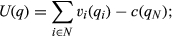
If the buyers and the GPO were all parts of the same system, one could focus on the aggregate profit function. Consider the situation (N, Q, v, c) and let




Decentralized System
In decentralized systems, decisions are usually not made centrally by a single party, and information about the situation can only be partially available to the participants. When the opportunity arises, each player acts in his own best interest, making decisions that improve his individual objective function. A buyer’s individual profit (utility) in a decentralized system is his valuation for the units he purchases, minus his monetary payment. For buyer i ∈ N, purchasing



Hereafter, we will use the following notation. We use u to denote the vector of buyers’ utilities,





Cost‐Sharing Rules
A cost‐sharing rule,


A cost‐sharing rule φ is budget‐balanced if

Without budget‐balancedness, a cooperative GPO faces additional problems—redistribution of excess profit, or funding of excessive purchasing costs.
A cost‐sharing rule φ is voluntary if


With a voluntary cost‐sharing rule, buyers are assigned positive cost‐shares only when they actually purchase positive quantities.
Cost‐sharing rule φ is monotone if, for every



With a monotonic cost‐sharing rule, the reduction in the cost‐share that any buyer observes as the result of choosing a smaller quantity never increases when the quantities of all other buyers (weakly) increase. As a special case, for

The Shapley cost‐sharing rule (adapted from Shapley 1953 for cost allocation situations) is a well‐known rule. Given q ∈ Q, the Shapley cost‐sharing rule assigns to every buyer i ∈ N the amount

The Shapley cost‐sharing rule is budget‐balanced, voluntary, and monotone.
Another practically appealing cost‐sharing rule is the proportional rule. Given a set of buyers N, a vector of their order quantities q, and a cost function c, the proportional cost‐sharing rule assigns to buyer i ∈ N the payment

With the proportional cost‐sharing rule, each buyer pays the same unit price, and cost‐shares are proportional to individual purchase quantities. However, it does not necessarily satisfy the monotone condition. For example, let n = 2, c(1) = 3, c(2) = 5, and c(3) = 7, and consider q = (2, 1) and

Proportional cost‐sharing rule is budget‐balanced and voluntary. Suppose c is such that


The special condition on cost function c introduced in Proposition 2 can be interpreted in the following way. The term


Purchasing Mechanisms
As the GPO carries out the actual purchasing for the buyers, she pays the purchasing cost to the suppliers and receives payments from the buyers. Thus, the purchasing cost is recovered from the buyers’ payments. We assume that the GPO is non‐for‐profit and that its operational costs are normalized to zero (covered, for example, through fees). As we explain in section 5, in particular Proposition 5, the system‐optimal quantities may not always be attainable in decentralized group purchasing systems. This means that the GPO cannot rely on buyers to choose the system‐optimal quantities themselves, or to announce their valuations truthfully and allow the GPO to select system‐optimal quantities. Thus, we need to look at specific decentralized group purchasing systems which may differ depending on the type of information exchanged among the buyers and the GPO, the decision rights of the parties, and the sequence of events. We discuss them in more detail in the next two sections—Section 4 considers ordering mechanisms for models with symmetric information, while section 5 considers ordering mechanisms for models with asymmetric information and proposes a bidding mechanism aimed to improve group purchasing results.
Ordering Mechanisms under Symmetric Information
Ordering mechanisms let the buyers choose their own order quantities. This is done subject to a rule for calculating the payments of each buyer. In this section, we consider two types of ordering mechanisms: (i) joint ordering with cost‐sharing, and (ii) fixed price ordering. While in fixed price ordering systems each buyer’s payment is determined solely by his order quantity at a known fixed rate, in joint ordering systems each buyer’s payment depends on the quantities ordered by all buyers and is determined only after all orders are placed. Throughout this section, we assume that all information is commonly known by all parties. The results in this section serve as the benchmark for our subsequent analysis in the asymmetric information case.
Joint Ordering with Cost‐Sharing
In a joint ordering mechanism, each buyer places his individual order, having been given a cost‐sharing rule that determines the amount that each buyer must pay to the system.
As each buyer’s individual utility in joint ordering systems depends on the orders placed by other buyers, a game arises. A joint ordering game under symmetric information is defined by a group purchasing situation under symmetric information, (N, Q, v, c), and a cost‐sharing rule, φ, and is denoted by (N, Q, v, c; φ). Utility of buyer i ∈ N in game (N, Q, v, c; φ) with order quantity q ∈ Q is

A Nash equilibrium for order quantities in this game is the vector of quantities such that no buyer can benefit from a unilateral deviation.
Let (N, Q, v, c; φ) be a joint ordering game. q ∈ Q is a Nash equilibrium (NE) vector of order quantities if for every i ∈ N we have


We use


Let (N, Q, v, c) be a joint ordering situation and φ a cost‐sharing rule that satisfies budget‐balanced, voluntary, and monotone properties. The following statements hold with regard to a joint ordering game (N, Q, v, c; φ):
For any





It follows from the result above that in purchasing situations set


Example—Situation I: Consider two buyers, each wanting to buy one unit, and assume that c(1) = 10 and c(2) = 15. Let


Joint Ordering Game in Situation I (Left), and in Situation II (Right). Each Element in the Table Gives the Utilities to Buyer 1 and Buyer 2, Respectively
Example—Situation II: Consider Example—Situation I, but assume that buyers’ valuations are now 


A special case of our joint ordering game emerges when u is continuous and concave for all buyers, which can occur for different combinations of valuation and cost functions; see section 6 for one example. Let (N, Q, v, c; φ) be a joint ordering game where 
Fixed Price Ordering
Fixed price mechanisms are a common approach that GPOs use to coordinate group purchasing. With a fixed price mechanism, the GPO announces a uniform selling price for every unit of the product, 
Given the situation (N, Q, v, c) and the price p, buyer i purchasing 





As the main parameter of a fixed price mechanism, the GPO needs to announce the price. We assume that the GPO’s goal is to maximize the total surplus generated in the system. Hence, the organization needs to find the price that maximizes the aggregate profit generated in the system, while ensuring that the total payments received cover the purchase cost. We call p a feasible price if for every vector of individually optimal quantities 

Let (N, Q, v, c) be a group purchasing situation. The price 

The feasibility condition in Definition 5 ensures that the total payments received by the GPO can cover the purchasing cost owed to the suppliers. Our next result gives the expression for 
Let (N, Q, v, c) be a group purchasing situation. Then, a first‐best price always exists. When 
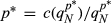
With the first‐best price given in Lemma 2 the GPO breaks even, as total buyers’ payments equal the purchase price paid by the GPO. Note that, in general, there may exist other first‐best prices which could generate GPO revenue that exceeds total purchase cost.
Similar to the joint ordering mechanisms, fixed price ordering can also lead to system inefficiencies. While the above Example—Situation I yields optimal price 


Performance Benchmarking
Next, we draw a comparison among the performance of the system under ordering mechanisms and the centralized system. The key for this comparison is the relationship between the buyers’ purchase quantities in different settings.
Let (N, Q, v, c) be a joint ordering situation and Let φ be a cost‐sharing rule that satisfies budget‐balanced, voluntary, and monotone properties. Then, Let φ be the proportional rule that satisfies monotone property. Then, 



As shown above, even under the symmetric information assumption, buyers in ordering systems under‐purchase and the system under‐performs compared to the system‐optimal quantities. This holds for any cost‐sharing rule that satisfies the three corresponding desirable properties. Furthermore, in situations where the choice of proportional rule makes the joint ordering mechanisms well‐behaved, individually optimal order quantities under the first‐best fixed price mechanism never exceed the largest NE in the associated joint ordering game, hence joint ordering systems outperform fixed price systems. Therefore, if the GPO uses the unit‐price‐equivalent from a joint ordering mechanism in a fixed price mechanism, a buyer may respond by choosing a smaller quantity and benefit from such a move, while in a joint ordering mechanism, a lower quantity could increase the buyer’s unit price, which would make it unprofitable.
Asymmetric Information
So far, we have assumed that the valuations of all buyers are common knowledge. In practice, the valuation function of each buyer is most likely known only to him. If this is the case, how could group purchasing be organized effectively? In this section, we investigate group purchasing systems under asymmetric information.
In a group purchasing situation with asymmetric information, only the values (N, Q, c) are commonly known by all parties. In this case, the individual valuation of a buyer i, 
Before we do that, it is worth mentioning that in the asymmetric information version of fixed price mechanisms, the GPO determines the price based on its incomplete information on buyers’ valuations. Since finding the system‐optimal solution requires complete knowledge of buyers’ valuations, the GPO may not be able to find the true first‐best price, as stated below.
The performance of fixed price mechanisms under asymmetric information is always bounded by that of first‐best price mechanisms under symmetric information.
Sequential Joint Ordering Mechanism
In this section, we introduce a sequential joint ordering mechanism. Under this mechanism, buyers are not required to communicate their valuations. The purchase cost function, c, and the cost‐sharing rule, φ, are known in advance. Buyers can place orders in any open round, and subsequently increase their orders in later rounds. We describe in more detail this mechanism in Appendix B (Algorithm 2).
The sequential joint ordering mechanism works through a number of rounds, t = 0, 1, 2, …. We start by initializing order quantities for all buyers: 



Consider an arbitrary round, t. The order quantities 





In order to find a lower bound on the performance of the sequential joint ordering mechanism, we introduce the Max–min strategy as a base strategy for the buyers.
Max–min strategy: Let (N, Q, v, c) and φ be given. Given 



In each round, a buyer who chooses this strategy ignores how other buyers may increase their orders in that round. In other words, the buyer considers the worst case scenario in which everyone but him kept their current order quantities (hence, the “min” part of the name, which refers to others’ quantities), and chooses the strategy that maximizes his utility. The sequence of Max–min strategy profiles of all buyers is 
In a sequential ordering mechanism under Max–min strategies all buyers play their Max–min strategies in every round. As we show in our next result, buyers who play Max–min strategies in the sequential joint ordering mechanism never order quantities below the smallest NE in the associated joint ordering game with symmetric information.
Let (N, Q, v, c) be a joint ordering situation and φ a cost‐sharing rule that satisfies budget‐balanced, voluntary, and monotone properties. In the sequential ordering mechanism under φ, we have 
Consequently, we get 


Some rational buyers may decide not to follow their Max–min strategies, especially if they have additional information about the valuations of other buyers.
Let (N, Q, v, c) be a joint ordering situation and φ a cost‐sharing rule that satisfies budget‐balanced, voluntary, and monotone properties. Let 


The above theorem shows that in the sequential joint ordering mechanism with a monotonic cost‐sharing rule, if a buyer is strategic (that is, if he deviates from his Max–min strategy in a way that eventually improves his terminal utility compared to the case in which he plays his Max‐min strategies), then the terminal utilities of all other buyers are at least as high as those under the Max–min strategies. A similar argument can be made for deviations by more than one buyer. Therefore, since playing the Max–min strategies may result in utilities of the smallest NE, one can consider U(
Consider Example—Situation I. In round t = 1, buyer i who plays Max–min strategy chooses his quantities by comparing 


Bidding Mechanisms
As seen in the last subsection, our sequential joint ordering mechanisms may under some instances only attain the aggregate profit of the smallest NE of the decentralized system. Although ordering mechanisms are practical and straightforward, especially if the buyers communicate through the GPO, they could perform poorly and fail to achieve the full potential for group purchasing. In this section, we look at bidding mechanisms and show how they might improve group purchasing results. In a bidding mechanism, buyers announce their bids, which are then used by the GPO to determine buyers’ purchase quantities and their corresponding cost‐shares.
Let 


A bid‐purchase rule α: V → Q determines the quantities to be purchased for every buyer under every given bid schedule.
Given mechanism (α, φ), bid schedule b would result in purchase quantity α(b) and cost‐share φ(α(b)). The bid‐purchase and cost‐share corresponding to buyer i are denoted by 

Similar to our earlier discussion, we expect bidding mechanisms to be budget‐balanced and match total purchasing costs with aggregate buyers’ cost‐shares. This is important, because recovering less than the total cost makes the entire transaction infeasible, while gathering more than the total cost creates an additional problem—redistribution of the leftover amount.
The mechanism (α, φ) is budget‐balanced if 
Our next desirable property ensures utility non‐negativity for every bid by every buyer.
The mechanism (α, φ) is individually rational if for every b ∈ V and every i ∈ N we have 
The value 

We next investigate buyers’ bidding strategies. In our analysis, we will use the concept of a NE bid schedule as a reflection of stability in buyers’ behavior. We say that a bid schedule is a NE if no buyer can benefit by unilaterally changing his bid. The formal definition is given below.
Let (N, Q, v, c) and (α, φ) be given. 


Truthful Implementation
A mechanism achieves truthful implementation if it ensures that bidding the true valuation is a NE.
Let (N, Q, v, c) be a group purchasing situation. A bidding mechanism (α, φ) achieves truthful implementation if there exists a NE bid schedule 

The main strength of truthful implementation lies in removing buyers’ incentives for strategic behavior—a buyer can announce his true valuation without the fear of being exploited by other buyers. As we show below, truthful implementation is not always achievable, and even when it is, it may not lead to desirable outcomes.
When implementing bid‐purchase rules, the ideal choice is the function that chooses system‐optimal quantities—which maximizes buyers’ aggregate profits—under every bid schedule. However, this can be impossible. It is well‐known that there exists no individually rational and budget‐balanced bidding mechanism that can truthfully implement the system‐optimal decisions in all situations (Groves 1985). We show that this statement holds in simple group purchasing situations as well. We say that a buyer i is single‐minded if 



There exists no individually rational and budget‐balanced bidding mechanism that can truthfully implement the system‐optimal quantities in group purchasing situations.
As the result of Proposition 5, group purchasing cooperatives that choose system‐optimal quantities for their members can only do so by assuming common knowledge of the buyers’ valuations. This immediately reveals a challenge with cooperative game approach to group purchasing; that is, these games, in general, cannot be truthfully implemented. Hence, before concerning ourselves with cost‐sharing in cooperative group purchasing games, which puts the emphasis on fairness and stability, we acknowledge that the assumption of truthful information sharing among the buyers does not hold realistically. Although stable sharing of gains/costs can be attainable in a group purchasing cooperative game, truthfulness cannot be implemented. 6
If system‐optimal purchase quantities cannot be implemented truthfully in group purchasing situations under asymmetric information, are there any purchasing rules that can be implemented truthfully? Consider the mechanism that purchases zero quantities for all buyers under any bid schedule, and as a result any bid schedule yields zero utility for every buyer. This trivial mechanism is truthful: a buyer’s truthful valuation announcement does not make any difference. Therefore, truthfulness does not resolve the inefficiency problem. The challenge with designing truthful, budget‐balanced, and individually rational mechanisms in group purchasing situations is thus their performance—not their existence. In what follows, we introduce two bidding mechanisms with some desirable properties.
Largest Nash equilibrium (LNE) mechanism: The LNE mechanism is the pair 

The LNE mechanism chooses the largest NE in the joint ordering game associated with any given bid. An interesting class of mechanisms are those for which there are no instances in which a strategic behavior by i ∈ N, wherein his utility increases after making an untruthful bid, leads to a reduction in utility by one or more of the other buyers (compared to the setting in which i makes truthful announcements). We formalize this by introducing the strategic synergy condition below.
Let (N, Q, v, c) be a situation and (α, φ) be a bidding mechanism. We say that (α, φ) satisfies the strategic synergy condition if for all i ∈ N and b ∈ V such that 

Thus, under strategic synergy, a profitable yet untruthful bid of a buyer never decreases utilities of other individuals. The LNE mechanism introduced above satisfies this condition.
The LNE mechanism satisfies the strategic synergy condition.
Drawing upon the strategic synergy of the LNE mechanism, we show that mechanism achieves truthful implementation when joint ordering under symmetric information yields system‐optimal decisions.
Let (N, Q, v, c) be a situation in which 
If the condition in Theorem 2 is met, then the LNE mechanism is truthful and achieves centralized efficiency. An illustration of this is given in Example—Situation I. However, Example—Situation II shows that this is not the case in general. We now focus on situations wherein the condition above is violated (that is, 
In situations where all buyers are single‐minded, the LNE mechanism is individually rational, budget‐balanced, and truthful.
As a result of Lemma 4, the largest NE can be implemented truthfully when the buyers are single‐minded (not cost‐sensitive), so that announcing true valuation is a NE. With general buyers, however, the LNE mechanism is not necessarily truthful. We provide examples in section 6 to show how buyers can bid strategically and increase their utility under the LNE mechanism. We next introduce a randomized version of the LNE mechanism, which can overcome this obstacle. 8
Randomized LNE mechanism: The Randomized LNE mechanism (RLNE) is the pair 


As its starting point, the RLNE mechanism reduces the situation into one with only single‐minded buyers. This reduction is done randomly, but allows any distribution of probabilities over Q. The mechanism then yields the largest NE in the corresponding single‐minded situation. Below, we establish the truthfulness of the randomized LNE mechanism in all group purchasing situations.
The RLNE mechanism is individually rational, budget‐balanced, and truthful in all group purchasing situations.
Although it is truthful, the performance of the RLNE mechanism can be arbitrarily bad. That is, 
Lower‐Bound Implementation: Beyond Truthfulness
In this study, as an alternative to truthful implementation, we introduce a weaker notion—the lower‐bound implementation (as defined below in Definition 12)—that guarantees the existence of a NE bid schedule such that none of the buyers receives utility below what he would receive under a truthful announcement.
Let (N, Q, v, c) be a situation and (α, φ) be a bidding mechanism. The mechanism achieves lower‐bound implementation if there exists 

The above definition implies that there exists a NE bid schedule wherein all buyers’ utilities are at least as good as those under truthful announcements of valuations. 9 The lower‐bound implementation is weaker than truthful implementation. First, it does not immediately obtain the buyers’ best course of action (in terms of submitted bids); second, it does not eliminate buyers’ inclination to be strategic with their bids. However, the lower‐bound implementation does assure the existence of a bid schedule that is stable and attains individual utilities not dominated by those generated under truthful announcements. As we show below, strategic synergy is a sufficient condition for a mechanism to achieve lower‐bound implementation.
A mechanism (α, φ) that satisfies the strategic synergy condition achieves lower‐bound implementation.
A mechanism that satisfies the strategic synergy condition has a nice property—when buyers act strategically, nobody suffers. In other words, when buyers act in their own best interest, their actions do not just help themselves, but may also improve profitability of their GPO partners. Our main result for this section, Theorem 4, follows directly from Lemmas 3 and 5.
The LNE mechanism is individually rational, budget‐balanced, and achieves lower‐bound implementation.
We have established in Lemma 5 that strategic synergy is a sufficient condition for lower‐bound implementation. The individual rationality is enforced by our choice of bid‐purchase rule; that is, if the utility generated by a buyer’s bid is negative, then the allocation of zero units is a preferred option and thus granted by a NE. Finally, the budget‐balancedness condition is immediately satisfied by our choice of cost‐sharing rules.
Performance Benchmarking
We again compare the performance of different mechanisms; we consider models with symmetric and asymmetric information. The results in this subsection follow from the above analysis.
Let (N, Q, v, c) be given. With the LNE mechanism, truthful valuations’ announcement by all buyers results in the utilities under largest NE; that is, 
Our result indicates that the buyers’ surplus generated by the GPO under mechanism 
Finally, the next result compares our bidding mechanism for the asymmetric information case with results obtained in the symmetric information model.
Let (N, Q, v, c) be a group purchasing situation and consider a cost‐sharing rule that satisfies budget‐balanced, voluntary, and monotone properties. We have 
The performance of the LNE mechanism is within the range bounded by the LNE of the joint ordering game with symmetric information and the system‐optimal performance. Simple examples show that the LNE mechanism can attain both extremes. Observe that, in conjunction with Proposition 3(ii), when the proportional rule is monotone, the LNE mechanism also outperforms the first‐best prices fixed price mechanism under the symmetric information (which, by Corollary 1, serves as the upper bound for performance of fixed price mechanisms under asymmetric information).
Numerical Examples
In this section, we illustrate our results from previous sections with some numerical examples. The first example uses discrete valuation functions, while in the second example, we consider continuous valuations.
Discrete Valuations
Consider a case with two buyers. Each buyer can purchase any quantity from sets
No cooperation: As a benchmark, consider the case where buyers do not cooperate and buy directly from the supplier given the cost function above. For buyer 1, comparing utilities under different choices of quantities reveals the best choice of
Optimal quantities: Table 2 summarizes the aggregate profits for different purchase quantities. The system‐optimal purchase quantities (3, 3) yield system profit of 25.
Joint ordering game: In the case of joint ordering, Table 3 provides individual utilities. In this case, we have q = (2, 2),
Fixed price ordering: Although q = (2, 2) implies that under joint ordering mechanism both buyers pay the unit price of 12, the same unit price used in a fixed price mechanism induces different individually‐optimal purchase quantities. To verify this, note that given the price p = 12, both buyers 1 and 2 prefer to purchase 1 unit instead of 2. However, in this case, the total payment of buyers is less than the purchasing cost; that is, 1 × 12 + 1 × 12 = 24 < c(2) = 28. The first‐best price in this case is, in fact,
Sequential ordering (asymmetric information): Let t = 1. For buyer 1, the choice of different order quantities (assuming that buyer 2 is ordering nothing, which was his “choice” in round 0) would result in the following:
LNE bidding mechanism (asymmetric information): Clearly, truthful bidding in this case yields 


























Total Profit U(q) in Example—Discrete Valuations: 
Left: Individual utilities in Example—Discrete Valuations: q=(2,2), 
Continuous Valuations
Suppose that N = {1, 2},
No cooperation: In a completely decentralized system in which buyers do not use a GPO, each buyer i ∈ {1, 2} is solving
Optimal quantities: In the centralized model we solve
Joint ordering game: In this case, the utility functions of both buyers are concave, thus the NE is unique. To find the NE under the proportional rule, each buyer i maximizes his utility,
Fixed price ordering: In the fixed price first‐best model, each buyer i ∈ {1, 2} is selecting
Sequential ordering (asymmetric information): As shown in the theoretical results above, in this case the Max–min strategy of each buyer in every round is not degenerated so the performance of the system converges to that under the smallest NE, which in this case coincides with the largest NE.
LNE bidding mechanism (asymmetric information): Suppose now that buyer 2 misrepresents his valuation and bids 


























Final Remarks
While group purchasing continues to generate more interest in both theory and practice, several obstacles exist for its successful implementation. Extant literature recognizes fixed price mechanisms as dominant mechanisms for group purchasing. Under such mechanisms, GPOs require a significant amount of information to find the optimal selling price for its members. Even in the presence of complete information, there is a chance of leaving a potential surplus on the table, as a single selling price might not be feasible for all potential buyers. At the same time, buyers are reluctant to share information, fearing exploitation by other buyers within their purchasing group. This often leads to the GPO operating with incomplete information and generating suboptimal results. Moreover, most theoretical analyses thus far have focused on buyers whose purchase quantities do not depend on the prices paid. This may be a reasonable assumption for commodity products, but it might not be appropriate for settings in which a lower price might increase demand for products, or it might reduce a buyer’s overage cost.
In this study, we attempt to address the abovementioned obstacles by adopting a different setting—namely, cost‐sensitive buyers who participate in a GPO. The mechanism design problem addresses the inherent dilemma of information asymmetry in purchasing groups and buyers’ reservations of exploitation by their rivals. We investigate two types of mechanisms for group purchasing: (a) ordering mechanisms, and (b) bidding mechanisms. In joint ordering mechanisms, the buyers announce directly their order quantities to the GPO and pay for their orders. In our analysis, we assume that the GPO purchases the exact amount that the buyers order; that is, the quantity purchased for a buyer corresponds to his order quantity. This is a natural assumption if suppliers’ capacities are not imposing any restriction so that as long as the buyers can afford their payments, any order quantity can be procured. This assumption is sometimes referred to as customer sovereignty (Moulin and Shenker 2001). When the GPO has to ration limited supply among the buyers, purchase quantities can be different than order quantities. Our model can be extended to cover latter situations by defining an order‐purchase rule that would determine the quantities bought for the buyers in case of supply shortage. Ordering mechanisms can operate either under cost‐sharing rules or under fixed prices where the GPO announces a uniform price and buyers determine their purchase quantities individually. In bidding mechanisms, the buyers announce their valuations for different quantities, and the GPO determines the buyers’ purchase quantities and cost‐shares according to pre‐announced schemes.
We start with a benchmark case by assuming symmetric information and then move to asymmetric information models. We introduce a sequential joint ordering mechanism and a family of ordering strategies for the buyers that achieve a lower bound on the performance of the system. That is, if some buyers strategically deviate from these strategies, the remaining buyers are never worse off. However, while joint ordering mechanisms are easy to implement and understand, they can perform suboptimally and lead to underperformance of group purchasing. We propose a class of mechanisms with some desirable properties that are appealing from a practical point of view and compatible with the inner workings of some real‐life GPOs wherein buyers are required to submit their quantity‐price schedules (valuation functions). Our mechanisms employ well‐known cost‐sharing rules, such as the Shapley and the proportional rules, with properties that are appealing from the point of view of fairness and/or intuitiveness, and choose allocations that are the largest Nash equilibria (and also payoff dominant) in the corresponding joint ordering games. We provide an algorithm that obtains such allocations. As an alternative to truthful mechanisms that might not be successfully implementable under some scenarios, we offer an alternative notion of implementation that is suitable for cases with strategic complementarities among players. By ensuring strategic synergies among the buyers—that is, preventing buyers to exploit other buyers via strategic behavior—our mechanisms are able to guarantee a lower bound on the individual utilities, as well as on total surplus. From an information point of view, rational buyers should be willing to participate in our bidding mechanisms as long as it is commonly known that the GPO’s purchasing cost function satisfies some reasonable basic properties.
We confirm some desirable features of our bidding mechanisms by comparing them with the fixed price approach. We show that bidding mechanisms can increase the purchasing volume and corresponding utilities for the participating buyers. This result is in line with some previous observations in the literature regarding the inefficiency of fixed price mechanisms when buyers’ demands are unknown (Dana 2001). Our comparison with fixed price mechanisms considers the upper bound of their performance by assuming that the GPO has complete information regarding buyers’ valuation functions. In reality, the lack of information on a GPO’s side can significantly reduce the performance of fixed price mechanisms, thus our bidding mechanisms can easily outperform them.
In practice, fixed price mechanisms are the easiest to implement and understand, and they are appropriate in settings with frequent purchases of larger variety of commodity‐type products (for instance, purchase of office supply). In environments of this type, transaction volume might make it logistically difficult and expensive to implement sequential join ordering or to submit quantity‐price schedules for all items. However, for more expensive items that are purchased less frequently (say, computers, furniture, vehicles, and so forth), sequential joint ordering and bidding both seem like reasonable alternatives that might increase buyers’ benefits. The choice between the two might depend on the features of GPO members: while bidding mechanism in general outperforms joint ordering, determining quantity‐price schedules ahead of time might be a challenge for less sophisticated buyers.
Lastly, we want to mention that our analysis focuses on a single‐period model. In an auction context, this corresponds to one bidding round. When no inventory is kept, this model extends naturally to a multi‐period case. Inclusion of inventory and buyers’ considerations for future periods make the problem more difficult. In such a case, buyers’ valuations for purchases in one period are affected by the possible demands of all other buyers in upcoming periods; thus the GPO might need to develop a measure that smooths the quantities purchased across different periods. Moreover, although our assumptions on GPO purchasing costs capture well‐behaved discount schedules (e.g., all‐unit discounts), they do not address more complex discount schedules. We plan to address these issues in follow‐up work.
Footnotes
Acknowledgments
The authors acknowledge helpful comments by Hervé Moulin, and are grateful to the associate editor and two anonymous referees for suggestions that substantially improved the paper.
A. Proofs
B. Algorithms
Some GPOs provide additional value‐added service. For example, healthcare GPOs offer benchmarking data, clinical support, and so forth. The focus of our study is on organizations that provide access to discounts of products and services.
Topkis (1979) and Milgrom and Roberts ( ) characterize the structure of
Any price p > 9 in this situation is a first‐best price.
The equal sharing of aggregate profit in the two‐buyer situation used in the proof of Proposition obtains an allocation in the core of the corresponding cooperative game, but one cannot make an assumption on information symmetry, and as the proof shows, buyers in this example would always be better off by not telling the truth.
We assume the buyers are risk‐neutral, thus if a buyer is confronted with an uncertain outcome, the expected utility over all possible outcomes is the basis for his decision.
The Shapley and proportional cost‐sharing rules generate the same results in this situation.
Note that in this situation the proportional rule satisfies the monotonicity condition.