






Abstract
This paper seeks to return scholarly attention to a core intellectual divide between segmented and conventional (or neo‐)assimilation approaches, doing so through a theoretical and empirical reconsideration of contextual effects on second‐generation outcomes. We evaluate multiple approaches to measuring receiving country contextual effects and measuring their impact on the educational attainment of the children of immigrants. We demonstrate that our proposed measures better predict second‐generation educational attainment than prevailing approaches, enabling a multilevel modeling strategy that accounts for the structure of immigrant families nested within different receiving contexts.
Introduction
Introduced in the early 1990s by Portes and Zhou, the hypothesis of segmented assimilation galvanized research on the “new” second generation. The ensuing outpouring of scholarship, both supportive and critical, has largely focused on its most controversial claims: that assimilation could have both negative and positive consequences; that the negative consequences would entail downward assimilation into an underclass; and that groups at risk of downward assimilation would do better if full acculturation were slowed down by at least one generation (Portes and Rumbaut 2001, 54).
While stimulating both thought and research, that debate has somehow elided the fundamental theoretical challenge posed by this alternative to prevailing sociological understandings of assimilation. As framed by Alba and Nee (2003), in a formulation no less influential than that of Portes and Zhou, assimilation is understood as resulting from the individual pursuit of rational action. In this view, the immigrants' need to pursue a better life in a strange, foreign environment produces small, virtually costless, cumulative changes, each one of which makes the next advance a bit easier. With time, immigrants acquire skills and the capacity to demonstrate competence, gaining recognition, reward, and exposure to an increasingly diverse mix of people.
Yet it is precisely this approach — “research … dominated by a strong individualistic bent where the social context in which economic success or failure takes place is either absent or is introduced in ad hoc fashion” (Portes 1995, 274)” — that the hypothesis of segmented assimilation rejects. By contrast, segmented assimilation theory emphasizes the importance of the context of reception, a feature of the society of immigration and one shared by all members of the group and which in turn overrides or amplifies the effect of individual characteristics. For Portes, Rumbaut, Zhou, and other proponents of this theoretical perspective, the crucial contextual influences derive from the ways in which migration policy, reception by the native population, and characteristics of the co‐ethnic community combine to create a distinct mode of incorporation. Varying across groups and conditioning the emergence of strong and solidary or weak and fragmented communities, modes of incorporation can both directly produce positive, negative, or even neutral effects, and can also indirectly alter the impacts of such individual attributes as skills or experience. If the mode of incorporation proves positive, the social environment can either enhance the benefits of individual‐level resources or compensate for their absence. By contrast, the opposite occurs when incorporation takes place via a negative mode: The benefits of individual‐level resources are overridden and the fallout from any deficit is enlarged.
This paper seeks to return scholarly attention to this core intellectual divide between segmented and conventional (or neo‐)assimilation approaches, doing so through a theoretical and empirical reconsideration of contextual effects on second‐generation outcomes. As we will show, the empirical approach followed by Portes and his collaborators is deficient: their criteria for defining context of reception are neither clear nor stable; context of reception is never directly measured, but instead proxied by nationality; and reliance on country of origin proxies precludes the multilevel modeling necessary to directly test for the impact of specific contextual effects. Furthermore, although they propose a two‐level model, entailing direct (main) and indirect (interactive) effects, their analysis of second‐generation outcomes only examines direct effects.
In the pages below, we rectify these shortcomings. First, we introduce the idea of a multilevel model of contextual effects, using three objective measures to create a one‐dimensional scale that ranks national‐origin groups according to the favorability of the receiving context. Second, to conceptualize the receiving context in a multidimensional way, we enter our three objective measures of reception context as group‐level variables in a multilevel regression model. Third, we enter interaction terms between our group‐level variables and family‐level human capital. We apply this new approach to the analysis of educational attainment among second‐generation young adults in the United States.
For this analysis, we draw on two large‐scale surveys: Immigrant Second Generation in Metropolitan New York (ISGMNY) conducted in 1998/1999 and Immigration and Intergenerational Mobility in Metropolitan Los Angeles (IIMMLA), undertaken in 2004. Both engage with the same issue motivating this paper and hence contain the relevant, migration‐related information; both entailed quota sampling of specific second‐generation populations. We pooled the two surveys generating a dataset with extensive origin‐level variation (we have at least one representative from 67 national‐origin groups), thereby gaining the capacity to systematically analyze the net impact of variation of each context dimension on the variation in the outcome variable, in this case, years of education.
Taking the three contextual factors identified by the segmented assimilation perspective as our point of departure, our analysis provides support for the importance of societal reception and group‐level resources when predicting educational attainment. In contrast, we do not find any evidence that governmental reception matters for educational attainment. In addition to these main effects, we use cross‐level interactions to examine how the context of reception alters the educational transmission process within immigrant families. Our results suggest that among families facing a favorable societal context of reception and enjoying the capacity to draw on significant group‐level resources, parental human capital has a bigger effect on second‐generation educational attainment. Or viewed the other way around, the friendliness of the context of reception makes the greatest difference for families with high human capital. While clearly highlighting the relevance of some aspects of the reception context, the analysis reveals significant complexities that existing approaches, based on more or less ad hoc comparisons of national‐origin groups, did not detect.
Previous Formulations of the Concept
Initially introduced by Portes and Bach in their 1985 study of Mexican and Cuban immigrants, the idea of “modes of incorporation” received its full exposition in Portes and Rumbaut's 1990 Immigrant America, later to be expounded in identical terms in the second, third, and fourth editions of Immigrant America as well as in Legacies. The authors put forward the concept of “context of reception,” identifying receiving government policies, labor market conditions, and the characteristics of groups' own ethnic communities as the salient components. Disaggregating government policies, the authors identified exclusion, passive acceptance, or active encouragement as the three relevant types. Labor market conditions also included several features, of which the most important was “the manner in which particular immigrant groups are typified” (1990, 86), whether positively or negatively, thus underlying the centrality of a preference for or prejudice against certain ethnicities. The ethnic community is classified by class composition. If it includes primarily manual workers, community‐level networks can facilitate access only to entry‐level jobs. In contrast, if the community includes a significant business or professional element, “support of ethnic networks is not contingent on acceptance of a working‐class lifestyle” and newcomers may be introduced “from the start to the whole range of opportunities…” (1990, 89; italics added). Modes of incorporation figured prominently in Portes and Zhou's seminal 1993 article on the second generation, as they contended that “the context that immigrants find upon arrival…plays a decisive role in the course that their offspring's lives will follow” (82); likewise, modes of incorporation was a cornerstone concept in Legacies.
Although the context of reception is positioned at the very core of segmented assimilation theory, the concept has never been operationalized; rather than measure mode of incorporation, Portes and his collaborators consistently proxied it by using nationality. Thus, when Portes and Rumbaut find that between‐group differences persist after the application of various controls, they conclude that “the direction of these effects fits closely with our knowledge of the modes of incorporation for each of these immigrant groups” (Portes and Rumbaut 2006, 271; emphasis added). However, the source of that knowledge is never identified; moreover, the judgments entailed in placing groups in the typology are often ad hoc. For example, it may well be the case that “neutral” appropriately describes the governmental policy response to the migration of both Jamaicans and Chinese, as asserted in Legacies. And yet, as for decades, substantial numbers of Chinese have entered as foreign students, and more recently as temporary high‐skilled workers, and permanent residence was granted to Chinese students living in the United States as of the Tiananmen Square massacre, one wonders whether it might not be better to describe this migration as one in which “authorities take active steps to encourage a particular inflow” (2001, 47).”
Second, despite emphasizing the importance of group‐level characteristics on individual‐level outcomes, most empirical treatments of segmented assimilation theory ignore the nested, hierarchical structure required for models which include contextual variables. Segmented assimilation theory includes a lower level of individual and family‐level processes, nested within or clustered by a higher level of national origins. Group‐level characteristics at the higher level exert an independent effect on second‐generation outcomes while also altering the family‐ and individual‐level processes at the lower level. Consequently, we need sufficient cases — here, national origins — at the higher level to systematically assess the importance of contextual variables while accounting for compositional differences within groups. This affords a multilevel modeling structure which can separately evaluate the impact of a group‐level trait — in this case, the mean level of education — from the effect of the corresponding characteristic working at the individual level — in this case, parental education.
Third, while the works reviewed above contend that modes of incorporation result from the combination of types of each different feature, nowhere can one find a hypothesis specifying the effects likely to be produced by different combinations, a significant deficiency as the typology developed in Legacies involved three different features, prejudiced/neutral societal reception, hostile/neutral/favorable government reception, and poor/working class/professional co‐ethnic community (2 × 3 × 3), leading to 18 different combinations. At the extremes, the possibility that different combinations of features could yield significant differences certainly seems reasonable: A context entailing favorable governmental reception and neutral societal reception and a professional co‐ethnic community could well yield advantages in contrast to the diametrically opposite context involving hostile government policy and prejudiced societal reception and poor co‐ethnic community. The appropriate test, however, would involve changing only one of the three determining variables (policy, societal reception, and co‐ethnic community) at a time, leaving the other two constant. Indeed, a recent appraisal using this method finds little empirical support for such smaller combinatorial differences (Waldinger and Catron 2016). Moreover, even when implementing this method, it proves impossible to assess the effects of each dimension individually: Does government reception matter more or less than societal reception in influencing educational outcomes for the children of immigrants?
Last, as noted above, Portes, Rumbaut, Zhou, and collaborators propose the existence of cross‐level interactions. These authors first emphasize the main effect associated with mode of incorporation and socioeconomic success: At the group level, more positive modes of incorporation yield better net outcomes than negative modes of incorporation. But they also anticipate that mode of incorporation will influence relationships at the individual level, altering the relationship between skills or experience and individual‐level outcomes. Thus, in chapter 4 of Legacies, Portes and Rumbaut “consider two alternative effects of group differences in contexts of reception: their direct causal impact on socioeconomic achievement and the extent to which they modify the influence of individual human capital and other variables. In statistical parlance, the first are additive effects and the second are interactive effects. In that chapter, Portes and Rumbaut examine main (or additive) and interactive impacts as they affect the earnings of the parents of the immigrant children studied in Legacies, finding, for example, that years of US residence have no effect on the earnings of Mexican and Nicaraguan parents, while increasing earnings among Cuban and Vietnamese parents. Yet while they also contend that first‐generation trajectories mold second‐generation experiences, empirically they never take up the question of how modes of incorporation interact with parents’ characteristics to affect outcomes among the children themselves. As the argument that “social context … can alter, in decisive ways, the link between individual skills and motivations and their expected rewards” (Portes and Rumbaut 2006, 102)” is a cornerstone proposition, we fill in this gap.
Re‐Conceptualizing Context of Reception
In a later section of this paper, we address these lacunae, evaluating the main and interactive effects of each dimension of the mode of incorporation with objective measures. First, however, we identify those contextual features of the reception society likely to influence second‐generation outcomes. Those features correspond to the three components comprising “modes of incorporation,” but are specified in ways that more clearly identify the mechanism linking each context to outcome and also allow for more precise measurement.
Governmental Reception: Policy and Status Prevalence
As noted in a recent National Academy report, US immigration policy has seen “the proliferation of immigration statuses that provide different degrees of permanence and security,” (NASEM 2015, 2‐2) with the result that legal status has become “a new axis of social stratification, similar to other social markers such as social class, gender, and race” (NASEM 2015, 3–22). For our purposes, the crucial immigration statuses fall into three broad categories: undocumented status, which can be characterized as hostile; refugee status, which is favorable, encouraging migration and affording rights and assistance for permanent residence, including reunification with family members; and a residual “neutral” category of those who enter as immigrants, namely green card holders and those with fixed term visas, for whom immigration is not actively encouraged but who with documented status enjoy greater rights than legally present “nonimmigrant” visitors. By exploiting the within‐group prevalence of undocumented and refugee members, we can characterize immigrants as positively, negatively, or neutrally received by the US government. We expect this group characterization to influence second‐generation outcomes in myriad ways.
Undocumented migration is path dependent, reflecting its deeply entrenched character, its linkage to ongoing recruitment networks and informal contacts between settlers and newcomers, as well as the specific historical conditions linking sending and receiving countries (Massey, Durand, and Malone 2002). Undocumented status is therefore very unevenly distributed across immigrants of different origins, a pattern that may intensify the strength of the link between nationality, on the one hand, and civic stratification and social stigma on the other. Insofar as undocumented migration impedes individual social mobility (Bean et al. 2011; Yoshikawa 2011), it may also yield a cumulative impact, attenuating the capacity to mobilize resources through ethnic social networks, whether the resources are those relevant to the search for jobs, the sharing of business context, or participation in community institutions. Consequently, we hypothesize that negative impacts on second‐generation outcomes can be expected in populations among whom undocumented immigration is widespread.
By contrast, refugee status is valuable. Whereas standard modes of entry — whether as legal “nonimmigrant” (tourists, students, businesspersons), legal permanent resident, or unauthorized immigrant — result solely from individual‐ or household‐level decisions, in the United States refugee movements are more centrally organized, reflecting the fact that the status needs to be determined prior to migration and typically gets applied to larger subpopulations of origin countries. Refugee policy both facilitates the entry of selected groups fleeing persecution and assists their subsequent integration. Members of the initial refugee wave may be particularly vulnerable, often arriving without a base of co‐ethnics to provide help or orientation. But that situation no longer holds for the later arrivals, who benefit both from their own refugee status and from the advantages that this same status generated for the earlier group of newcomers. Thus, as compared to undocumented status, the prevalence of refugee status varies even more widely across national‐origin groups; where widespread, we hypothesize that effects will be positive.
Co‐Ethnic Community: Group‐Level Education
The distribution of legal status across national‐origin groups within any particular country largely results from government policies and decisions. Although not entirely independent of government policies, other factors lead migrations to vary greatly in selectivity, with implications for group‐level characteristics that may also affect immigrant and second‐generation outcomes. For example, Indians comprise the most positively selected of immigrants living in the United States: Schooling among the average Indian immigrant exceeds a college degree. Mexican migration is also selective: While the poorest segments of Mexico's population typically lack the resources needed to move to the United States, well‐educated Mexicans have little incentive to move to the United States, as employers tend not to adequately reward their investment in schooling. Consequently, Mexican emigration is more likely to stem from populations that are deprived relative to the United States, but better off than average in Mexico (Feliciano 2005).
As with legal status, we hypothesize that group‐level differences in educational attainment will alter the ability to capitalize on ethnic social capital, for reasons related to the resources that schooling helps individuals to access and the symbolic meaning it conveys. On average, group‐level education is correlated with other resources likely to affect immigrant and second‐generation outcomes, whether having to do with the ways in which referral networks connect to employers and jobs, the quality and diversity of information conveyed through ethnic ties, or the degree of engagement and understanding of host society institutions (Borjas 1992). To the extent that social circles tie immigrants and their offspring to other people of the same origin, the rewards of education or the penalties of lack of schooling may be widely shared. Just such an example can be found in Inheriting the City, a book based on one of the surveys used in this paper: The authors mention a barely literate Chinese mother in New York, who knew her daughter should go to an elite public high school, requiring passage of a competitive examination (Kasinitz, Mollenkopf, and Waters 2008, 352), thus highlighting how cross‐class cutting social ties and strong ethnic solidarity can promote upward mobility among disadvantaged members of a diverse group.
Moreover, education also has a reputational effect, sending a signal to outsiders, who may focus on the obvious characteristics that a person might share with others of the same or similar background, as opposed to individual traits (Lee and Fiske 2006). Indeed, these tendencies toward statistical discrimination have discouraged the migration of higher‐skilled Mexican immigrants, whom employers are apt to perceive through the prism of the average Mexican immigrant, whose schooling is relatively low (Mattoo, Neagu, and Özden 2008).
Societal Reception: Prejudice and Discrimination
While the average educational profile of an immigrant group may yield reputational effects, other characteristics are likely to influence the ways in which any foreign‐origin group is perceived. At the turn of the twentieth century, immigrants from eastern and southern Europe were seen as swarthy, but at the turn of the twenty‐first century they are perceived as white and hence indistinguishable from the dominant group (Roediger 2005). Migration streams from elsewhere in the world may not share that same acceptability. Migrants from the Caribbean and Africa are likely to suffer from long‐standing prejudices against persons of African origin. While persons of Mexican background are often seen as occupying an intermediate position in the American racial order, somewhere between blacks and whites, that characterization also implies some significant degree of rejection. The prevalence of the “model minority” image may be a source of protection for immigrants from Asia, but the view that Asians are also “forever foreigners” suggests that levels of acceptability may not reach those attained by contemporary immigrants from Europe or Canada. For instance, Hersch (2011) documents a significant wage disadvantage between immigrants of the lightest and darkest skin colors. Although there is a great deal of phenotypical diversity within origin groups, broad ethno‐racial categories of “Asian,” “Latino,” and “black” are strongly associated with region of origin and thus racial stratification can operate at the group as well as the individual level. Moreover, extensive qualitative evidence of “colorism,” or disadvantage by darkness of skin, exists even within pan‐ethnic and racial groupings (Bonilla‐Silva 2006; Hunter 2007), suggesting the importance of still finer variation in skin color at the national‐origin level within broader racial groupings.
In the remainder of this paper, we test for these contextual effects in two ways. First, we create a unidimensional scale measuring context of reception derived from the Legacies framework, testing for its impact on educational attainment in a multilevel framework. Second, we replace this unidimensional second‐level variable with a multidimensional second‐level model including objective measures corresponding to each of the context concepts outlined above: governmental reception, co‐ethnic community, and societal reception.
Model
We use a multilevel model that takes the nested structure of families within groups into account, adjusting for the correlation in individual‐level characteristics within origin groups and testing for both the direct and the contextual effect (Gelman 2012) of educational attainment among immigrants on the educational attainment of the second generation. We take the educational attainment y of respondent (i) nested in group j as a function of parental Education E and a matrix of control variables X. Each group j has a different intercept α
j
which is normally distributed and modeled as a function of the group‐level variables Z. Small greek letters indicate (vectors) of coefficients with β indicating the effect of parental education and the vector γ, the effects of the control variables. In the second line, the vector θ indicates the effects of the group‐level variables Z on the intercept α.

In a next step, we let the effect of parental education β vary across groups, which allows us to test for theoretically informed contextual characteristics that predict heterogeneity in the transmission of education across immigrant groups (Luthra and Soehl 2015). This extends the model to:

Methodologically, this follows a line of inquiry that has used multilevel models to ascertain the effects of contextual variables on educational outcomes among the children of immigrants (Levels et al. 2008) or on other socioeconomic outcomes (e.g., Kanas and Tubergen, 2009). While most of this Europe‐based research has examined variation across different receiving countries, we are necessarily limited to one receiving country. However, we exploit here, as have other scholars (Kalmijn and Van Tubergen 2010), the ample variation in receiving context by national origin that exists within the United States.
The question then is what is the proper level at which to define the “community” that faces a context of reception? Ideally one would construct reception context not simply as a function of the country of origin, but also reflecting variation by period of migration, local context of origin, and precise location of settlement. While our measure of the co‐ethnic community takes geography into account, as it is based on data from New York and Los Angeles, we cannot disaggregate our measures of the policy context or of societal reception below the national level.
Data
All individual‐level data in the study stem from a pooled sample of two large‐scale surveys of the children of immigrants: Immigrant Second Generation in Metropolitan New York (ISGMNY, Mollenkopf et al 2011), conducted in 1998–1999 and Immigration and Intergenerational Mobility in Metropolitan Los Angeles (IIMMLA, Rumbaut et al 2008), undertaken in 2004. We limit our samples to the children of at least one foreign‐born parent in all analyses, and restrict the age range to those 23 and above to reduce left censoring on our dependent variable, educational attainment.
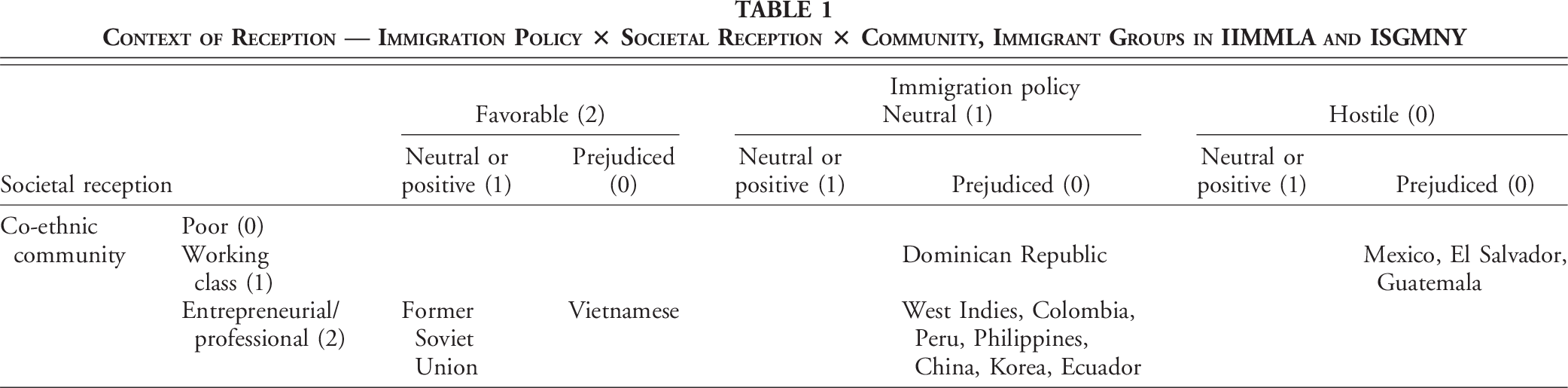
We operationalize context using a unidimensional scale drawn from the Legacies framework as well as drawing on three objective indicators of each dimension of the context of reception. Each of these methods requires somewhat different samples. When evaluating the use of mode of incorporation with the unidimensional context scale, we are necessarily limited to the national origins discussed in the existing literature, in order to have sufficient information to assign each origin a value on each of the mode of incorporation dimensions. These national origins are those quota sample groups in both the IIMMLA and the ISGMNY, outlined in Table 1 (N = 2,287; origins = 26). For the multidimensional mode of incorporation analysis, where we rely on secondary sources to assign values, rather than current judgments in the literature, we include all national‐origin groups in our sample (N = 2,955; origins = 67).
Context of Reception — Immigration Policy × Societal Reception × Community, Immigrant Groups in IIMMLA and ISGMNY
We do not have full information on some of the group‐level variables in our dataset. In particular, we are missing skin color information on 28 origin groups, or 8 percent of all individual observations. To preserve the variation in our sending countries, we multiply impute the missing skin color information at the country level using a variety of national‐level indicators (see online Supporting Information). Our imputation results in 15 datasets of imputed values. The standard errors reported in all analyses are adjusted for multiple imputed data and analyzed using the MI multiple imputation suite of commands in Stata 13. For our regression analyses that include group‐level variables, we use multilevel mixed‐effects models with a varying intercept to account for the hierarchical structure of the data.
Variables
Dependent Variable
We use second‐generation educational attainment as our dependent variable in all models, doing so for a variety of reasons. The first concerns its substantive importance: Educational attainment is the most important mediator in the relationship between parental and child occupation and income (Blau and Duncan 1967). Second, educational attainment, unlike labor market outcomes, is generally completed and relatively “fixed” by the mid‐ to late twenties and therefore can appropriately be examined in a still young second‐generation population. Finally, as an outcome that is more proximate to and influenced by the childhood environment than later integration outcomes — such as those of occupation, income, or place of residence — it is an outcome where we may best be able to observe contextual effects deriving from the immigrant parents’ experience upon arrival in the receiving society.
We measure educational attainment in number of years, using detailed information on schooling and university completion available in both surveys.
Independent Variables
The independent variable in all analyses is the context of reception. We first introduce a multilevel model with a unidimensional context of reception scale at the national‐origin level, followed by a multilevel model with an indicator for each dimension of the context of reception and finally a model that adds cross‐level interactions.
One‐Dimensional Context Scale
In order to identify any possible systematic relationship between modes of incorporation and second‐generation outcomes, we apply the Legacies framework to create a scale, following the existing secondary literature in ways that are faithful to the approach developed by Portes and his collaborators. Thus, in Table 1, we create a context of reception table displaying the possible combinations of the three main variables and then populate each cell with origin groups in IIMMLA and ISGMNY. Using the manuscripts emerging from the IIMMLA and ISGMNY projects, we characterize the first dimension, immigration policy, as positive for groups with a large proportion of refugees, neutral for groups with small proportions of both refugees and undocumented immigrants, and hostile for groups with large proportions of undocumented immigrants. The societal reception is divided into neutral or positive for predominantly European immigrant‐origin groups, and prejudiced for others. Finally, the co‐ethnic community is divided into poor, working class, and entrepreneurial/professional classes, depending on the self‐employment and education levels for each group. Each category of the three features is assigned a number from “0” to “2” in the table above, and these numbers are then summed to create a context of reception scale score. As shown in the first line of Table 3, the average score in the groups we can rank is 3.2, with a range of “1” for the least favorable to “5” for the most favorably rated groups. Former Soviet Jews, surveyed in New York, and the Vietnamese, surveyed in Los Angeles, stand at the top, with rankings of “5” and “4,” respectively, and Mexicans, Salvadorans, and Guatemalans in Los Angeles at the bottom with a ranking of “1.”
Multiple Dimensions of Immigration Contexts
Following the discussion above, we develop several new measures of the mode of incorporation, allowing each dimension to be independently assessed and relying on objective data sources.
To reflect the facilitative and constraining aspects of governmental reception, we rely on secondary data on legal status prevalence during the time of parental migration. An appropriate measure of governmental reception needs to be temporally relevant, reflecting an early period in the respondents’ lives and one prior to the survey. As the respondents sampled by ISGMNY and IIMMLA were born between 1964 and 1984 to parents who mainly immigrated to the United States within a 15‐year time frame, from 1968 to 1983 (ISGMNY) or 1970 to 1982 (for IIMMLA), we operationalize the concept of government reception to reflect key policy developments during the respondents’ youth.
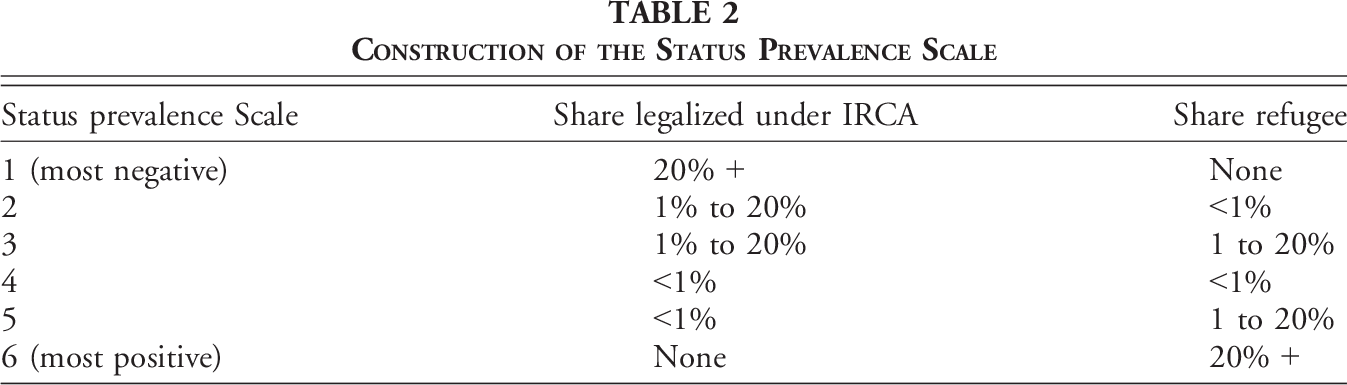
We construct a scale of status prevalence based on two indicators: (1) the number of persons from any given country legalized under the regular amnesty program of 1986 as a fraction of the total population from that country in 1990, and (2) the number of persons admitted as refugees from any country between 1980 and 1989 as a fraction of all persons admitted to the United States from that country during the same period. We compute these proportions using data from the statistical yearbooks of the Immigration and Naturalization Service and the 1990 Census. We distinguish six levels. The most negative (1) includes immigrant nationalities with a large proportion of undocumented individuals, for which the number of persons legalized in the 1986 amnesty programs is equal to or greater to 20 percent of the nationality's 1990 population and for which no persons were admitted as refugees during the 1980s. At the other extreme, level six includes nationalities with a large refugee component, for which the number of persons admitted as refugees during the 1980s is equal to or greater than 20 percent of the nationality's 1990 population and for which no persons were legalized in the 1986 (definitions of all levels appear in Table 2). 1 We enter this scale as a continuous variable in our analyses, making the strong assumption of equal distance between each value of the scale. However, we check for sensitivity of our results to this assumption by including the scale as a series of 0/1 indicators as well.
Construction of the Status Prevalence Scale
To assess the impact of co‐ethnic community differences in education, we use a variable measuring average years of schooling by national origin for the foreign born aged 25 and older as reported in the 1980 US Census. As the co‐ethnic community is specific to the local context, we draw on information keyed to respondents’ place of residence, whether in New York or in Los Angeles, to create a summary measure for all respondents in the two surveys. In some cases, the characteristics of the co‐ethnic community vary significantly across the two places: Mainland Chinese in New York averaged only 9.1 years of education, whereas their compatriots in Los Angeles had 11.6 — a full 2.5 years more. Among those from Hong‐Kong, the advantage is even greater with three years more in Los Angeles as compared to New York City. Among the Vietnamese, by contrast, average educational levels as of 1980 were practically the same in both places.
Last, as a proxy for potential discrimination, we include the mean skin color of the national‐origin group as reported by interviewers from the New Immigrant Survey, a nationally representative sample of adult immigrants admitted to legal permanent residence from May to November of 2003. The scale distinguishes 11 levels of pigmentation, ranging from the complete absence of color (albinism) to the darkest at 10. The shades of skin color corresponding to the points one to 10 on the Massey and Martin Skin Color Scale are depicted in a chart, with each point represented by a hand, of identical form, but differing in color. The scale is for use by interviewers, who assign each respondent a score (Massey and Martin 2003).
Although darker skin color is consistently associated with worse socioeconomic outcomes (Espino and Franz 2002; Hersch 2011; Branigan et al. 2013), we recognize that other markers of race and triggers of prejudiced behavior, such as facial features, dress, and accent, are also important and likely to vary within individuals of similar color; likewise, the skin color of individuals can vary considerably within origin countries. Our measure cannot capture these elements, nor do our data contain individual measures of respondent phenotype, but average skin color serves as a proxy for the potential for societal prejudice deriving from race. 2
The first section of Table 3 presents summary statistics for these variables. The average education level of the groups in 1980 was 11.6 years with an observed range of 7.6–15.2 years. The average status prevalence score, our measure for the governmental reception context, for respondents was 3.65, meaning the average origin group had some IRCA legalizations (1–20%), but no refugees. The group‐level average skin color ranges from 1.44 (close to the very white end of the scale) to 7.44 with an average of 3.90, close to the middle of the scale.
Descriptive Statistics of Second‐generation Sample, Aged 23 and Above, IIMMLA and ISGMNY
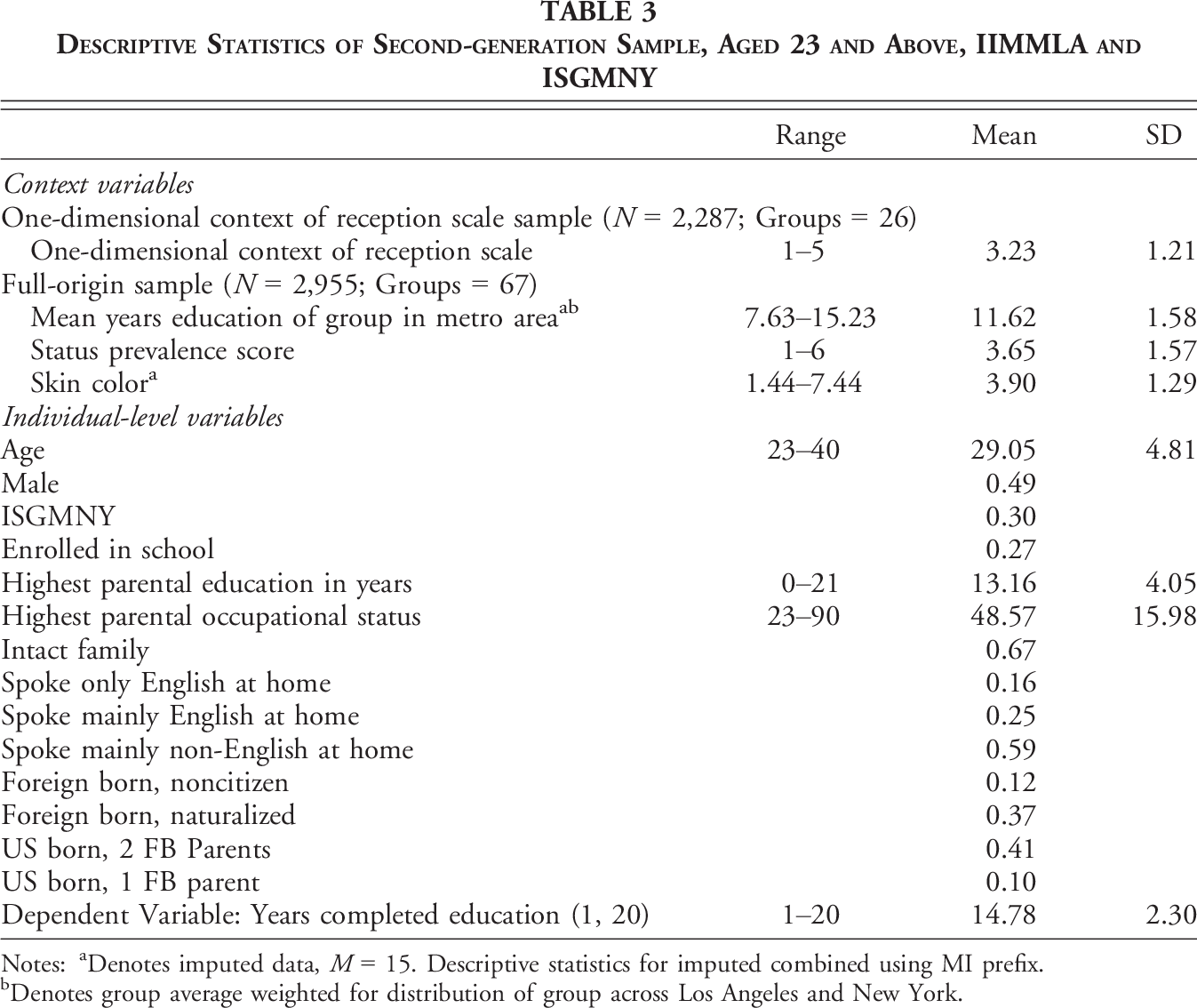
Notes: aDenotes imputed data, M = 15. Descriptive statistics for imputed combined using MI prefix.
bDenotes group average weighted for distribution of group across Los Angeles and New York.
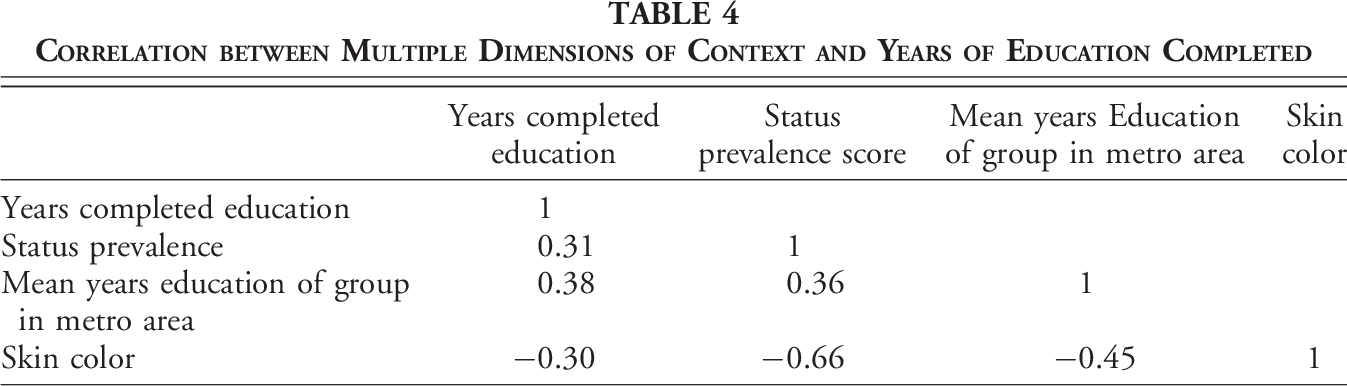
Table 4 presents the correlations between each approach to measuring contextual effects and our dependent variable. Looking down the first column, we see that each of the variables we have created to measure immigration context is moderately to strongly correlated with second‐generation educational attainment, with the darkness of skin color negatively associated and positive legal status and mean years education at the group level positively associated. Important to note is that the context variables are also correlated with each another: Groups with darker skin color tend to have a more negative legal context of reception, and also lower levels of education. Thus while analytically distinct, empirically the (dis)advantages in these dimensions overlap and mutually re‐enforce each other.
Correlation between Multiple Dimensions of Context and Years of Education Completed
Control Variables
To better isolate contextual effects, we include a variety of individual‐level controls drawn from the literature on second‐generation attainment. We control for demographic and regional differences in educational attainment by including age, sex, and metropolitan area (Los Angeles v. New York). We also control for whether the respondent is still enrolled in school. Family resources, expected to be positively associated with respondent second‐generation attainment, are included with a measure for the highest parental education and occupation, and an indicator for coming from an intact family where the biological parents lived with the respondent from ages six to 18.
In order to hold constant family‐ and individual‐level assimilation, we include a measure of the language spoken in the parental household, as all English, mostly English or mostly non‐English language. We also control for generation and citizenship status, including a categorical variable identifying foreign‐born respondents without US citizenship, naturalized foreign‐born, and US‐born respondents. Information on parental place of birth allows us to control for membership in the 2.5 generation. Summary statistics for all these variables can be found in the second part of Table 3.
Analysis
Consistency of Context Indicators
First, we examine the relationships between the different approaches to measuring contextual effects. Table 5 displays group‐level means of the measures of sending and receiving context we have obtained from secondary sources by national origins and the context of reception scale adapted from the Portes/Rumbaut typologies of modes of incorporation (as described above).
Context of Reception and Multiple Dimensions Scores of National‐Origin Groups with 50 Observations or More
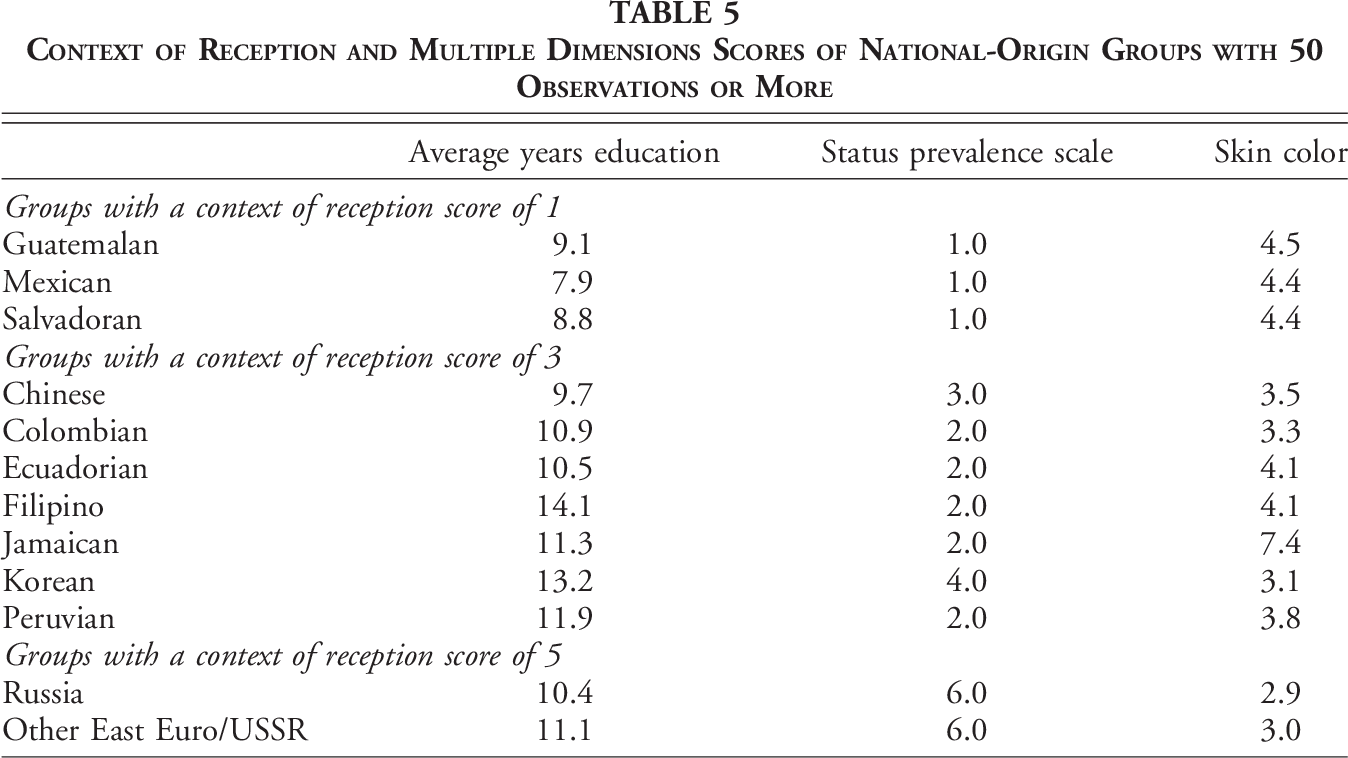
At the extremes, as expected, we immediately see congruence in the three operationalization measures. The Central American groups with the most negative context of reception score share a medium‐dark average skin color, low average years of education, and a uniformly negative legal context of reception. Similarly, the Eastern European groups that occupy the most positive context of reception cell in the Legacies table share higher levels of group education, high refugee rates, and are predominantly light‐skinned. However, the large number of respondents who occupy the intermediate cells of the table is actually quite heterogeneous. Professional ethnic groups with neutral government receptions, but a negative societal reception, are very diverse: High levels of education and low percentages of undocumented immigrants prevail among Filipinos; the Chinese, in contrast, have lower average levels of education and an undocumented minority. Colombians once again represent another configuration, reporting an undocumented minority but with an average education at 11 years and a generally light complexion. Hence, even when using the multidimensional framework developed in Legacies and in other writings, origin groups that fall into the moderate context of reception configurations appear upon closer inspection to be quite dissimilar.
Comparing Context Indicators as Predictors of Educational Attainment
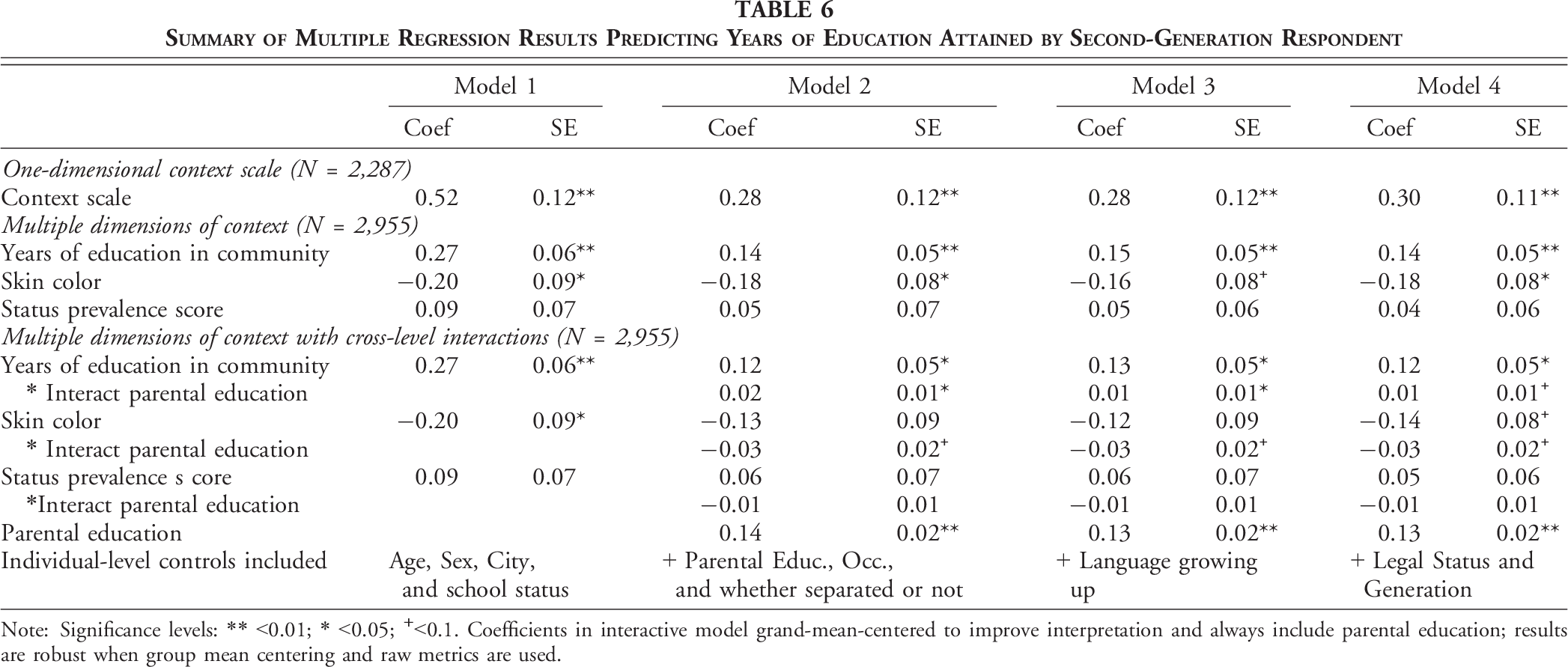
In order to empirically assess the different approaches outlined above, we compare a series of models, regressing years of education on both the unidimensional and multidimensional measures of contextual effects, alongside typical controls for individual‐level factors. The samples differ slightly as described above, but each model uses a combined sample of observations from both IIMMLA and ISGMNY, restricted to those aged 23 and above with valid responses to all control variables. We enter these control variables in four steps, first only controlling for age, sex, and schooling status (Model 1), then including parental education, parental occupation, whether the respondent was separated from a biological parent during childhood (Model 2); we then add the language spoken in the respondent's childhood home (Model 3), and finally respondent's place of birth, and respondent's citizenship status (Model 4). Table 6 presents a summary of these results focusing on the context measures. The full models can be found in the online Supporting Information.
Summary of Multiple Regression Results Predicting Years of Education Attained by Second‐Generation Respondent
Note: Significance levels: ** <0.01; * <0.05; +<0.1. Coefficients in interactive model grand‐mean‐centered to improve interpretation and always include parental education; results are robust when group mean centering and raw metrics are used.
One‐Dimensional Context of Reception Scale
We first evaluate the impact of contextual effects using the one‐dimensional context of reception scale. The results of this endeavor are seen in the first part of Table 6.
The effect of the scale is statistically significant across all specifications. A one‐point increase in the context of reception scale is associated with about one‐half year of additional expected schooling among the children of immigrants of the same age and sex. However, more than 40 percent of this effect is accounted for by individual‐level factors such as parental educational, occupation, and family separation. After all controls have been applied (far right column), the context of reception continues to yield an effect but it is now more modest, at about one‐third of a year of expected schooling. These initial results therefore confirm the importance of national‐origin context on second‐generation educational attainment, but do not provide further insight into which dimension(s) of the context of reception may be driving this result.
Multiple Dimensions of Context
In the next section of Table 6, we show the results of a series of models using separate, objectively defined indicators for each of the mode of incorporation variables. Both average years of education in the community and average group skin color yield statistically significant results. In the first model with only demographic controls, a one‐year increase in average education in the community is associated with about a one‐fourth of a year increase in respondent's education. This coefficient declines by about half once all individual‐level control variables are added and in the final Model 4, each additional year in the average education level of co‐ethnics is associated with an increase of 0.14 years completed education. This result confirms earlier research demonstrating the importance of ethnic group human capital on intergenerational mobility (Borjas 1992). However, our analysis here further demonstrates that the impact of ethnic group resources on educational attainment holds even when including further origin group‐level controls.
Turning to societal perception, we see that each shade darker in the group average skin color is associated with a decrease of about one‐fifth of a year of education. Interestingly, this negative effect is not accounted for by compositional differences at the individual level: The coefficient size remains fairly constant across all models as we introduce additional controls. Moreover, even after accounting for the fact that darker‐skinned groups have lower levels of education and worse contexts of reception at the group level, group skin color maintains an independent association with lower levels of schooling in the second generation.
Finally, the coefficient for the legal status prevalence scale is both substantively small and not statistically significant, throughout all of our models. We conducted several sensitivity tests to confirm this unexpected finding, including entering the reception scale as a categorical variable and entering the percent refugee and percent IRCA regularizations separately. The coefficients remained insignificant across all models.
Multiple Dimensions of Context with Cross‐Level Interactions
The final rows in Table 6 display the results including the multiple dimensions of context as well as cross‐level interactions between these dimensions and family‐level resources (highest parental education). To facilitate interpretation, all variables are grand‐mean‐centered. In the final model including all controls, significant (at the 0.1 level) interactions exist between the individual‐level variable of parental years of education, on the one hand, and the group‐level variables of skin color and average years of education, on the other. The relationship between parental and respondent education is stronger in populations with higher average levels of education. In contrast, the relationship between parental and respondent education is weaker among immigrant groups with darker skin color.
To summarize these relationships, Figure I displays the intergenerational transmission coefficient for immigrant families belonging to national‐origin groups of different mean levels of education, for those in groups with the lightest (1.5 on the skin color scale) and the darkest skin color (7 on the skin color scale). For instance, the educational attainment of an immigrant parent belonging to a group with the darkest skin color and very low group‐level years of education has essentially no relationship to the educational attainment of the second‐generation child. For an immigrant from a white‐origin group with high mean education, the transmission rate approaches the US national average (Card 2005), with a transmission rate of slightly over 0.3. Thus, the contextual effects of the group at large exert not only a main effect, but also interact with the status transmission process within the immigrant family. Individual immigrants from groups with darker skin color, or lower levels of education, are less able to transmit their educational attainment to their US‐raised children.
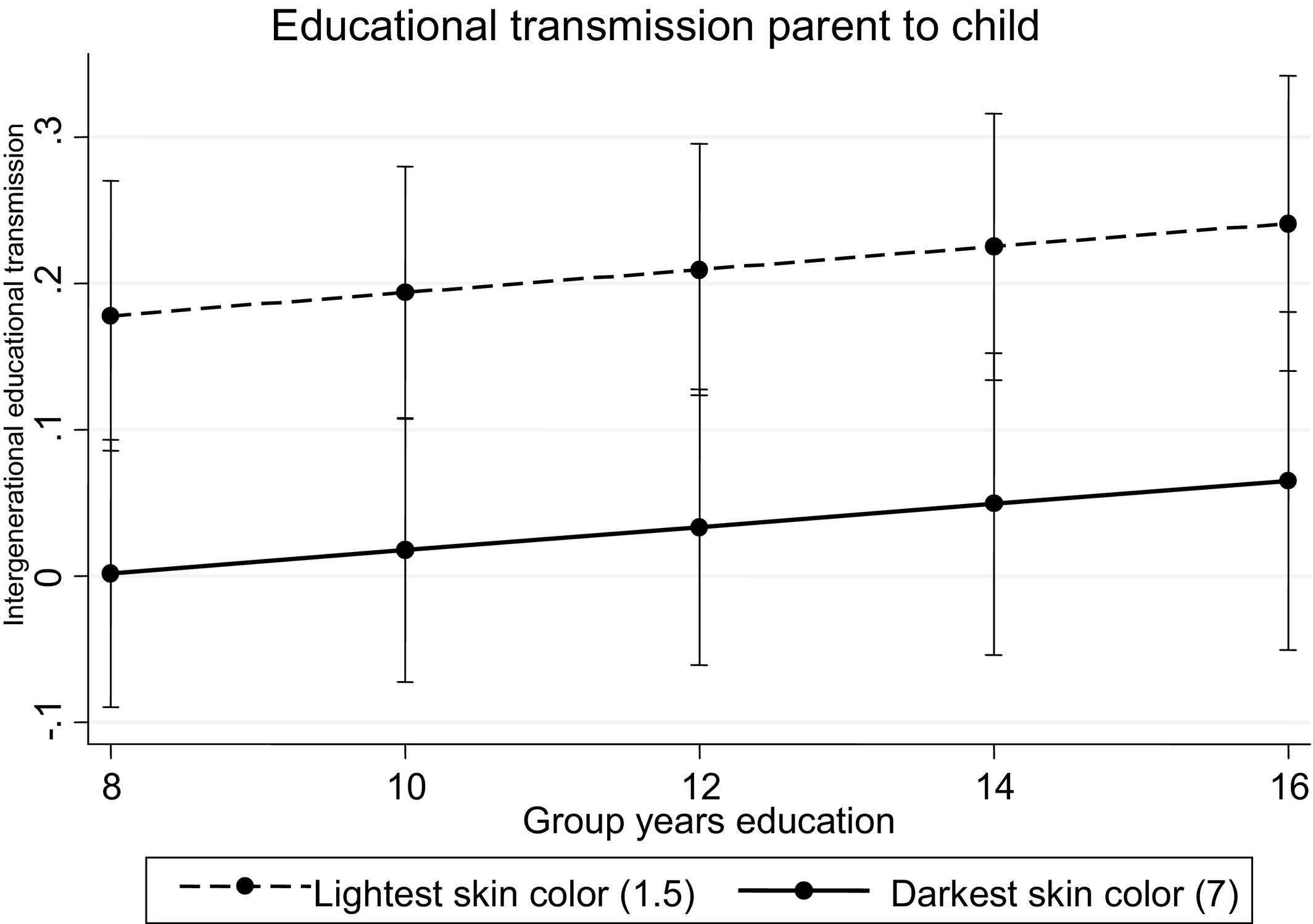
Group Years Education, Group Skin Color, and Educational Transmission
Discussion
Our paper is the first to systematically operationalize and compare alternative approaches to the measurement of contextual effects in second‐generation educational attainment. Furthermore, we have gone beyond the typical nationality (i.e., dummy variable) approach by interacting each indicator with parental education, thereby testing whether context yields an interactive as well as an additive, or main, effect. A rigorous assessment of the currently dominant modes of incorporation approach is clearly required, yet our endeavor also shows the formidable empirical hurdles involved. The greatest challenge entails finding reasonably proximal indicators of the concepts measured at a level of detail that represent migrant origins at the national level and not broader categories such as “Central American.”
These difficulties notwithstanding, we believe that we have successfully introduced new potential measures of each dimension of the mode of incorporation. In the case of group‐level resources, this has proven relatively easy: Group‐level education strongly and significantly predicts second‐generation attainment; its relationship to years of education is robust to many alternative specifications. Other dimensions reveal some distance between the measurements we could assemble and the underlying concepts. The difficulty in measuring societal discrimination has required the use of an indirect proxy for potential discrimination, skin color, likely weakening the observed relationship between this variable and second‐generation educational attainment. However, the effect of skin color remains significant and in the expected direction even in models including all individual‐level controls; therefore, it likely captures the societal reception context as outlined above. Moreover, in separate analyses not presented here, we observed a stronger relationship between group average skin color and second‐generation outcomes than between group‐level reports of discrimination and second‐generation outcomes. 3 We also believe that our measure of status prevalence is of high quality, relying on detailed information from official statistics at the national‐origin level. Thus, the lack of statistical significance points to the possibility that this dimension of the reception context may in fact not systematically affect second‐generation educational attainment. Given that even undocumented children of immigrants often have to “learn to be illegal” (Gonzales 2011) only after leaving the protection of formal schooling, educational attainment may be a second‐generation outcome less vulnerable to group‐level status prevalence than, for instance, labor market outcomes or political participation.
In addition to providing new, objective, and replicable measures of mode of incorporation, we also compared alternative ways of operationalizing the concept in models predicting second‐generation educational attainment. Recent systematic evaluations of this approach using the CILS data (Waldinger and Catron 2016) have found that when systematically applied to all meaningful comparisons, and varying one dimension at a time, results are often inconsistent with the predictions of the modes of incorporation model. In additional analyses, which are available as Supplemental Material, we implement a similar approach using the IIMMLA and IMSGNY data and come to conclusions similar to those reported by Waldinger and Catron.
The one‐dimensional context of reception scale tested here has significant advantages over country‐by‐country, context of reception comparisons; it is more parsimonious, and collapsing these differences into a scale also enables us to employ appropriate multilevel models, which take into account the correlation of observations within national‐origin groups. Most importantly, the scale also better predicts second‐generation attainment.
However, this scale remains problematic. Unlike the alternative approach we develop, it lacks the ability to discern mechanisms underlying the group‐level differences in academic performance: Is it the legal context, the societal context, or the community characteristics that matters most? Moreover, this approach shares a weakness with the country‐by‐county origin comparisons in that it relies on subjective decisions about where in the Legacies table each country of origin resides; the researcher must either be highly knowledgeable of the legal and local context facing each immigrant group or rely on the existing categorizations, as we have done.
The multidimensional approach developed in this paper addresses all of these concerns. First, by including measures of legal context, societal context, and co‐ethnic community characteristics, we can discern which dimensions of the reception context exert an impact on second‐generation outcomes and also how those effects vary. Second, as opposed to the subjective rankings presented in Legacies and other related works, we rely on objective measures of each dimension: INS statistics for governmental context of reception, group average skin color measures for societal reception, and the average level of education for the foreign born of the same ethnic group in the local context (New York City boroughs or Los Angeles county). Using these secondary sources, additional origin countries can be easily added to the model, and this approach can also be exported to other receiving countries.
This operationalization allows us to identify the distinctive impact of each contextual variable on second‐generation educational attainment, net of other contextual‐ and individual‐level measures. In turn, we gain the capacity to assess the relative importance and impact of one contextual variable relative to the other. Thus, a standard deviation change in group‐level education (1.58) in our final Model 4 is associated with a 0.19 (0.12 × 1.58) years increase in predicted years of education. While a standard deviation change toward darker group‐level skin color is associated with an effect of comparable size, it yields a 0.18 decrease (−0.14 × 1.29) in years of education.
Finally, to fully evaluate the predictions of segmented assimilation, we need to examine not only the main effect of the context of reception on second‐generation attainment but also the ways in which contextual characteristics at the group level facilitate or hinder status transmission within immigrant families. Our effort to do so actually confirms one of the key contentions on which the hypothesis of segmented assimilation rests: namely that, in addition to a direct impact, context can alter the impact of parental resources. However, we bring significant further refinement to that hypothesis, as we show that these interactive effects take complex form. On the one hand, belonging to a disadvantaged group, with low educational resources or exposure to prejudice due to darker skin, diminishes overall educational attainment net of individual‐level characteristics. On the other hand, family‐level resources matter less for second‐generation members of disadvantaged groups. The consequences are paradoxical as they can point toward greater opportunity in the sense that one's parental pedigree matters less for how one does in life, but they may also mean that advantaged members of these disadvantaged groups will be less able to pass on their higher achievements to their children. Separating out the main and interaction effects of the context of reception enables us to explain what is often framed as contradictory findings in the literature: the ability of the children of disadvantaged immigrant groups to greatly surpass their parents in terms of educational attainment (lower transmission due to interaction with parental education), while still lagging behind more privileged immigrant groups and native whites (negative main effect on attainment).
Conclusion
Although endlessly contested, assimilation has long provided the master concept for understanding the transformations undergone by immigrants and their descendants. However insightful, this perspective neglects the context under which international migration occurs, a shortcoming which the theory of segmented assimilation attempts to address. Although contextual factors are inherently of sociological interest, the very nature of population movements across states gives them heightened importance.
The influence of context on the incorporation of immigrants has long been a central theme in the work of Alejandro Portes, who has advanced “modes of incorporation” as a concept for summarizing the key contextual factors linked to the receiving context. However, we find this approach wanting. As we have shown, the concept itself is fuzzy and ill‐defined; the criteria used for assigning nationalities to modes of incorporation are subjective, with the result that nationalities differing on objective characteristics have been assigned to the same mode of incorporation. Most importantly, the concept is never operationalized, but rather measured by the proxy of nationality, thus relying on names when generalizable theory demands variables.
Responding to precisely that challenge, this paper has disaggregated mode of incorporation into its three components — policy reception, societal reception, and co‐ethnic community — identifying the objective indicators of status prevalence, mean years of schooling, and mean skin color that correspond to each concept. In so doing, we gain the leverage needed to discriminate among each of the distinctive contextual influences that might affect second‐generation outcomes, generate a metric that links differences in contextual factors to the outcome of interest, and assess the importance of one factor, relative to another.
As we have shown, this approach yields superior results. Comparing names generates coefficients that are only inconsistently significant (Waldinger and Catron 2016). An index ranking nationalities according to the advantage/disadvantage associated with a mode of incorporation produces more robust effects, but it is neither a meaningful metric (what, exactly, is entailed in a one‐step difference in modes of incorporation?) nor does it identify the specific feature — government policy, societal reaction, or co‐ethnic community — responsible for the result. Our method, in contrast, allows us to defensibly assign a large number of national‐origin groups with different values on all three dimensions of the immigrant context of reception. We can then go on to use multilevel models that allow the comparison of the relative, and independent, impact of both group‐ and individual‐level characteristics on second‐generation educational attainment, as well as the interaction between the two.
As the measures we use are objective and drawn from publicly available sources, these indicators can be applied by other scholars to other datasets; their utility can be assessed in light of alternatives that other researchers may propose. And so we close our paper with the all too common call for more research, motivated by the belief that in this case the stakes are simply too high to rely on rule‐of the thumb judgments of critical concepts and inconsistent operationalization.
Supplemental Material
Supplemental Material, imre12315_Supplemental_Material - Reconceptualizing Context: A Multilevel Model of the Context of Reception and Second‐Generation Educational Attainment
Supplemental Material, imre12315_Supplemental_Material for Reconceptualizing Context: A Multilevel Model of the Context of Reception and Second‐Generation Educational Attainment by Renee Luthra, Thomas Soehl, and Roger Waldinger in International Migration Review
Footnotes
Notes
Supporting Information
Additional supporting information may be found in the online version of this article at the publisher’s web site:
References
Supplementary Material
Please find the following supplemental material available below.
For Open Access articles published under a Creative Commons License, all supplemental material carries the same license as the article it is associated with.
For non-Open Access articles published, all supplemental material carries a non-exclusive license, and permission requests for re-use of supplemental material or any part of supplemental material shall be sent directly to the copyright owner as specified in the copyright notice associated with the article.
