






Abstract
Abstract
In this paper, we investigate the ethnic politics of commercial gentrification. We discuss how ethnicity is conceived of, managed by, and integrated into urban policy; and how the changing ethnic composition of the neighborhood is perceived and lived by entrepreneurs with different ethnic and class backgrounds. We employ the notion of “mixed embeddedness,” coined by Kloosterman et al., to understand the changes gentrification brings about for ethnic minority entrepreneurs and to explain their responses to these changes. Using the case study of a gentrifying street in Amsterdam, namely, Javastraat in Indische Buurt, we draw on an analysis of ethnic packaging at the policy level as well as in depth interviews with ethnically Dutch and ethnic minority entrepreneurs. Our findings shed light on how ethnic minorities survive and manage commercial gentrification on their doorsteps as well as the complexity of social mixedness in gentrifying neighborhoods.
Introduction
Once we went to a meeting at the local council. They said, “We will regenerate Javastraat.” I thought: no way, do you have a magic wand? They said, “We will renovate and sell the houses and attract Dutch people to the neighborhood.” They did what they said, and now the Dutch are here. Singles, couples mostly without kids, or at most with one kid. Once they have the second kid, they move out (interview with Mahmut, Turkish/Dutch, long–term entrepreneur, September 2016).
Mahmut runs a small greengrocer shop on Javastraat, a commercial street in the gentrifying neighborhood of Indische Burt in Amsterdam, the Netherlands. He migrated from Turkey to Amsterdam in the early 1990s and worked hard to open and run his shop. Back then the street was lively and large families and single migrant workers were his customers—it was the “golden era” as he called it. The neighborhood started to gentrify in the 2000s, led by the municipality and housing corporations who sought to socially mix this ethnic, minority–dense neighborhood. As a result, Mahmut lost some business as his ethnic minority customers moved out and were replaced by incoming, ethnically Dutch (White) singles or couples with no or few children. The newcomers were not buying as much, the pressure of big supermarkets was growing, and the rents in the street were increasing. The already fierce competition among the small greengrocers got even more intense. Mahmut decided to follow the trends set by bio–supermarkets and introduced specific products to attract the newcomers. The diversity of both the crowd in his shop and the products on his shelves tells the story of the ongoing gentrification in the Indische Buurt. Decorating his shelves are now super foods such as goji berries, organic drinks, and other foods that the newcomers seemingly desire. But next to these healthy, hip, packages are the five kilo cans of tomato puree or two kilo packs of Turkish tea still demanded by the large ethnic minority families in the neighborhood. Mahmut has done everything he can think of to make sure that he can still provide for this own family. Yet, the (gentrifying) pressure of insecurity is on his shoulders: “I cannot look to the future with confidence anymore,” he said.
Mahmut had to react quickly to the gentrification of his neighborhood, he had no choice. What is striking about his story is that he is (at least for now) a survivor of gentrification, not (yet) a victim. Of course, the question remains open as to whether people who survive gentrification by adaptation are victims or not. Mahmut's resilience is an unsettled debate in gentrification studies but as Lees et al. (2018) have recently argued, the concept of survivability introduces a welcome perspective of individual action into the field. Mahmut's story, however, is in contrast to the commercial gentrification literature, which often paints a very black and white picture of long–standing local businesses as victims of gentrification (e.g., Sullivan 2011). Focusing our lens on Mahmut's gentrifying street, we investigate the ethnic politics of commercial gentrification. Extending the literature on gentrification and policies of social mixing (e.g., Bridge et al. 2011; Lees 2008) that have tended to focus mainly on class, we discuss how ethnicity has been used by the local government in Amsterdam to gentrify this neighborhood. Drawing on in–depth interviews with ethnically Dutch and ethnic minority entrepreneurs in the neighborhood, we look at how the changing ethnic composition of the neighborhood is lived and managed by entrepreneurs with different ethnic and class backgrounds. In short, we look at mixedness, which is the condition of being mixed (by the local government) and the degree of ethnic mixing that occurs on this gentrifying street.
Commercial Gentrification and Ethnicity
In a recent review of the literature on commercial/retail gentrification, Hubbard (2018:296) says: “there's an emerging, but patchy, literature that's beginning to acknowledge the importance of retail transformation in effecting neighbourhood change,” yet often the residential neighborhood is the first to experience gentrification and its commercial streets the second. Key to this emergence was Zukin et al.'s (2009) discussion of “boutiquing” in New York City, in which they called attention to the displacement of local retail stores and services due to gentrification. Interestingly, patchy as it is, the literature on commercial/retail gentrification that has developed spans the globe (see Pascual–Molinas and Ribera–Fumaz 2008; Schlak and Turnbull 2015; Zukin et al. 2016, etc.). Indeed, Mermet (2017), focusing on the Marais in Paris, links the recent reconfigurations of retail capital (concentration, internationalization, and financialization) and the more generalized contemporary gentrifications that are experienced in cities around the world. Hubbard (2018) discusses retail upscaling and what he calls “the spatial restructuring of retail capital,” he also describes the transition from ethnic stores to gentrified stores (if in the British context):
“many inner–city districts became characterised by locally–run stores catering to the needs of local working–class consumers, especially those belonging to ethnic communities whose tastes were poorly served elsewhere. Such streets are characterised by ‘ethnic’ grocery stores, beauty shops and restaurants, but also discount stores and outlets associated with more residualised forms of consumption such as liquor stores, sex shops and betting shops, as well as pawnbrokers, charity shops and second hand stores. But, conversely, it is this ‘local’ character and vernacular style that has subsequently been seized upon as retail capital seeks new, more profitable sites for its own realization, exploiting the ‘rent gap’ between current and potential land values” (ibid:297).
Indeed, what is notable about the commercial/retail gentrification literature is its focus on race/ethnicity, the residential gentrification literature has been slower to respond. The literature on race/ethnicity in gentrification studies, like that on commercial/retail gentrification, is also patchy (Lees 2000, 2016; Murdie and Teixeira 2011; Powell and Spencer 2002); this work is mainly from the United States and tends to focus on gentrifiers rather than the pre–existing populations affected by gentrification.
Residential gentrification, as said, is often accompanied by commercial/retail gentrification, which manifests itself in hip cafés, restaurants, pop–up stores, art galleries, and so on, displacing small and often ethnic or low–income shops (see Hubbard 2017; Rankin and Mclean 2015). At the policy level in the Euro–American world, ethnic diversity is celebrated as a positive quality in city marketing, what Hackworth and Rekers (2005) have called “ethnic packaging.” Ethnic enterprises attract both middle–class newcomers who are in search of “authentic” products and marginal gentrifiers looking for affordable groceries (Zukin 2008). As Derriks (2011) has discussed, some ethnic entrepreneurs participate in the early stages of gentrification as active agents of ethnic packaging. In the later stages, however, the rising rents put pressure on, and often displace, these entrepreneurs. The fact remains that commercial streets are the faces of ongoing gentrification in many neighborhoods, and one can truly get the pulse of urban change by looking closely at the everyday dynamics of these streets.
Even though there is growing attention to commercial gentrification in the gentrification literature (Hubbard 2017), we still know relatively little about the ethnic politics of commercial gentrification. One exception is Huse's (2014) biography of a gentrifying street in Oslo in which she discusses how ethnic packaging makes neighborhoods attractive for middle–class users and residents, which, in turn, brings about the displacement of lower–class ethnic minorities. She also talks about the resilience of immigrants, using the word “surviving” (p. 48). Another is Rankin and McLean (2015) who studied the gentrification of a commercial street in Toronto underlining the other dynamics of racialized and class power, besides ethnic packaging, that operate in the transformation of disadvantaged spaces. They look at the stigmatization of commercial and residential spaces that serve marginalized groups and the mobilization of white privilege in the redistribution of space and resources that ignores or renders invisible the demands and needs of lower–class racialized people. Although both Huse (2014) and Rankin and McLean (2015) argue that redevelopment projects “solicit participation from marginalized groups on terms that reinforce dominant modes of spatialization” (p. 229), we lack explanations about which marginalized groups can (are able to) participate in gentrification and how. Such explanations should not be read simply as supporting gentrification, for Mahmut, like many others, it is about protecting his business and livelihood.
Like many of the ethnic immigrants with businesses on Javastraat, Mahmut was an ethnic entrepreneur, as such it is useful to consider the notion of “mixed embeddedness,” a framework for conceptualizing immigrant entrepreneurship developed by Dutch scholars Kloosterman et al. (1999). This allows us to understand the changes gentrification brings about for different ethnic minority entrepreneurs, and to explain their responses to these changes. We are interested in the context–dependent dynamics of racialized and class power as it operates in different geographies of gentrification. Embeddedness operates in a time and place specific context (here Javastraat in Indische Buurt) and the opportunity structures in it. In investigating this embeddedness, we look at how ethnic diversity was incorporated into the policies that led to the gentrification of Javastraat and Indische Buurt more widely, how entrepreneurs with different ethnic backgrounds have experienced and been affected by the process, and what kinds of relations have developed between old and new entrepreneurs. Where Mazer and Rankin (2011) look at the marginalized and the displaced, we look at incomers too, for when investigating mixed embeddedness one cannot look at one without looking at the other. We are especially interested in how ethnic entrepreneurs cope with the process of gentrification. We argue that we need to listen to, and theorize, the story of Mahmut and other ethnic entrepreneurs to enrich our knowledge of the ethnic dimensions of gentrification politics as they play out in space and place.
Social Mix Policy and Gentrification
There is now a relatively substantial literature on policies of social mixing and gentrification (see Annunziata et al. 2019, for a detailed review); scholars have shown that policies of social mixing have been a driver of gentrification worldwide (Bridge et al. 2011; Lees 2016). The assumption in social mixing policy (see Lees 2008) is that spatial proximity brings about improved interclass and interethnic relations in ethnic minority dense neighborhoods, from which low–income ethnic minority residents are expected to benefit, that is, from middle–class role modelling, the prospective investments in public provisions, decreasing stigmatization, and so on. Indeed, scholars point out that ethnic diversity has become a major tool for local urban governments in their efforts to promote gentrification, yet how ethnicity and gentrification plays out varies contextually (Lees 2016). Huse (2014) suggests that ethnic packaging makes neighborhoods attractive for middle–class users and residents, which, in turn, brings about the displacement of lower–class ethnic minorities. The celebration of ethnic diversity then does not actually bring about changes in social and economic redistribution, rather, it serves either capitalist interests (De Olivier 2016) or governmental attempts to civilize lower–income, ethnic–minority populations (Uitermark et al. 2007).
Urban policy makers make use of ethnic, class, and territorial stigmatization as a tool to legitimize the policies of social mix that bring about gentrification (Lees 2014). Slater (2016) has discussed how the production of territorial stigma and the stigmatization of certain neighborhoods and their residents—mostly ethnic and racial minorities and/or the poor—work to legitimate gentrification and displacement. In their comparative study of the symbolic politics of gentrification, Sakızlıoğlu and Uitermark (2014) argue that urban authorities use divide and rule tactics in renewal neighborhoods by classifying the residents and engaging in differential treatment of different resident groups, which feeds into the territorial, ethnic, and class stigmatization and breaks any potential contestation. More recently, Hubbard (2017) has conceptualized “retail policy in Britain as a form of moral regulation” (p. 8). This policy tags some shopping streets in ethnic minority neighborhoods as “dying” or “failing” because “they lack the stores and facilities idealized by middle–class consumer cultures” (p. 8). Turning them into “thriving” streets does not only mean physical upgrading, but also civilizing or displacing the less affluent and often ethnic/racial minorities. Gentrification restructures the ethnic composition of neighborhoods and the ways ethnic (and the nexus of class, gender, etc.) inequalities are experienced and negotiated.
The literature shows that even though many middle–class, often white, households are attracted to ethnically diverse neighborhoods, they either do not engage in the local community (Butler and Robson, 2003) or tend to control diversity by policing local spaces and social life in a way that maximizes their own interests. This middle–class attraction to, and love for, diverse neighborhoods is discussed by Tissot (2011) as resulting from the affordability of these neighborhoods and the fact that these groups quickly come to enjoy living where they can afford to live. Similarly, May (1996) pointed out that ethnic minorities became the object of the “exotic gaze” for the middle–classes, who are interested in and consume other cultures as part of their multicultural urban lifestyle (p. 208). But, on the other hand, we know little about how lower income, racial/ethnic minorities experience and manage the changing ethnic composition of their gentrifying neighborhoods. The limited research there has been points to the “feelings of loss” and the “erasure of own culture” that can be found alongside the community's appreciation for the upgrading of neighborhoods (Hyra 2015; Modan 2008). In the context of commercial gentrification, there is scarcely any research focusing on how entrepreneurs with different ethnic backgrounds experience changing ethnic diversity. Ernst and Doucet (2014) suggest that nongentrifier, ethnically Dutch brown–café owners, actually appreciated the influx of White Dutch into their neighborhood.
In contrast to policy expectations, researchers have found that gentrifying areas are often characterized by noninteractions between the life–worlds of the different class and ethnic groups. In other words, the diversity that the middle–classes like to have in their neighborhood does not entail any actual crossing of racial and class boundaries, what Butler and Robson (2003) have termed social tectonics. But in a more recent study, Jackson and Butler (2015) have argued that social tectonics “doesn't capture the relations between the reconstitution of classed/raced space and identities in gentrifying areas” (p.2363). The authors suggest that living with ethnic others can become a way for certain segments of the middle classes to distinguish themselves from the more affluent middle classes, in other ways from their classed others. Their work points to the complex intersectionality of class and ethnicity in gentrification.
In the gentrification literature, ethnic and racial minorities (usually from U.S. case studies) are almost always counted among the victims of gentrification and displacement, burdened by increasing rents, job losses, and the destruction of their social networks (Betancur 2011; Bolt et al. 2009; Goetz 2011; Hyra 2018). Despite a small literature on Black–led gentrification in American cities (Boyd 2005; Goetz 2011; Taylor 2003; among others), the literature lacks an elaborate account of the impacts of gentrification on ethnic minority entrepreneurs, together with their responses to this process. As stated earlier, the notion of mixed embeddedness could help us understand and conceptualize the changes that gentrification brings about for ethnic entrepreneurs. Kloosterman et al. (1999) argue that the rise and fall of ethnic entrepreneurship is located at the intersection of changes within social–cultural and economic–institutional frameworks. Mixed embeddedness involves the act of embedding at two levels: (i) the social level, where ethnic entrepreneurs have access to resources due to being a member of a certain social and ethnic group, for example, access to finance and social networks; and (ii) the market and institutional level that shapes market opportunities and constraints at the local and national scales, for example, labor market conditions, regulations for commercial spaces, available subsidies for small enterprises, or market trends for consumer goods and products. The key question, here, is how gentrification affects these levels of embedding? At the social level, the displacement and impoverishment of an ethnic community due to gentrification might, for instance, decrease the demand, as well as the community resources, available to ethnic entrepreneurs. And the gradual erasure of ethnic culture might be alienating for local ethnic minority entrepreneurs. As for the market and institutional level, increasing rent levels in gentrifying areas often make it harder for ethnic entrepreneurs to stay put. Similarly, the introduction of new regulations for commercial spaces, for example, subsidies promoting higher end businesses or changes in permit policies, helps shrink the market for ethnic entrepreneurs. Furthermore, changing market trends, such as the increasing middle–class demand for ecological, organic products, might push ethnic entrepreneurs out of the market. On the other hand, the growing demand for exotic products by middle–classes might mean increasing business volume for some ethnic entrepreneurs. Not all ethnic enterprises are embedded to the same extent into the social as well as economic and institutional landscapes. The change in the mix of embeddedness brings about different consequences for different ethnic entrepreneurs, and they also respond differently. Drawing on, and critiquing, the notion of mixed embeddedness allows us to consider the complexity of the situation of ethnic businesses on a gentrifying street.
The Case Study
Indische Buurt (Indies neighborhood) (see Figures 1 and 2) is in the east of Amsterdam and it is one of the most diverse parts of the city. Indische Buurt was a working class neighborhood built in the early C20th (Bohl 2010) which by the 1970s and 1980s had become home to a concentration of nonwestern minorities. This was partially the result of “white flight,” as ethnically Dutch (that is White) residents moved out in time to the suburbs which had relatively low rents for family housing, leaving behind a physically and socially dilapidated neighborhood.
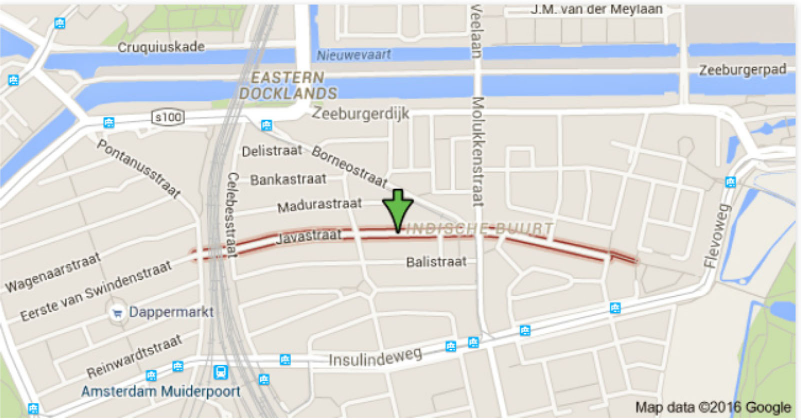
Javastraat in Indische Buurt, Amsterdam.
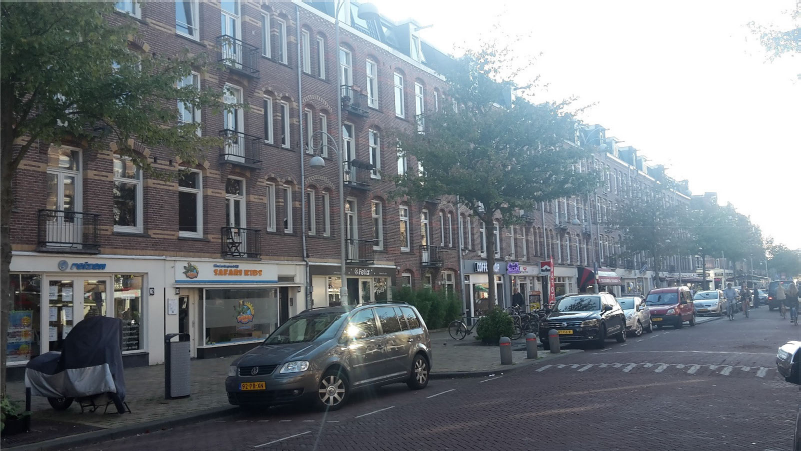
Javastraat (Photo: by Author, 2018).
In the 2000s the city government of Amsterdam embraced an entrepreneurial agenda and gentrification emerged as a policy goal (van Gent 2013). In this policy context, gentrification was meant to serve as a tool: (i) to extend the touristic and entertainment facilities concentrated in the city center to nearby neighborhoods (like Indische Buurt); (ii) to decrease ethnic concentration through social mixing by permitting tenure conversions that would allow middle–class households to move into ethnic minority dense neighborhoods. Gentrification in Indische Buurt proceeded quickly in this period, especially in the northwest of Indische Buurt, and its main commercial street—Javastraat—became the showcase of its residential and commercial gentrification—“the beating heart of the neighborhood” as Zimmerman (2015) calls it in the Lonely Planet.
The social, economic, and population changes in the neighborhood due to gentrification can be read off the relevant statistics. From 2000 to 2010, the share of social housing declined from 93 to 63 percent, whereas the share of owner–occupied and market–rental sector housing increased sharply from 3.5 to 10 percent for market rental and from 3.5 to 20 percent for owner occupied housing (OIS 2011). There was a significant ethnic change as the percentage of nonwestern migrant residents decreased from 59 to 47 percent between 2005 and 2016 in the Indische Buurt West (IB–West) area, where gentrification took place at a fast pace. But even in Indische Buurt East (IB–East), where gentrification was slower, the percentage of nonwestern migrant residents decreased from 58 to 53 percent, 2005–2016 (OIS 2016). In IB–West, the 25 percent increase in average household income over a 10–year period was higher than the 19 percent increase at the city level as a whole, indicating a significant influx of higher income groups into the area which replaced those with lower incomes. Likewise, that other proxy for gentrification—housing prices—increased: between 2014 and 2018, the average housing value per square meter in Indische Buurt Oost increased by 66 percent and in Indische Buurt West by 68 percent, whereas the increase was only 54 percent in Amsterdam at large (OIS 2019).
The research presented in this paper was undertaken in 2016–2018 and sought to investigate and understand processes of ethnicization in relation to commercial gentrification on Javastraat where policies of mixing had been enacted. Archival documentation, for example, analysis of policy and planning documents, was undertaken to investigate why and how Indische Buurt was to be socially mixed by the local government. In–depth interviews were undertaken with ethnic minority and ethnically Dutch entrepreneurs and residents of Javastraat, the goal being to understand the impact of these policies on the ground. In total 37 interviews were conducted with old and new entrepreneurs on Javastraat (old timers and newcomers/gentrifiers). Of these 37 interviews, 34 were conducted with entrepreneurs; (21 long–term entrepreneurs and 13 newcomers). Among these entrepreneurs, there were 11 Turkish, 11 ethnically Dutch, 4 Moroccan, and 8 other ethnic groups (Surinamese, Pakistani, Afghan, Iraqi, Kurdish, Chinese, Indian, and Egyptian). Interviews were conducted in four different languages—Dutch, Turkish, English, and Arabic—which was vital in interviewing different ethnicities. These interviews were digitally recorded, transcribed, and thematically analyzed to identify patterns. Some respondents did not give consent for recording and in these cases, we took detailed notes during the interviews and made summaries of the interviews before thematically coding them. The interview questions were focused on: (i) the lived experiences of the changing ethnic composition in the neighborhood; (ii) how interethnic relations were shaped and played out; and (iii) how gentrification affected ethnic minorities, and how they dealt with the negative impacts of the process. The names of the interviewees and any details that might reveal their identities have been anonymized. In addition, we conducted interviews with the street manager, the housing corporation neighborhood administrator, and a community worker. Finally, observations in public and semipublic spaces in the neighborhood, and attendance at community meetings, were undertaken to get a wider sense of the impacts of commercial gentrification on ethnic minorities. We also included the field notes (based on observations, small talks with several respondents) in our analysis.
Dutch Social Mix Policies and Their Enaction in Indische Buurt
In the 1970s and 1980s, Dutch policy and political discourse on the integration of minorities promoted cultural diversity (multiculturalism). In the 1990s and 2000s, however, assimilation replaced cultural diversity. Hitherto described in socioeconomic terms, the concentration of ethnic minority (particularly Muslim) populations in certain neighborhoods started to be viewed as a threat to the Dutch nation and culture (Bolt and van Kempen, 2010). The Dutch authorities implemented urban social mixing policies that were expected to contribute to the integration of ethnic minorities into Dutch society (Uitermark, 2003), this was especially so in Amsterdam because it was among those (few) cities in Europe with a high percentage of social housing, housing that could be manipulated by the state.
In the 1990s into the 2000s, tenure mixing through urban renewal was the conventional method of social mixing that was implemented by Dutch social housing corporations, in cooperation with the national and local governments. These policies resulted in state–led gentrification (Uitermark et al. 2007; van Gent 2013). In the 2010s, tenure mixing through the sale of social housing stock became more popular; it was/is more affordable in the face of the austerity measures social housing corporations rolled out (Hochstenbach 2017). This shift in housing policy not only resulted in the acceleration of gentrification in neighborhoods with already increasing demand for middle class housing, but it also produced a changing “form, intensity, and geography of state–led gentrification” (ibid:17) in Amsterdam.
The official focus of Dutch social mixing policies has always been on socioeconomic change. Yet these policies have implicit concerns around integrating and civilizing disadvantaged ethnic minority groups (Uitermark et al. 2007). Bolt et al. (2008) argue that this is partly “due to anti–discrimination legislation in the Netherlands” (p. 1367). Central government policy targeting the upgrading of 40 problem neighborhoods in 2007, as well as the livability index, used concentration of ethnic minorities as a negative indicator, which was criticized and altered later in other policy documents. Even though there has been no comprehensive research into ethnic displacement due to social mixing policies in the Netherlands, the literature indicates that ethnic minorities have been disproportionately affected by these policies (e.g., Bolt et al. 2008; Sakızlıoğlu 2014; Uitermark 2003).
Research shows that in Amsterdam, housing market restructuring through liberalization and the privatization of social housing has gone hand in hand with integrationist policies of social mixing in gentrifying neighborhoods (Hochstenbach 2017). A recent study found that ethnic segregation decreased in the city, in part due to increasing ethnic diversity in gentrifying neighborhoods (van Gent and Hochstenbach 2019). This finding is in contrast to the wider (mainly United States focused) literature, which asserts that gentrification brings about new forms of ethnic segregation (although this is an ongoing debate, see, e.g., Byrne 2003; Mordechay and Ayscue 2017). The question remains, however, as to whether increasing ethnic diversity in Dutch gentrifying neighborhoods brings about the bridging of social capital among different ethnic and class groups.
Following national policy prescriptions on social mixing and ethnic integration, interventions in Indische Buurt began in the 2000s with the municipality's Urban Renewal Plan for Indische Buurt 2001—2005, which set out to re–differentiate the housing stock (Zeeburg 2002). Following this the Urban Renewal Plan 2007–2010 invested 250 million Euros in Indische Buurt to spur urban transformation in the neighborhood through residential and commercial upgrading. Housing corporations active in the neighborhood sold a substantial part of their stock and made more private rental homes available to attract middle class residents. Tenure mixing through urban renewal went hand in hand with the upgrading of public spaces, and the conversion of public property into gentrified cafes and restaurants, which played a crucial role in triggering further gentrification in the neighborhood (Sakızlıoğlu 2014). The municipality and the housing corporations got involved in city–marketing to improve the image of the neighborhood, and Indische Buurt was marketed as a World Neighborhood, where ethnic diversity was an opportunity for social and economic upgrading. This campaign highlighted Javastraat, casting it as a street for World Shops (Stadsdeel Zeeburg 2008a). Some of the ethnic entrepreneurs made use of newly available funds to renovate their shops. Similarly, a World Housing project was implemented to upgrade and differentiate the existing housing stock in the old Indische Buurt through the provision of subsidies, relocation allowances, and permits to subdivide ownership (Stadsdeel Zeeburg 2008a). The 2007–2010 Urban Renewal Plan rebranded the ethnic diversity in Javastraat, emphasizing the “Mediterranean outlook” of the street. The image of “Mediterranean” made invisible and rebranded the “other” ethnic origins of the shopkeepers on Javastraat, most of whom were from Turkey and Morocco (Schoemaker 2017). Indische Buurt was no longer a “problem neighborhood” but a “world neighborhood” with a “Mediterranean” outlook. Javastraat was no longer Turkish or Moroccan, it was now Mediterranean (Schoemaker 2017).
Commercial gentrification was specifically framed and promoted by three policy documents: (i) the Javastraat Plan 2008; (ii) the Hospitality Sector Plans in 2009 and 2012; and (iii) Chance Zone Subsidies. The Javastraat Plan aimed to keep the ethnic diversity of the street intact (contra most studies of commercial/retail gentrification elsewhere), whilst improving the quality, look, and product range of the existing stores. In other words, ethnic minority shopkeepers were seen as an asset to the extent that they could contribute to the commercial gentrification of the street and serve the newcomers, thus gentrifying ethnic diversity. But the plan also wanted to abolish “illegal” activities—supposedly concentrated in call shops—and attract new high–end shops in their place (Stadsdeel Zeeburg 2008b). The Hospitality Sector plans of 2009 and 2012 designated Javastraat as a “hospitality sector concentration zone” and aimed to attract “quality” restaurants and cafés to the area, whereas new snack bars, coffee houses, grillrooms, doner businesses, take–away businesses, coffee shops, and brown cafés were no longer permitted (Municipality of Amsterdam 2012:15). The Chance Zones Subsidies, a joint program of the Municipality of Amsterdam and the European Union, aimed to promote economic upgrading by attracting higher end businesses into disadvantaged neighborhoods. The program offered subsidies to cover investments to renovate the interiors and facades of commercial spaces, together with hardware investment costs. Many newcomer entrepreneurs made use of this program.
Housing corporations, as the owners of the vast majority of the residential and commercial property in Indische Buurt, were the stewards of gentrification in the neighborhood. They not only aimed to attract big chains and “quality” restaurants and others, but also renovated select old public buildings that triggered gentrification in the area. Additionally, a street manager, paid for by the municipality, was employed specifically to steer the change by talking to, and mediating between, potential entrepreneurs and property owners, while also helping long–standing entrepreneurs to upgrade their shops and properties. According to the street manager, keeping ethnic diversity intact greatly helped to upgrade Javastraat. Significantly, she wanted to assist ethnic minority entrepreneurs in surviving this change in the neighborhood, or, more specifically, in marketing “exotic” products and upgrading their product selection to cater to the newcomers” tastes. In her own words:
“Old shops look closed, both physically and figuratively, but these shops might have the products the new customers want. Perhaps they should put these products in the shop windows or change a little bit what they have on offer. So it is about what they sell and how they present it” (Lotte, ethnically Dutch, works but does not live in Indische Buurt).
Based on this understanding of diversity, the structural impacts of gentrification—such as increasing rents and the social and cultural changes in the neighborhood—were seen to be negated. Upgrading the look of the shops and selling exotic products was presented as sufficient to allow ethnic businesses to stay put in the area.
But the revanchism often wrought on minorities (Smith 1996) during gentrification and was very evident for disciplinary and punitive measures, which were taken to eliminate and control the unwanted elements in the neighborhood. Ethnic minority shopkeepers underlined that the municipal police fined those shopkeepers who did not comply with the rules. The police raided and closed the shops associated with money laundering, gambling, and drugs. Street cameras were placed in several spots to keep crime under control. Neighborhood police and street coaches patrolled the streets. The municipality simultaneously used soft and hard measures to leverage, as well as control, ethnic diversity in relation to the renewal of the neighborhood. Low–level modes of urban governance are often applied to control and enable gentrification of immigrant dense neighborhoods (see Gibson 2015; Huse 2014; Langegger 2016).
Social Mixedness on the Gentrifying Javastraat, Indische Buurt
Doron and Eline, ethnically Dutch female entrepreneurs who opened a store on Javastraat, were very much aware that they were taking an active part in the upgrading (gentrification) of the street. They found it important, however, to view and acknowledge Indische Buurt not only as an up and coming neighborhood, but also as a neighborhood where many people were surviving poverty and inequalities. Like Lotte, the street manager, they saw themselves as trying to help the pre–existing community: for example, Doron and Eline were engaged in projects with local schools hoping to make a tangible contribution to the local community. But despite Doron and Eline's attempts at community preservation many of the original ethnic entrepreneurs interviewed underlined the displacement of low–income ethnic minorities. Hasan, a Turkish baker, was among them:
“The change we are going through here is so much like the change that took place in de Pijp [a centrally located gentrified neighborhood in Amsterdam] some decades ago. It started there just like this. As the Dutch say, it is now a yuppie neighborhood. I would not want Indische Buurt to become like de Pijp. I think it would be better if they didn't sell all the social housing, so that normal people with less money can also stay here” (Hasan, Turkish/Dutch, long–term entrepreneur, June 2016, content in the parenthesis by the authors).
Likewise, Osman, a Moroccan entrepreneur, who said that the Dutch authorities had neglected the neighborhood and it had become a “ghetto” over the years, did not want his co–ethnics to be displaced:
“It is good that in the end, it is becoming more mixed… but we worked in this neighborhood in all those years of neglect and now only the ones who have the money and can adjust to the change will be able to stay. This is not good!” (Osman, Moroccan/Dutch, long–term entrepreneur, July 2016).
Significantly, ethnic diversity was an element of personal lifestyle choice for many of the new, incoming entrepreneurs. Indische Buurt was a “site of diversity” that was dynamic and surprising, providing a stark contrast to the homogenous White neighborhoods of Amsterdam, such as Amsterdam Zuid, that were described as being “too white”:
“It is one of the raw, ethnic, diverse quarters of Amsterdam. It is lively, it is multicultural; a lot is happening, and I love it’ (Gideon, ethnically Dutch, newcomer, September 2016).
Some of the incoming entrepreneurs could not afford to live in or open a business in higher–end neighborhoods, and they drew symbolic boundaries with their classed others in higher–end neighborhoods who chose to live with their co–ethnics rather than living in a mixed neighborhood like Indische Buurt (cr. Jackson and Butler, 2015). Despite being middle–class, these entrepreneurs were economically fragile when they moved into the neighborhood. They presented living and working in this ethnically diverse neighborhood as a personal choice and talked about their love for ethnic diversity and multiculturalism as an element of personal lifestyle. Like for pioneer or marginal gentrifiers elsewhere, relatively affordable housing prices and rent levels for commercial spaces were important factors in their decision to move:
“Before I lived in Bos en Lommer, which is also an immigrant neighborhood. We moved here because of the apartment we could get. The East did not appeal to us, but we live in one of those new buildings at Timorplein…We could get a place there. So that is why” (Dirk, ethnically Dutch, newcomer, September 2016).
What Dirk describes echoes Tissot's (2011) findings about the economic fragility of the middle–classes and the fact that they learn to like living where they can afford to live:
“We came to live here in 2001. In the first month we lived here, there were two murders on the street. There were junkies on the streets. Not that it was not safe, not that I felt threatened all the time. You know, it is an environment that you adapt to and you make the best of it. It is better now” (Dirk, ethnically Dutch, newcomer, September 2016).
Many of the newcomers viewed ethnic diversity as adding commercial value to the street. For instance, Jan thought ethnic enterprises provided the authentic, exotic touch of the street (cr. May 1996). Importantly, they thought that keeping these preexisting ethnic entrepreneurs in the area would also stop the neighborhood from gentrifying too much and becoming a threat to the marginal gentrifiers, like themselves, who had moved in. Yet, Jan also believed that these ethnic shops had to change and “adjust to the demands of the newcomers” (Jan, ethnically Dutch, newcomer, June 2016).
The old timer, ethnically Dutch shop keepers welcomed the influx of ethnically Dutch newcomers, with whom they thought the neighborhood became “better” and “more livable.” For them Javastraat had been in a spiral of poverty and had lost its shopping street quality. It was “too monotonous” with too many greengrocers and Islamic butchers. These ethnically Dutch businesses had not moved out, because they were deeply rooted in the neighborhood. Some of them started serving the newcomers, and they appreciated the closure of some “illegal” teahouses and call shops owned by ethnic minority groups. All in all, they welcomed the incoming higher classed ethnically Dutch who were taking over the space from their long–standing ethnic others.
Interestingly, some old timer, ethnic minority entrepreneurs also welcomed the new, ethnically Dutch in–movers. These were mostly of Turkish origin and had already adapted their offer to the preferences and tastes of the new clientele. Murtaza, one of the first to do this, thought that it was good to have more ethnically Dutch entrepreneurs on the street. Half of Murtaza's customers were ethnically Dutch, and he liked the fact that these people had more purchasing power and therefore did not need to “bargain for five cents” (Turkish–Dutch, long–term entrepreneur, June 2016). Similarly, Erdal suggested that the street got “whiter” over time, and that this was a positive thing. It was not only good for his business, but things also “became livelier, nicer in the street.” He was not the only one who associated the coming of the white Dutch middle–class with “upgrading,” “improvement,” and “liveliness” in the street.
Yet other, long standing, ethnic minority entrepreneurs thought that the neighborhood change was a process of privileging the Dutch. In their view, the municipal authorities and housing corporations made it easy for the ethnically Dutch households and entrepreneurs to live and work in Indische Buurt. They felt that they were negatively affected by the process, for example, they lost customers or felt that their neighborhood/street had been conquered by “others.” Among them was Nour, a long–term female Moroccan entrepreneur, who expressed her frustration:
“They give priority to the Dutch. They were the ones leaving the neighborhood, and then they let bakeries, hairdressers open one after another, but now they say this is too much, that is too much. The street manager told me that they would not let any restaurants, cafés open here, but almost every day a new Dutch place is opening. Something is happening here, don't know what” (interview, June 2016).
Like Nour, Dursun, an old timer, Turkish entrepreneur complained that “This was the street of foreigners, but now they don't want foreigners, only the Dutch, to come and live here” (interview, July 2016). Another ethnic old timer, Huseyin, who had worked on Javastraat for more than 20 years, was fearful of displacement, he was especially disappointed that they were turning Javastraat into “a bar street for the Dutch.” Derya, a long time, female Turkish entrepreneur, criticized the municipality: “The terraces of the new Dutch bars occupy the entire pavements. The municipality does not say anything to them, while giving us fines all the time.” Maybe the most sarcastic of all, Barisa, a worker in a grocery shop, complained: “Javastraat has become a beer and pork street! How nice, heh!?” (interview, July 2016).
Interethnic relations, mixedness, in the commercial spaces of the gentrifying neighborhood were complex. The motto of a group of new entrepreneurs in the neighborhood was “Be local, buy local.” Even though most did not have much interaction with their neighbors beyond greeting them, being engaged in the neighborhood was very important for these incomers. Most did their grocery shopping or got their lunch or had a drink after work on Javastraat. A few of them did business with the long–term ethnic entrepreneurs, such as getting supplies or outsourcing services. However, beyond simple economic ties, most new entrepreneurs did not really interact on a daily basis with the long–time ethnic minority residents and entrepreneurs of the neighborhood.
At the market and institutional level, long–term shopkeepers, both ethnically Dutch and ethnic minorities, felt the pressure of rising rents and property prices on the street. The ones who owned their places were much more secure compared to the renters, who continually felt the market pressure of rising rents. Further, most lost their customers, who were displaced out of the neighborhood. The middle–class newcomers bought less in terms of quantity and demanded a different quality and variety of products as compared to the large ethnic families buying the most basic products in large quantities. At the institutional level, new subsidies were made available for the high–quality start–ups, which resulted in restricting the commercial space for ethnic businesses. Simultaneously, some subsidies were made available for the existing entrepreneurs to renovate and upgrade their places of business, but few knew about them.
Some of the old timer, ethnically Dutch and mostly Turkish, ethnic minority entrepreneurs were able to adapt to the new circumstances. They had the necessary resources to adapt to the changes, including economic and social capital and language skills, and they tended to be well embedded in the social, economic, and institutional environment of the neighborhood. They were quick to make alterations to their businesses: they renovated their shops and diversified their product range to survive the changes. Some split their shop floor to start a business that would serve newcomers, creating everyday spaces for intra– and interethnic and class encounters, whereas others took an active part in the ethnic packaging of the street by making and selling “ethnic” food such as manti (Turkish ravioli), fresh yufka (flatbread), and homemade falafel. One such entrepreneur was Ozcan, who turned his teahouse into a restaurant and allocated the small room at the back for his original teahouse. He started serving ethnically Dutch customers besides the predominantly Turkish and Moroccan ones in the teahouse. He engaged in daily negotiation of generational, class, and cultural differences:
“Many customers of mine come from rural areas, they are not educated, high cultured people. The new generation here doesn't approve of their way of sitting, talking, eating, dealing with each other, you know. They order things instead of asking for them. My son, born and raised in Amsterdam, does not want to serve them. He thinks they are rude. That is the way he was raised. My old timer customers think he is snobbish. But when a Dutch customer comes in, my son is cheerful and likes to serve them’ (Ozcan, ethnically Turkish, long–term entrepreneur, June 2016).
Ozcan also said that his old timer, Turkish customers could be too loud sometimes when they ordered food or drinks: “That makes Dutch families feel awkward and ask me why they shout.” He complained that he had an extra emotional burden to find a balance among these groups and that it was very challenging being an “inbetweener”:
“I cannot educate the old–timers. I say we cater for both Dutch and Turkish customers and they need to be politer and not order things around and be less loud. It does not work all the time” (interview, June 2016).
Mahmut, the Turkish greengrocer mentioned in the introduction to this paper, said that he had to deal with his old customers jumping the queue in his shop, which the newcomers did not appreciate. He was, he said, simply disciplining his old customers to adjust to the newcomers” queuing culture. Here, Mahmut used his embeddedness in his own community to moderate the everyday encounters of different groups; at the time of the research, it did not affect his social embeddedness in his own community but this could change over time, especially if serious conflict emerged.
Others followed market trends from bio–supermarkets and offered cheaper organic products. Because they were proficient in the Dutch language and could manage well the social interactions with the middle–class newcomers, they were able to adapt to the changing social conditions of business–making. They did business with the newcomer entrepreneurs and functioned as sources of local knowledge for the newcomers. They were knowledgeable about the social mixing policy of the municipality and politically active in the entrepreneurs” association on Javastraat. These old timer, ethnic minority entrepreneurs served as brokers of change, negotiating among the different ethnic, class, and generational groups in the neighborhood.
Nevertheless, while integrating better than some of their peers into the new context of gentrification, these adapters had to re–negotiate their social embeddedness in their own communities. Some still felt depressed that their neighborhood was being taken over by newcomers, and others felt discriminated against as policy implementation resulted in the privileging of the ethnically Dutch.
But the influx of White, middle–class Dutch was especially alienating for those ethnic minority, old timer, entrepreneurs who lacked the social and economic resources to take part in integration with respect to the change in their neighborhood. This group experienced the change in a negative way. Their type of business allowed less flexibility to adjust, they did not know about the available subsidies, and they were not members of the association of entrepreneurs. Indeed, they were severely affected by the changes on Javastraat as they lost customers, which brought about a fierce competition among certain businesses. It became quite hard for some to make ends meet. They neither had the social and language skills to serve the newcomers nor the economic resources to change their businesses. As Dursun, who had a home appliances store, explained:
“Changing my business? I did consider that, ok, I did, but look, I have all this inventory here. How to get rid of that and how to start all over again? It is too hard for me. I have a family to look after, you know. It is hard to take risks and learn new skills” (Dursun, long term shopkeeper, Turkish/Dutch, renter, July 2016).
Likewise, Ali, who had sold and repaired electronic appliances for 10 years on Javastraat, said that he had no other, better plan than to “wait and see,” even though his business was not going well: “I will see how far it goes. Now it is the crisis again. Insallah it will be better” (Ali, Egyptian–Dutch, long term entrepreneur, September 2016). Interviewees like Ali, however, were not so optimistic about the future and indicated that the usual outcome was that minority businesses collapsed or were displaced elsewhere. At the time of the research, there was no conflict apparent between the adapters and those less able/willing to adapt.
Conclusions
Our research in the gentrifying neighborhood of Indische Buurt in Amsterdam has shown that the politics of ethnicity on its commercial strip—Javastraat—are messier and more complex than mere co–existence or rubbing along; there are even interesting signs of cross–culturalism. The local municipality constructed and leveraged ethnic diversity to valorize the commercial success and gentrification of Javastraat, using a combination of soft and hard measures. Soft measures included supporting ethnic minority entrepreneurs in upgrading their products and shops, and marketing their ethnic otherness in a way that would help gentrify the neighborhood. In the social mixing policies enacted, the “racialized other” was redefined and embraced as an asset to the extent that it could contribute to commercial gentrification (see also Huse, 2014). Hard measures included disciplinary and punitive measures to eliminate “unwanted” elements from the neighborhood, including some ethnic businesses from the street.
Javastraat entrepreneurs’ experiences of the changing ethnic composition of the street and neighborhood varied. A group of long–term ethnic minority entrepreneurs and some new entrepreneurs viewed the changing ethnic composition as one of increasing ethnic and class inequalities. A second group of entrepreneurs, consisting mostly of new, ethnically Dutch entrepreneurs, embraced ethnic diversity as an element of distinction (cr. Jackson and Butler 2015). A third group, the long–term ethnically Dutch entrepreneurs and some (mostly Turkish) entrepreneurs, were relatively content with the influx of the ethnically Dutch, which they associated with upgrading. Last, some ethnic minority entrepreneurs thought that the process was negative and privileged the ethnically Dutch.
Although we found little significant mixing between the newcomers and the pre–existing entrepreneurs, rather the side–by–side existence of different economic and social lives, there were some nuances and exceptions. There were some incomers and some old timers who acted as brokers negotiating among the different cultures, classes, and ethnicities in the neighborhood. These people actively sought to break down what amounted to parallel universes; for the newcomers, this was to protect the diversity in the neighborhood, and for the old timers it was to protect their businesses. To some degree, it was about survivability for both. These groups were/are the “resourceful agents capable of engendering social change,” which Huse (2014:202) did not find in her study of Oslo. Only further longitudinal research with these specific groups will tell whether they have been successful or not.
In analyzing the impacts of gentrification on ethnic entrepreneurs on Javastraat, we made use of the notion of mixed embeddedness. Entrepreneurs’ responses to gentrification were directly related to their economic and social capacity to adapt to the changes gentrification brought to their door. “Adapters” were those entrepreneurs who were better embedded socially, economically, and institutionally to respond to and become a part of gentrification. Among them, a subgroup of entrepreneurs, mostly of Turkish origin, negotiated the differences among the old and new residents, generations, and classes, thereby moderating social change in the neighborhood. They were able to adapt to the new political economic as well as the social context gentrification brought about. However, other ethnic minority entrepreneurs who lacked the social, cultural, and economic resources to adapt to the changes in the neighborhood suffered from gentrification. “Surviving the day” and “waiting and seeing” were the ways in which they dealt with the process. These entrepreneurs felt insecure about the influx of newcomers, who gradually took control over the use of space and redefined the norms and rules regarding ownership and use of space in the neighborhood. The varied experiences of the old timer, ethnic minority entrepreneurs on Javastraat showed that the gentrification brought about by social mixing policies reinforced and deepened existing ethnic and class inequalities and brought about more economic and social insecurity for ethnic minority groups, but significantly this was burdened differentially. Ethnicity and type of business were both important factors in how ethnic entrepreneurs were able to respond to the changes they were confronted with, for example, Turkish entrepreneurs were better able to respond, and food shops better able than electronics shops.
Yet, even if we can identify resilient (for now) ethnic businesses that have enacted strategies of survivability on a gentrifying street, one should also ask who these “resilient” ethnic businesses are serving (cr. Hentschel and Blokland 2016) and at what cost. As one of our interviewees stated, there is an emotional labor involved in negotiating across the different cultures, classes, and generations in gentrifying spaces. More in–depth research specifically into this emotional labor would make a significant contribution to a much–needed evidence base (re. the impacts of policies of social mixing) on the costs to minority adapters of securing a balance between their social embeddedness within their own communities and the new community. Here, the ethnic politics of gentrification cannot be disentangled from the class politics involved in the process (Hubbard 2017; Lees 2016). In recent years, there has been a resurgence of work looking at how gentrification is being resisted, but limited research into how everyday people survive (and manage) gentrification on their doorstep. These struggles deserve the attention of gentrification scholars, and possibly also comparison with how (marginal) gentrifiers try to protect themselves from the further gentrification of the neighborhood they have moved to. This means looking at social mixedness in all its complexities on the ground.
Acknowledgments
The authors are thankful to research assistants Danielle Sonder and Yahya Mathkor for their great support during the fieldwork. The authors are immensely grateful to Justus Uitermark and Ebru Soytemel for their comments on an earlier version of the manuscript. The authors also thank the anonymous reviewers for their constructive comments.