






Abstract
Manipulating feeding rate and protein quality may improve growth and feeding efficiency of cultured species. However, whether feeding rate, protein quality, or their interaction has a greater effect on growth and feeding efficiency response variables is unknown. To determine whether feeding rate and protein quality individually or interactively affect growth and feeding efficiency, juvenile Zebrafish (Danio rerio) were either offered nutritionally similar diet consisting of either menhaden fishmeal protein or a 100% replacement of fishmeal with soybean meal-based protein restrictively or to satiation. Total length, weight, feed intake, and feed conversion ratio (FCR) were measured throughout the duration of the study. Protein quality and feeding rate individually and interactively affected feed intake and FCR: Zebrafish offered feed to satiation had higher growth and FCR than those fed restrictively, and Zebrafish fed soybean meal-based diet showed lower growth and higher FCR and feed intake compared to those fed fishmeal-based diet, although magnitude of response depended on feeding rate. These findings likely indicate lower digestibility of soybean meal or the presence of antinutritional factors in soybean meal that led to impaired nutrient absorption of fish offered soybean meal-based diet. Differences in measured response variables between protein qualities and feeding rates highlight the importance of determining interactive effects in nutritional studies.
Introduction
Creating best culture practices and protocols that are standardized among facilities provides the foundation for successful, repeatable fish culture. However, determining best culture practices to produce high-quality fish is logistically challenging and time consuming, leading to widely differing feeding regimes among research and culture facilities.1–3 To aid in creating best culture practices, model species such as Zebrafish (Danio rerio) are commonly used in fish nutritional studies, 3 and results are widely applicable to fishes across trophic levels due to their omnivorous nature. 4 Past research has explored several areas to improve Zebrafish culture, including nutritional requirements,3,5 diet type,6–8 and feeding rates, 9 on growth performance and digestive activity,10,11 behavior, 12 hormone and immune response,13–15 and gene expression.11,16,17 Despite the extensive Zebrafish culture history, few standardized culture practices exist,1–3 especially in regard to feeding regimes.
Altering feeding rate is one technique used to manipulate fish growth, body composition, and overall performance. Two major feeding rates exist: feeding to satiation (i.e., ad libitum) and feeding restrictively.18,19 Feeding above satiation or at too high a rate is expensive and can lead to feed waste contributing to high nutrient loads in a culture system, impairing fish health, 20 while feeding too restrictively leads to disruption of normal development, poor growth, and lowered survival. Consequently, determining the optimal feeding approach that reduces food waste, but yields high growth, high survival, and other desirable measured qualities is imperative. When feeding to satiation, nekton experience excess of caloric availability, reducing the need to maximize absorption, resulting in high growth, 21 but lowered feeding efficiency. 22 When feeding restrictively, the caloric reduction optimizes digestion and absorption of nutrients, 23 leading to increased feeding efficiency such as reduced feed conversion ratio (FCR), reduced feed intake, or improved assimilation efficiency.21,24,25 To date, the effect of feeding rate on measured response variables differs by species,18,21,26–30 sex, 9 and life stage. 31 However, the efficacy of feeding to satiation or feeding restrictively in Zebrafish culture has not been determined.
Replacing fishmeal protein in fish feed with plant-based proteins can also improve fish culture practices. Plant-based proteins have been widely used in feeds with variable acceptance, growth, and survival compared to using fishmeal-based diets.32,33 Generally, in carnivorous and omnivorous species, a partial replacement (40%–90%) of fishmeal with plant-based protein sources results in comparable growth to a fishmeal only-based feed,33–37 appearing as an optimal feeding strategy. Despite this comparable growth, negative consequences may manifest, including reduced functioning of the digestive system, 37 changes to expression of genes associated with the immune response 15 and nutrient absorption, 38 increased presence of bacteria that negatively affect beneficial gut microbes, 39 or reduced fillet quality.32–34,36 Because these negative consequences are often associated with feeding diets containing plant-based proteins, some of these protein sources are deemed lower quality compared to fishmeal.
Determining the combined effects of feeding rate (i.e., quantity of food) and quality of dietary protein on measurable effects of target species would yield insight into which practice has a greater impact on fish culture. Previous research has shown that protein quality 6 and feeding rate (for females only 9 ) affect growth responses of Zebrafish. However, whether protein quality or quantity has a greater or an interactive effect on response variables of Zebrafish is unknown.
The objective of this study was to determine if protein quality or feeding rate has a greater effect on growth, survival, and feeding efficiency using juvenile Zebrafish as a model species. The individual effects of protein quality and feeding rate on these measured variables were also determined. We hypothesized that protein quality has a greater effect on growth, survival, and feeding efficiency (i.e., FCR and feed intake) response variables because protein quality 6 had a greater breadth of individual effects compared to quantity 9 in previous studies.
Materials and Methods
Animal husbandry
All experiments were conducted in accordance with the recommendations in the Guide for the Care and Use of Laboratory Animals of Southern Illinois University-Carbondale (SIUC). The SIUC Institutional Animal Care and Use approved all protocols (Protocol No. 18-007) performed. During any fish handling, anesthesia was performed using water bath immersion in tricaine methanesulfonate at a concentration of 0.01 mg/mL, a concentration far less than the suggested dose for euthanasia. 40 Efforts were made to minimize pain, stress, and discomfort in the animals.
Zebrafish were housed in 3.0 L polycarbonate aquaria within a recirculated aquaculture system (Pentair Aquatic Eco-Systems, Cary, NC) fully automated for pH and conductivity and equipped with two mechanical filters, a carbon filter and an ultraviolet light. The initial mechanical filtration used filter pads, which eliminated 98% of solids down to 120 μm in size followed by canister filtration with 50 μm pleated cartridge filters. All flow rates were set similarly in each aquarium (5.9 ± 0.46 cycles/h).
Water quality measurements were maintained as suggested for Zebrafish rearing throughout the experiment2,38: water temperature: 26.72°C ± 0.06°C (mean ± standard deviation); pH: 7.05 ± 0.07; conductivity: 1009.65 ± 10.77 μS; and dissolved oxygen: 82.29% ± 3.91%. Zebrafish experienced a 12-h light/12-h dark cycle (i.e., 08:00–20:00 overhead illumination). The illumination was at 245 lux and the distance between the surface of the water and the light source was ∼10 cm.
Fertilization and larval rearing
Zebrafish were SIUC-domesticated individuals that originated from broodstock stocked to SIUC system in 2018. The original source of Zebrafish was obtained from a local pet store (Petco, Carbondale, IL). Broodstock were reared in 5.0 L polycarbonate aquaria separated by sex. Before spawning, broodstock were offered commercial feed (Otohime, Japan) supplemented with Artemia nauplii to ensure proper gamete development. For spawning, ∼10 males and 15 females were combined into breeding aquaria, which included a structure with a mesh sheet at the bottom of the aquarium to prevent consumption of eggs and artificial plants to induce spawning. Broodstock were removed after 24 h to prevent broodstock from consuming larvae.
Larval Zebrafish hatched within 72 h of fertilization at 27°C and were initially reared together in a “common garden” until first feeding. At 7 days postfertilization (dpf), larval Zebrafish began feeding on live rotifers (Brachionus plicatilis). As larvae increased in size, live Artemia nauplii were offered, in addition to rotifers. At 17 dpf, larvae were switched to feeding on only Artemia and trained on commercial diet, and at 21 dpf, larvae were offered only commercial diet. At 25 dpf, fully metamorphosed, feed-trained Zebrafish were allocated to 12 separate 3.0 L aquaria with up to 20 individuals per aquarium (n = maximum of 20 fish per 3.0 L aquarium),41,42 in a completely randomized design.
Feed preparation
Fishmeal and soybean protein-based feeds were formulated and prepared at SIUC. A centrifugal mill (Retsch 2M 100, Haan, Germany) ground dry components of feed to small particle size, which were then homogenized using a Farberware Mixer (Fairfield, CA). Feeds were extruded (Caleva Extruder 20, Sturminster Newton Dorset, England, United Kingdom) and spheronized (Caleva Multibowl Spheronizer) to create solid, round pellets and freeze-dried (Labconco FreeZone 6, Kansas City, MO) to remove moisture. Pellets were ground and separated by size using a vibratory sieve shaker (Retsch AS 200 Basic) to the appropriate size for feeding (mean 0.35 mm in diameter).
Two feeds were created: fishmeal- and soybean meal-based diets. In the soybean meal-based diet, proteins derived from soybean meal (46%) and soy protein isolate (15%) fully replaced the menhaden fishmeal. The soy protein isolate was included to adjust for crude protein levels, while ensuring proper nutritional formulation of the feed. Both soybean meal- and fish meal-based diets were formulated to contain the same level of all essential nutrients. Both feeds were isoenergetic and isonitrogenous with crude protein levels of 54.51% ± 0.57% and 53.30% ± 0.13%, respectively. Feed formulations in g/100 g of feed and analyzed composition by percent are included in Table 1. The dietary formulations of the two diets followed exact formulations for Zebrafish from previous studies.11,38,39 Feeds were stored at 4°C throughout the experiment.
Feed Formulation, Proximate Composition, and Amino Acid Composition
Mechanically extracted menhaden meal, stabilized with 0.06% ethoxyquin (Omega Protein, Reedville, VA).
Solvent-extracted soybean meal (Premium Feeds, Perryville, MO).
Crude protein concentration min. 92% (Dyets, Inc., Bethlehem, PA).
Proccesed Euphausia superba (Florida Aqua Farms, Dade City, FL).
Soluble fish protein hydrolysate (Sopropeche S.A., Boulogne Sur Mer, France).
Cod liver oil (MP Biomedicals, Solon, OH).
Refined soy lecithin (MP Biomedicals).
Bernhart-Tomarelli mineral mix with 5 ppm selenium in a form of sodium selenite (Dyets, Inc.).
Custom vitamin mixture (mg/kg diet) Thiamin HCl, 4.56; Riboflavin, 4.80; Pyridoxine HCl, 6.86; Niacin, 10.90;
Feeding experiment
At 26 dpf, 3.0 L aquaria (i.e., the experimental unit) were randomly assigned to four treatment groups in triplicate (n = 12 experimental units). Treatment groups were implemented in factorial design to compare the effects of protein quality (i.e., fishmeal and soybean meal) and feeding rate (i.e., satiation and restrictive feeding): (1) fishmeal-based diet offered to satiation (FSat); (2) fishmeal-based diet offered restrictively (FRes); (3) soybean meal-based diet offered to satiation (SSat); and (4) soybean meal-based diet offered restrictively (SRes).
The restricted feeding rate was set to 8% of total biomass in each aquarium per day (i.e., biomass accounted for mortalities), which was previously shown to be an appropriate restricted feeding rate, 11 while the satiate feeding rate was back-calculated as fish were offered feed for 10 min until all fish in the aquarium ceased feeding and before pelleted feed accumulated at the bottom of aquaria. The restricted feeding rate was closely monitored by observing the feed intake for each aquarium and setting the feeding level to the aquarium with the lowest feed intake, ensuring a consistent feeding rate across all aquaria and minimizing potential bias caused by palatability or preference differences between the two diets that could have impacted the feed intake among groups.
Fish were fed these regimes from 26 dpf through 46 dpf for a total of 21 days. Percent weight gain was used to determine duration of the feeding trial with a target of greater than 400% weight gain for all treatment groups as this percentage was sufficient to detect differences among treatment groups in other Zebrafish studies.10,38 Feeding occurred thrice daily on a fixed schedule (08:30, 13:00, and 18:00) to promote feed consumption and use. 43
Sampling
Beginning 25 dpf, fish were measured for weekly growth. Before the beginning of the feeding experiment, eight subsamples of four to five fish were initially taken for weight and total length. During the experiment, three sampling periods occurred. Once per week (i.e., 33, 40, and 47 dpf), fish were batch-weighed by aquarium to determine average weight per fish for each experimental unit. Average weight per fish was used to adjust feeding rates.
Weekly total length was also determined by photographing each experimental unit from the top view with a ruler for measurement below the clear aquarium and using ImageJ (NIH Image) to determine total length. All individuals in an aquarium were measured using ImageJ and the average length per fish was calculated for each aquarium. Due to the nature of photographing each experimental unit from the top-down view of Zebrafish rather than the side view, which led to inaccuracies in determining the end of the caudal peduncle, the total length instead of standard length was measured. Therefore, length measurements may not be directly comparable to other Zebrafish studies that use standard length as a measurement, but trends in length results among experimental units will be comparable. Survival was also monitored daily, and deceased individuals were weighed to adjust feed intake.
Analysis
The effects of protein quality, feeding rate, and the interaction between quality and quantity were determined for several growth metrics, survival, FCR, and feed intake. Percent survival was estimated as the average percent of fish surviving from 26 to 47 dpf. Percent weight gain was calculated as the final average weight per fish minus the initial average weight per fish divided by the initial weight per fish multiplied by 100.11,38 Feed intake was calculated daily as the amount of feed offered divided by the total biomass (average weight per fish increased daily for potential growth multiplied by the number of surviving Zebrafish) and then averaged for 7 days. FCR was calculated as the amount of feed offered divided by the weight change of the experimental unit.
Average weight per fish, total length, feed intake, and FCR (mean ± standard deviation) as a function of protein quality, feeding rate, and their interaction by sampling period were analyzed using repeated-measures analysis of variance (ANOVA). The response variables of weight, total length, feed intake, or FCR included three replicates of each of the four treatments measured at each of three sampling periods. Tukey-Kramer multiple pairwise comparisons with Holm's correction determined differences among treatment groups. Percent survival and percent weight gain were analyzed using three-way ANOVAs to determine the individual effects of protein quality and feeding rate and the interactive effect of quality and quantity on response variables. All analyses were conducted in R version 4.0.3 (R Core Team).
Results
Growth
Weight
Fish fed to satiation had higher average weight per fish than those fed restrictively (F1,2 = 39.6, p = 0.024), and across all sampling periods, average weight per fish increased for each experimental treatment (F2,4 = 2450, p < 0.001). Average weight per fish did not differ between those fed soybean meal-based diet and fish meal-based diet for the same feeding quantity (F = 1.54, p = 0.340). Average weight of each experimental unit differed at each sampling period due to differences in feeding rate (F2,4 = 48.5, p = 0.00200), protein quality (F2,4 = 6.19, p = 0.0600), and subsequent interactions between feeding rate and protein quality (F2,4 = 4.60, p = 0.0920). As a specific example, these interactions indicated that individuals fed soybean meal-based diet to satiation gained weight throughout the duration of the experiment, but the average weight of fish differed from those fed restrictively and those fed fishmeal-based diet depending on sampling period.
Average weight per fish only differed among treatment groups at 47 dpf (the end of the experiment; Fig. 1). At 47 dpf, fish in the restricted feeding groups weighed less than those in the satiate feeding groups for the same protein quality (p = 0.00400). Meanwhile, Zebrafish offered the same feeding rate (FSat and SSat or FRes and SRes) had comparable weights across all sampling periods (p > 0.300).
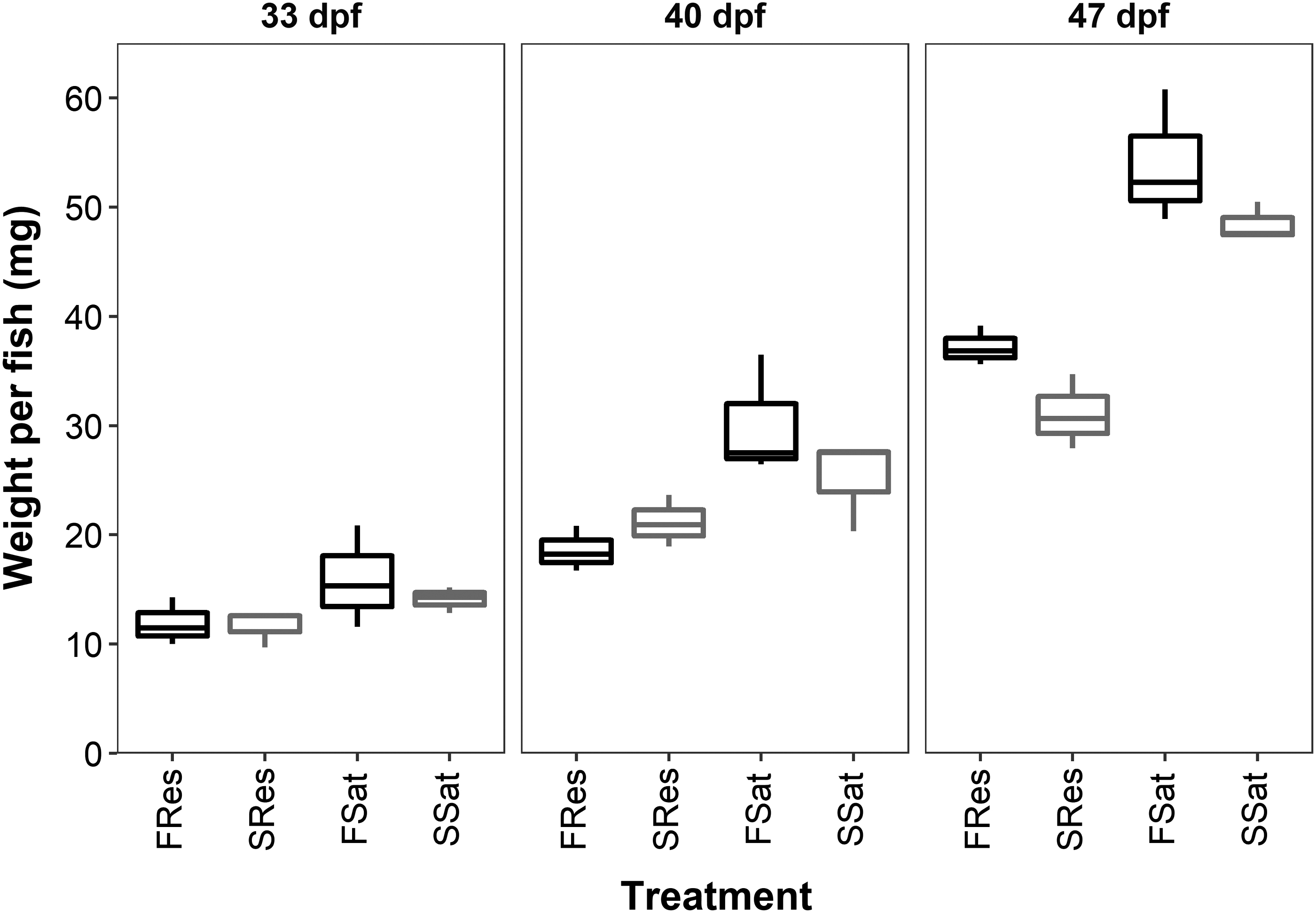
Median and quantile batch weight per fish (mg) for each treatment group during each sampling period (33, 40, and 47 dpf). Gray boxes indicate soybean meal-based diet treatments, while black boxes indicate fishmeal-based diet treatments. Holm adjusted p-values below 0.500 for multiple pairwise comparisons within a sampling week as follows: 40 dpf: SSat-FRes 0.359; 47 dpf: Fres-SRes 0.288, FRes-FSat 0.178, FRes-SSat 0.136, SRes-FSat 0.178, SRes-SSat 0.023, FSat-SSat 0.299. dpf, days postfertilization; FRes, fishmeal-based diet offered restrictively; FSat, fishmeal-based diet offered to satiation; SRes, soybean meal-based diet offered restrictively; SSat, soybean meal-based diet offered to satiation.
Weight gain
Percent weight gain was higher for individuals fed to satiation (F1 = 63.3, p < 0.001) and fed fishmeal-based diet (F1 = 7.30, p = 0.0270) than individuals fed restrictively or soybean meal-based diet. At 47 dpf, percent weight gain was higher for fish in the FSat and SSat groups than those in the FRes (p < 0.0200) and SRes (p < 0.00100) groups (Fig. 2). Zebrafish offered similar feeding rates (FSat and SSat [p = 0.334] or FRes and SRes [p = 0.261]) had similar percent weight gains; however, Zebrafish fed fishmeal-based diet showed a trend of greater percent weight gain than those fed soybean meal-based diet.
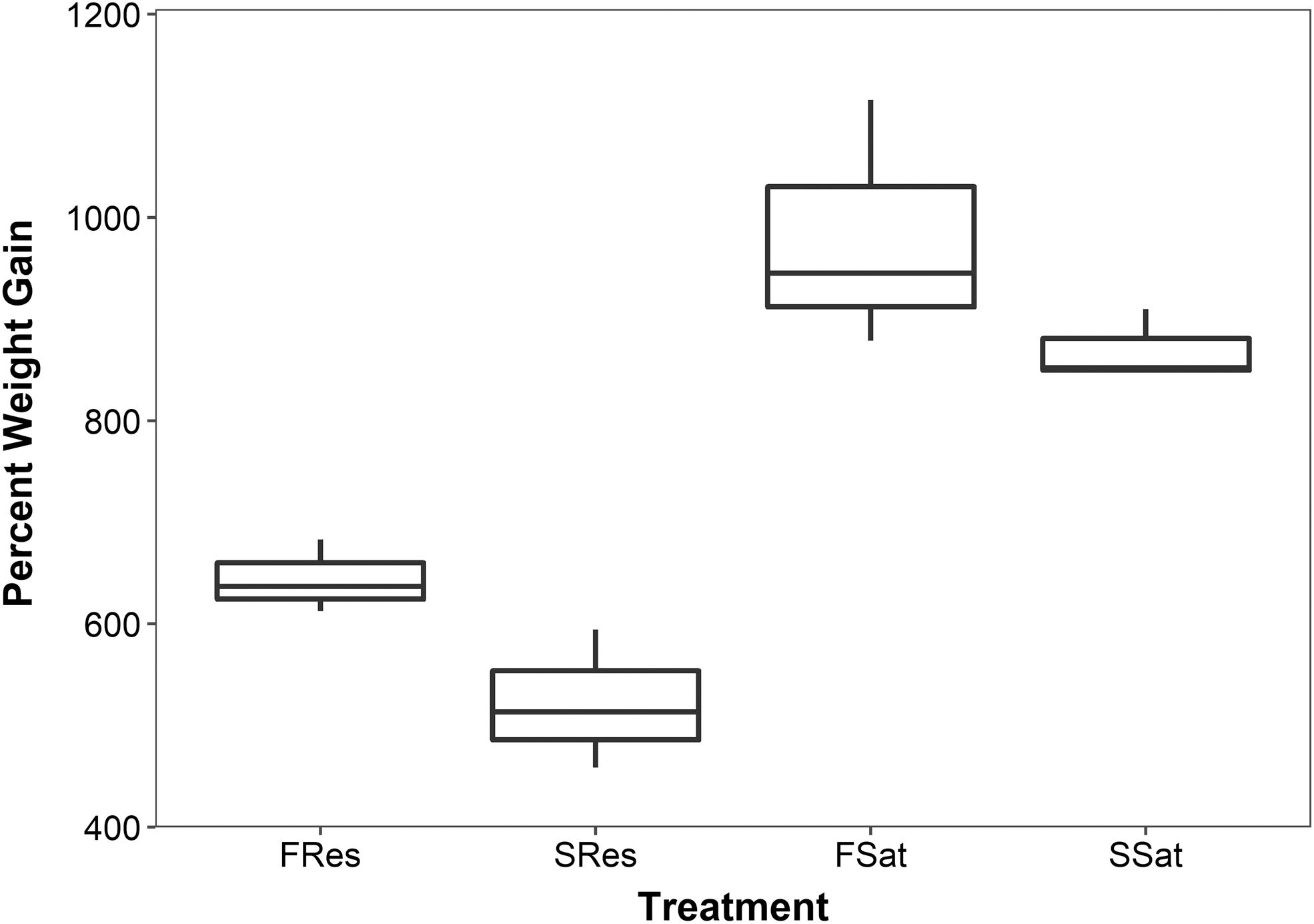
Median and quantile percent weight gain for each treatment group throughout the duration of the experiment. Holm adjusted p-values below 0.500 for multiple pairwise comparisons as follows: Res-FRes 0.288, FSat-FRes 0.178, SSat-FRes 0.136, FSat-SRes 0.178, SSat-SRes 0.023, SSat-FSat 0.229.
Total length
Feeding rate and protein quality affected the total length of Zebrafish. Zebrafish in the FSat group were longer than those in the SSat group across all sampling periods (Fig. 3; 33 dpf p = 0.0250; 40 dpf p = 0.0560, and 47 dpf p = 0.0210). Fish in the SSat group were longer than those in the SRes group only at 40 dpf (33 dpf p = 0.815; 40 dpf p = 0.0590; and 47 dpf p = 0.181), but tended to be longer at each sampling period. Fish offered similar feeding rates (FSat and SSat or FRes and SRes) had similar total lengths across all sampling periods (F1,1 = 0.928, p = 0.512), although fish in the SSat group tended to be shorter than those in the FSat group. However, the interaction between protein quality and feeding rate (F1,1 = 69.7, p = 0.0760) affected total length, indicating some cross-over effects potentially leading to these length trends.
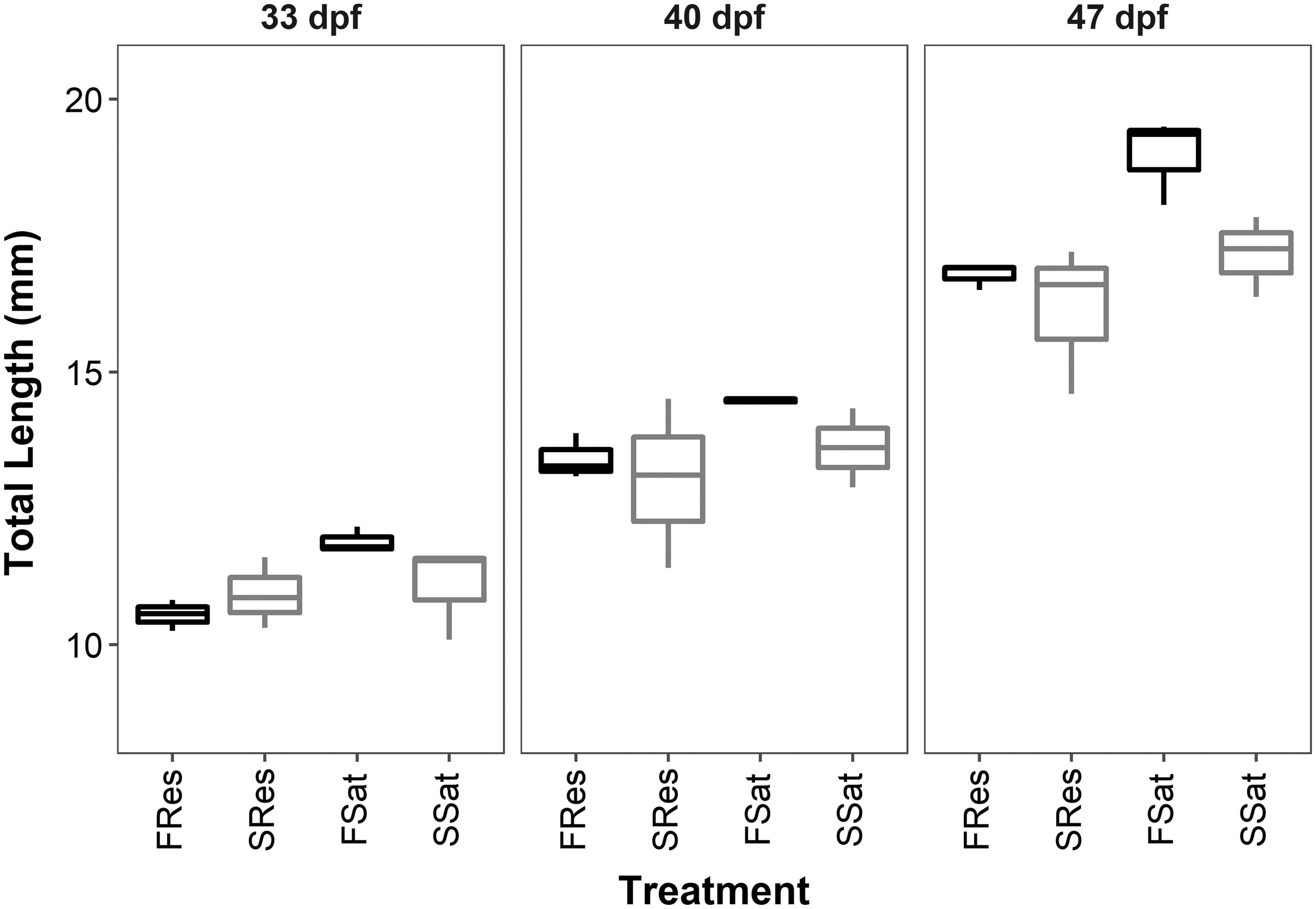
Median and quantile total length (mm) for each treatment group during each sampling period (33, 40, and 47 dpf). Gray boxes indicate soybean meal-based diet treatments, while black boxes indicate fishmeal-based diet treatments. Holm adjusted p-values below 0.500 for multiple pairwise comparisons within a sampling week as follows: 33 dpf: FRes-FSat 0.151; 40 dpf: FRes-FSat 0.338, SRes-SSat 0.338; 47 dpf: FRes-FSat 0.124.
Survival
Fish fed fishmeal-based diet had higher survival than those fed soybean meal-based diet (F1 = 3.94, p = 0.0825; Fig. 4). Within the same protein quality group, fish fed to satiation had similar survival to those fed restrictively (F1 = 0.0620, p = 0.810). However, all pairwise comparisons among treatment groups showed similar survival (p > 0.440 for all comparisons), although there was a trend for Zebrafish offered soybean meal-based feed to have lower percent survival.
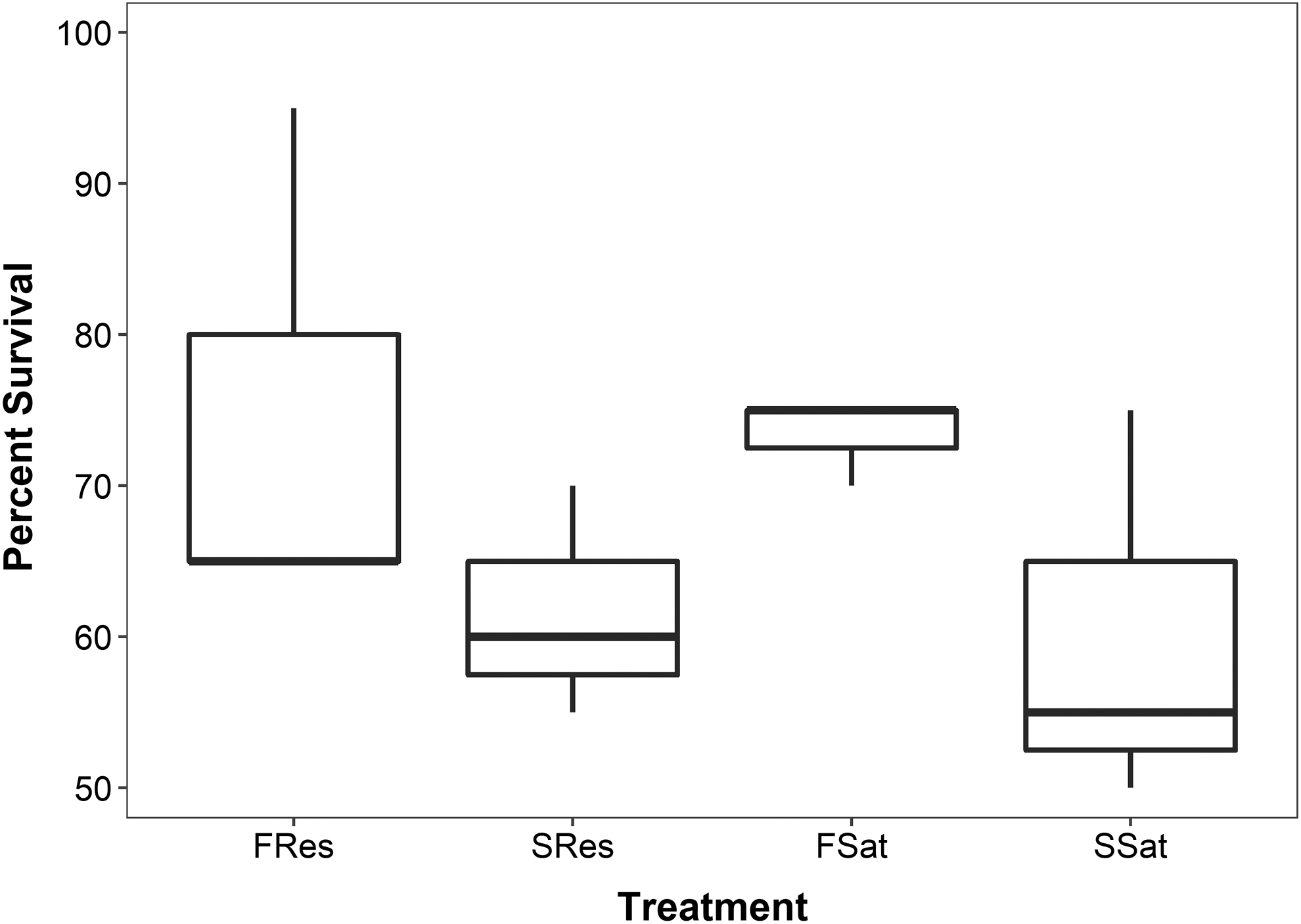
Median and quantile percent survival for each treatment group throughout the duration of the experiment. Holm adjusted p-values below 0.500 for multiple pairwise comparisons as follows: SSat-FRes 0.211.
Feeding efficiency
Feed intake
Fish fed soybean meal-based diet had higher feed intake than those fed fishmeal-based diet at 40 and 47 dpf (Fig. 5; main effect: F1,2 = 73.8, p = 0.0130; 40 dpf: F1,2 = 45.6, p = 0.0210; 47 dpf: F1,2 = 30.4, p = 0.0310), and individuals fed to satiation consumed more feed than those fed restrictively (F1,2 = 75.0, p = 0.0130). However, interactions between protein quality and feeding rate affected the magnitude of difference in feed intake among treatment groups (F1,2 = 73.8, p = 0.0130). In addition, the difference in feed intake for Zebrafish fed fishmeal-based diet and soybean meal-based diet (F2,4 = 11.5, p = 0.0220) and between restrictive and satiate treatment groups (F2,4 = 8.50, p = 0.0360) differed by sampling period. Specifically, individuals fed to satiation always had higher feed intake than those fed restrictively, but individuals fed soybean meal-based diet to satiation had much higher feed intake at 40 and 47 dpf than individuals in all other groups, indicating an interaction between protein quality, feeding rate, and sampling period (F2,4 = 11.5, p = 0.0220).
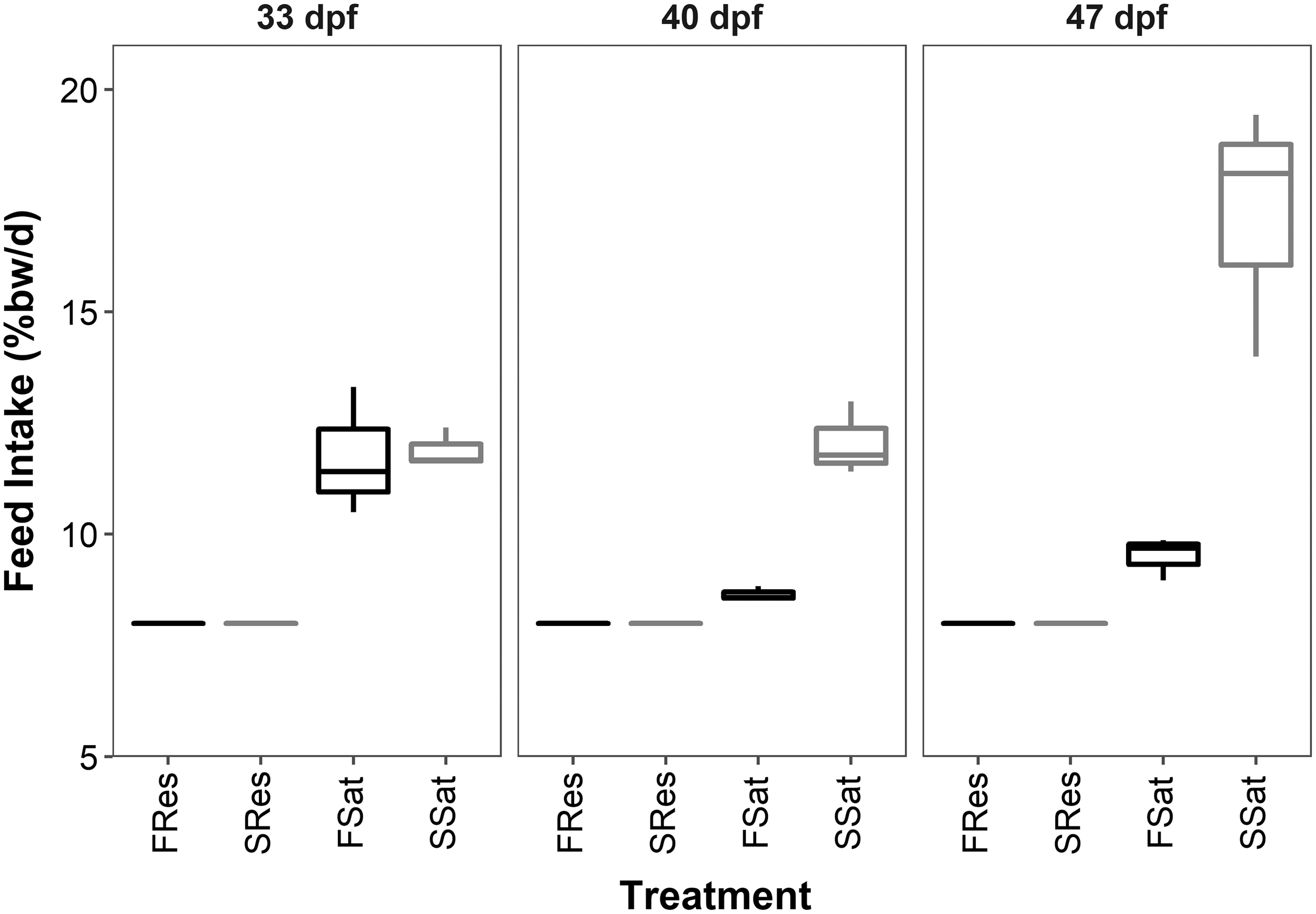
Median and quantile feed intake as percent body weight per day (%bw/d) for each treatment group during each sampling period (33, 40, and 47 dpf). Gray boxes indicate soybean meal-based diet treatments, while black boxes indicate fishmeal-based diet treatments. Holm adjusted p-values below 0.500 for multiple pairwise comparisons within a sampling week as follows: 33 dpf: FRes-FSat 0.138, FRes-SSat 0.021, SRes-FSat 0.138, SRes-SSat 0.021; 40 dpf: FRes-FSat 0.067, FRes-SSat 0.067, SRes-FSat 0.067, SRes-SSat 0.067, FSat-SSat 0.067; 47 dpf: FRes-FSat 0.152, FRes-SSat 0.152, SRes-FSat 0.152, SRes-SSat 0.152, FSat-SSat 0.152.
Feed conversion ratio
Zebrafish fed soybean meal-based diet had higher FCR than those fed fishmeal-based diet (Fig. 6; F1,2 = 24.2, p = 0.0390), and those fed to satiation had higher FCR than those fed restrictively (F1,2 = 113, p = 0.00900). However, FCR among treatment groups differed across sampling periods (F2,4 = 7.68, p = 0.0430) and showed different trends by week depending on protein quality and feeding rate (F1,2 = 15.3, p = 0.0600). Chiefly, SSat fish had high FCR (>1.0) throughout the entire experiment, which was higher than fish fed restrictively or FSat fish. Yet, at 47 dpf, SRes fish had similarly high FCR to SSat fish (p = 0.865). Fish fed restrictively and FSat fish had comparable FCR at 33 and 40 dpf (p > 0.220), but FCR varied considerably among treatment groups at 47 dpf. In this study, FRes fish had the lowest FCR, followed by FSat fish, and SRes and SSat fish had the highest FCR. These complex relationships among FCR values and treatment groups highlight the interaction feeding rate and protein quality had on this metric.
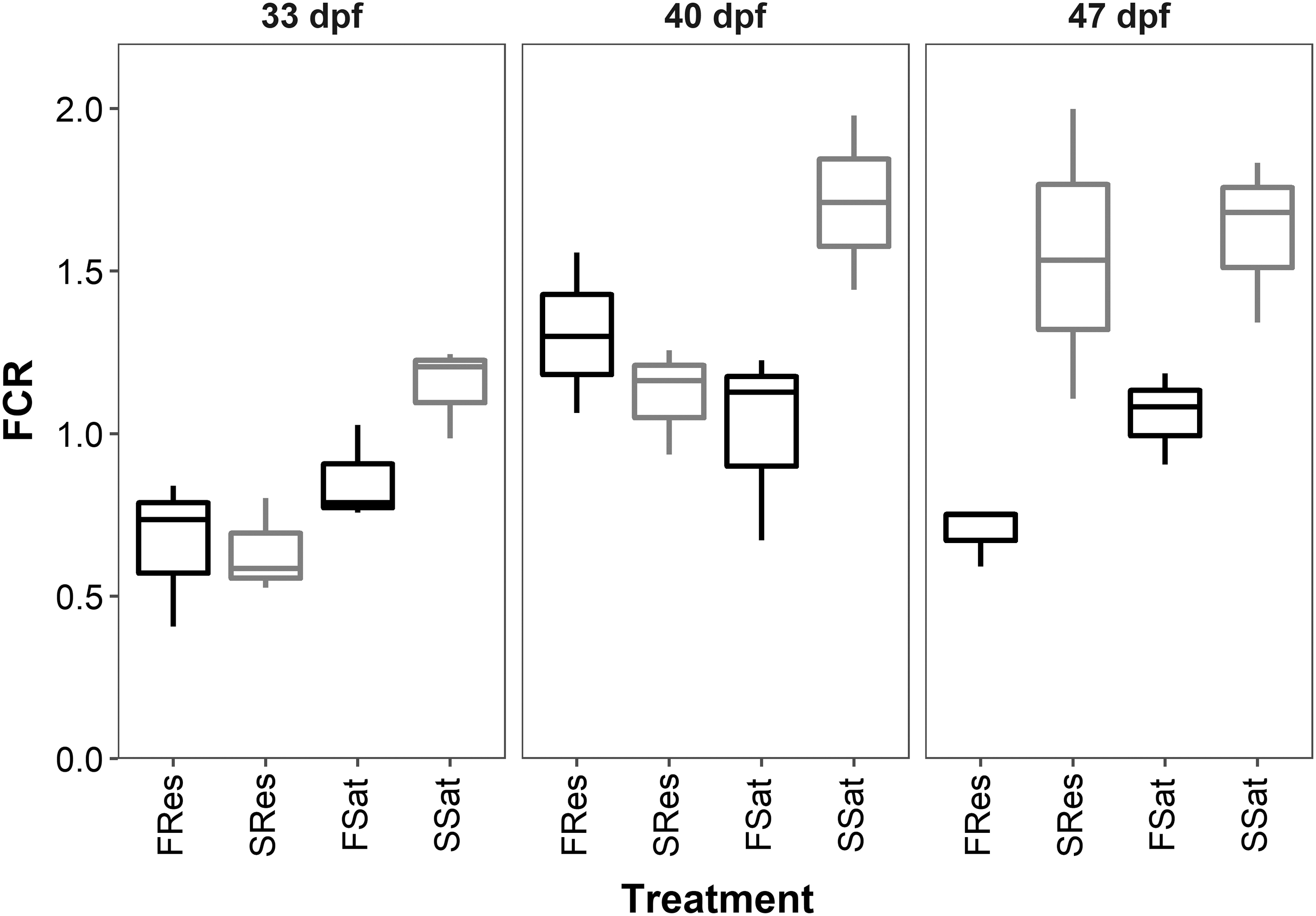
Median and quantile FCR for each treatment group during each sampling period (33, 40, and 47 dpf). Gray boxes indicate soybean meal-based diet treatments, while black boxes indicate fishmeal-based diet treatments. Holm adjusted p-values below 0.500 for multiple pairwise comparisons within a sampling week as follows: 33 dpf: FRes-SSat 0.065, SRes-FSat 0.070, SRes-SSat 0.355; 40 dpf: SRes-SSat 0.270, FSat-SSat 0.148; 47 dpf: FRes-SSat 0.063. FCR, feed conversion ratio.
Discussion
This study aimed to determine if protein quality or feeding rate had an interactive or differential effect on measured responses of fish growth, survival, and feeding efficiency (i.e., FCR and feed intake) using juvenile Zebrafish as a model organism. Results show that feeding rate and protein quality affected weight and total length, although feeding rate had a larger effect on growth. In addition, feeding rate and protein quality individually and interactively affected percent weight gain, feed intake, and FCR. Individuals fed to satiation had higher growth and lower feeding efficiency as expected for animals offered more nutrients and energy.
Trends in measured response variables varied by protein quality when comparing treatment groups offered the same feeding rate. Specifically, feeding fishmeal-based diet yielded higher growth and lower efficiency metrics compared to feeding soybean meal-based diet similar to Smith et al.'s experiment that indicated protein quality affected growth in Zebrafish. 6 However, this study's results contrast a previous study, which found that protein quality, but not feeding rate, affected growth metrics of Channel Catfish (Ictalurus punctatus) reared in ponds. 19 This Zebrafish experiment occurred in a controlled setting rather than an open-system where other natural sources of food potentially reduced measurable feeding rate effects on growth in Channel Catfish.
Both protein quality and feeding rate affected growth of Zebrafish. First, Zebrafish fed to satiation experienced higher growth than Zebrafish fed restrictively, which compares to other studies showing similar patterns in growth metrics,25,44,45 but differs from many studies that show similar or improved growth in both fish21,24,46,47 and shrimp 30 fed restrictively. In the latter studies, improved growth associated with restrictive feeding was attributed to maximized digestion and absorption resulting from caloric restriction 23 and suboptimal protein levels, as opposed to satiation feeding without nutrient or caloric limit. 22 Moreover, there are disproportionately higher metabolic costs of feed digestion and nutrient absorption at heightened feed intake levels, 48 leading to observed reduced feeding efficiency metrics in Zebrafish fed to satiation. The excess nutrients in satiate feeding increased availability of recovered energy used toward growth, allowing Zebrafish to attain larger sizes and improved body condition (i.e., weight gain:total length) compared to those fed restrictively. This finding aligns with a study conducted on Rainbow Trout (Oncorhynchus mykiss), which showed individuals fed to satiation retained more energy and lipids compared to those fed restrictively. 45 Thus, in this Zebrafish study, feeding to satiation yielded greater growth potentially due to greater recovered energy regardless of the reduced absorption capabilities compared to the restrictively fed Zebrafish that maximized nutrient absorption. However, whether the greater growth in the satiation group led to different whole-body composition, including potentially higher lipid content, 21 requires further investigation.
Second, Zebrafish fed fishmeal-based diet were larger than those fed soybean meal-based diet. Because this trend was similar across feeding rates, feeding restrictively may be sufficient to notice trends in response variables. Third, the interaction between protein quality and feeding rate may yield delayed observable effects in measured variables. Specifically, observed differences in growth metrics were seen most prominently during the third sampling period (47 dpf). This finding indicates that trends among treatment groups may not be immediately obvious, so how measured responses vary across a study's duration may be an important aspect of further nutritional exploration.
Zebrafish survival was similar across treatments, but individuals fed soybean meal-based diet had lower survival than those fed fishmeal-based diet. The lowered survival of Zebrafish fed soybean meal-based diet could be due to exposure to antinutritional factors such as protease inhibitors and saponins found in soybean meal,15,49 which are known to induce intestinal inflammation and impair fish health. 50 In addition, individuals experienced 60%–75% survival on average, which compares to similarly aged larval and juvenile Zebrafish survival in other studies,38,51–53 and other fishes offered a partial or full replacement of fishmeal with soybean meal diet.32,33,37,39
However, this lower level of overall survival experienced by these Zebrafish may not be conducive for best culture practices and may be due to individuals not transitioning successfully to formulated feed. Most mortalities in all experimental units occurred within a week of feeding experiment initiation and all individuals were much smaller (e.g., 0.0100–0.0300 mg) than surviving Zebrafish. It is likely that the deceased Zebrafish were too small to consume formulated feed or found the feed unpalatable and did not even initiate feeding during the experiment.
Reduced growth in fish fed diets containing soybean meal is often a result of reduced feed intake associated with lowered palatability of plant-based feeds.33,54 However, reduced growth and feed intake were not observed in this study. Instead, feed intake and FCR were higher for Zebrafish in the SSat treatment group than Zebrafish in other treatment groups and trended to be higher for those in the SRes treatment group as well. Most likely, Zebrafish fed soybean meal-based diet could not efficiently use the feed for growth, increasing feed intake to compensate for any potential nutrient deficiency or absorption impairment. Consequently, high availability of soybean meal-based diet in the SSat treatment allowed for higher feed consumption leading to comparable growth to those in the FSat treatment. The high feed intake and FCR of Zebrafish fed soybean meal-based diet compare to studies showing that nekton fed to satiation18,30 and offered a partial or full replacement of fishmeal with soybean meal-based diet 32 exhibit reduced feeding efficiency metrics when compared to those fed restrictively or offered fishmeal-based diet. Lower growth and overall poor acceptance of plant-based feed has been observed in carnivorous33,37 and omnivorous species 55 when offered feed with a full replacement of fishmeal. Generally, a partial replacement (40%–90%) of fishmeal with plant-based protein sources results in improved acceptance and comparable growth to a fishmeal feed.33–37 However, even with partial replacement of fishmeal, undesirable consequences can occur, including lowered feeding efficiency,32,33,36,56 reduced functioning of the digestive system, 37 changes to gene expression, 15 or reduced fillet quality for consumers32–34,36 due to lower digestibility of soybean meal or the presence of antinutritional factors associated with intestinal inflammation, and reduced digestive and absorptive capacity of individuals.37,49,56 Thus, in this study, reduced absorption and digestive capabilities could have led to the observed lower growth in Zebrafish offered soybean meal-based diet. However, despite a potential digestibility reduction, the overconsumption of soybean meal-based diet by the SSat group led Zebrafish to have reduced growth performance compared to FSat Zebrafish. In a practical sense, this overconsumption of feed (i.e., high feed intake and FCR) and reduced growth performance by juvenile Zebrafish fed soybean meal-based diet are undesirable as it wastes food, deteriorates water quality, and increases overall feeding costs. 24
Conclusions
This experiment aimed to determine whether protein quality, feeding rate, or both affect fish growth and feeding efficiency response variables using juvenile Zebrafish as a model organism. Feeding rate affected growth metrics, while both feeding rate and protein quality, as well as the interaction between the two variables affected feeding efficiency metrics. Specifically, highest growth of juveniles was associated with feeding to satiation and a fishmeal-based diet, and lowered feeding efficiency was associated with feeding to satiation and a soybean meal-based diet.
We acknowledge that these results pertain to the juvenile life stage and may be Zebrafish specific, but they can inform the standardization of Zebrafish feeding regimes. Furthermore, regardless of species and life stage, the interactive effects between dietary protein quality and feeding rate highlight the importance of varying feeding rate and feed formulation in tandem in nutritional studies when possible. If this experiment only compared the effects of protein quality on Zebrafish offered one feeding rate, effects of protein quality on growth or feeding efficiency may not have been observable. However, the overconsumption of feed and feed waste associated with feeding to satiation along with space and budgets limits warrant the use of restrictive feeding where trends in response variables are at least observable and can inform culture practices.
Footnotes
Authors' Contributions
S.V. and K.K. contributed to the experimental conceptualization. S.V. conducted data curation and formal analysis. S.V. and K.K. contributed to methodology for the research. S.V. wrote the original draft of the article and S.V. and K.K. edited the article.
Acknowledgments
We would like to thank John Grayson, Giovanni Molinari, Connor Schwepe, and Erica Curles for assistance with Zebrafish spawning and rearing. We also thank Michal Wojno for article comments during the editing process.
Disclosure Statement
No competing financial interests exist.
Funding Information
There was no specific funding associated with this research.