






Abstract


Introduction:
There are numerous minimal invasive (MI) treatment options described in the literature for patients with primary ventral hernia repair but none has gained the universal acceptance. 1,2 Laparoscopic intraperitoneal onlay mesh (IPOM) repair is the most used and extensively studied technique for small- and medium-sized primary ventral and incisional hernia. 3 However, it is associated with significant mesh-induced complications, post-operative pain, and higher costs. 4 The MI extraperitoneal approaches intend to overcome these limitations. 5 This video evaluates the results of laparoscopic ventral transabdominal preperitoneal (TAPP) mesh repair for primary ventral hernias.
Methods:
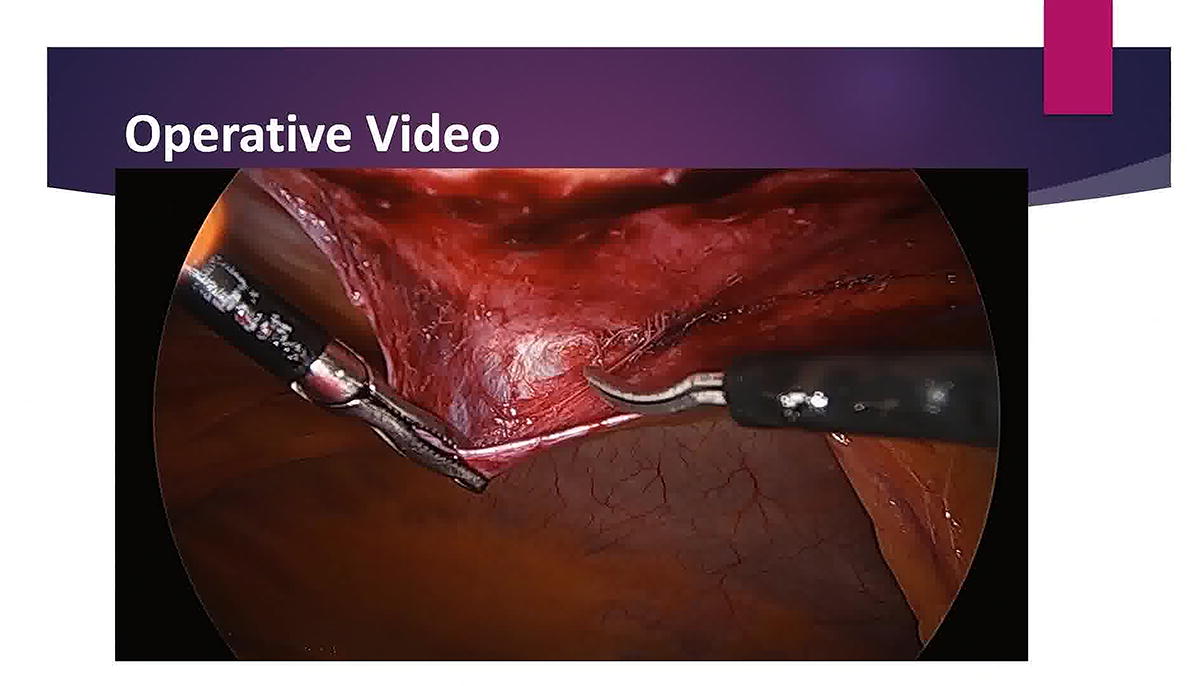
This study comprised 12 patients with primary ventral hernias. All patients were managed laparoscopically by vTAPP repair with a follow-up of at least 6 months. The inclusion criteria were small-to-medium-sized (2–4 cm) primary ventral hernias located over the umbilical or epigastric regions. Hernias with defect size >4 cm, postincisional, and recurrent hernias were excluded. In vTAPP repair, a preperitoneal flap is created by starting the dissection 5–6 cm away from the hernia defect. Contralateral tilt of the operating table, counterpressure from outside, and preperitoneal capnodissection of the peritoneal flap with a Veress needle facilitate the flap creation. Any peritoneal rents are repaired with vicryl 3-0. After closing the fascial defect with barbed suture, a 15 × 15 cm simple polypropylene mesh was deployed with sufficient overlap all around. The mesh was fixed to the posterior rectus sheath using prolene 2-0 suture followed by the closure of the peritoneal flap using barbed suture.
Results:
Twelve patients (M:F::2:1) with a mean age of 38 years (range 27–56 years) and mean body mass index of 29.4 kg/m2 (range 26.8–32.4 kg/m2) were included. One patient was excluded from the study as the procedure was converted to IPOM repair due to a gross peritoneal flap tear. The average operative time was 121 minutes (range 96–150 minutes). The mean postoperative VAS score at 24 hours was 2.2 (range 1–4), and all patients were discharged on postoperative day 1. There were no bowel or bladder injury, surgical site infection, seroma, and recurrence noted over 6 months of follow-up.
Conclusion:
Laparoscopic ventral TAPP repair is a safe and feasible alternative option for small-to-medium-sized primary ventral hernia. The advantages include lower costs, less pain, and shorter duration of hospital stay. Longer operative time and steeper learning curve are the main limitations of this procedure.
Patient consent statement:
Authors have already received and archived patient consent for video recording/publication of the surgical procedure video without exhibiting patient demographic details and identity in advance.
Source of work or study:
This is an original work carried out in a tertiary care public hospital, and there are no conflicts of interest or obligations resulting from it to any of the authors.
There are no commercial associations during the last 3 years that might create a conflict of interest in connection with the video.
Runtime of video: 9 mins 30 secs
Get full access to this article
View all access options for this article.