






Abstract


Introduction:
Pericardial effusions is a rare condition in infants with reports of up to 50% failure of medical management in cases of recurrent pericardial effusions in this population. 1,2 Surgical intervention is necessary in these cases to prevent frequent need for invasive procedures and prevent possible cardiac tamponade. 3 The classical surgical intervention is an open approach to a pericardial window. 4 We describe a case of a successful thoracoscopic pericardial window in an infant.
Methods:
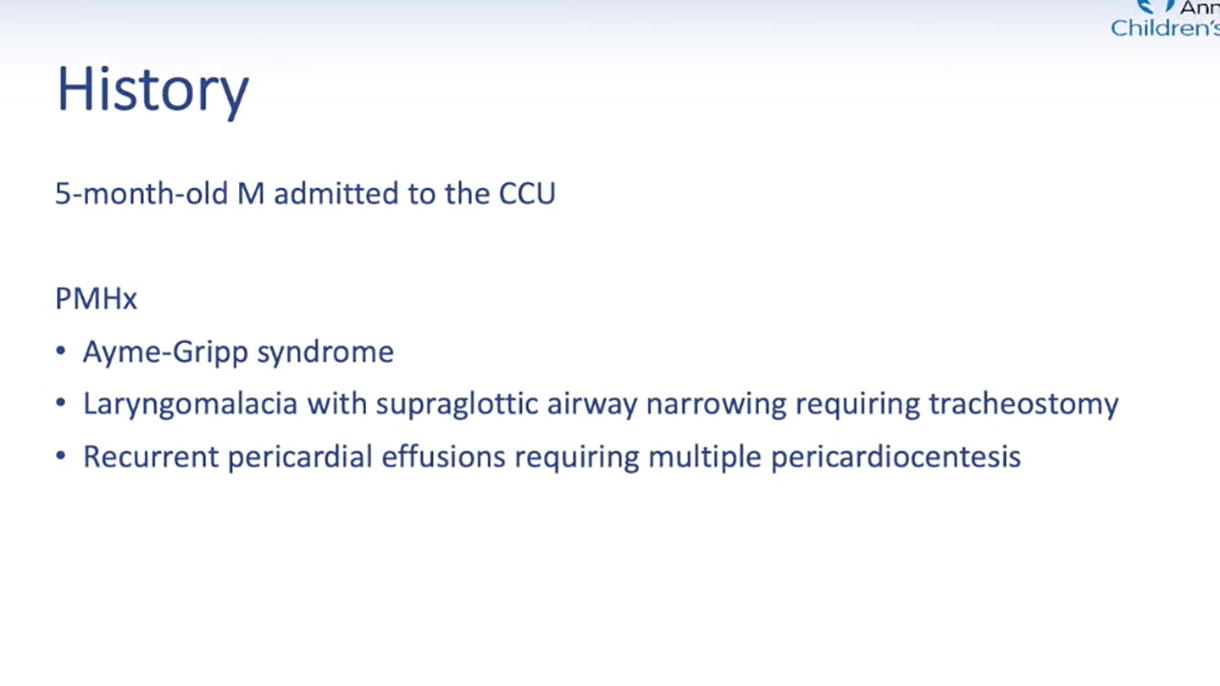
A 5 month old male with a history of Ayme-Gripp syndrome, laryngomalacia with supraglottic airway narrowing requiring tracheostomy, and recurrent pericardial effusions requiring multiple pericardiocentesis. Due to the frequent nature of his need for pericardiocentesis, decision was made to pursue right sided thoracoscopy with pericardial window creation. After three ports were placed in the right chest and successful visualization was obtained, the pericardium was incised using endoscopic scissors. Immediately there was release of pericardial fluid that was straw colored and clear. The opening in the pericardium was extended in a cephalad direction using a combination of Cool Seal and scissors.
Results:
The patient did well immediately postoperatively. Unfortunately, on postoperative day 4 he was found to be bacteremic. The patient recovered with a course of antibiotics and was discharged without any additional complications.
Conclusion:
A thoracoscopic approach to a pericardial window in infants can be safe and effective. Potential benefits from a thoracoscopic approach include smaller incisions and likely less postoperative pain. Further studies should be conducted to demonstrate the benefits of this approach.
Of note, this video was presented at the International Pediatric Endosurgery Group Annual Meeting, June 2024 in Henderson, LV.
Patient Consent Statement:
Patients have consented to photo/video being utilized for purposes of research.
Author Disclosure Statements:
The authors have nothing to disclose. Author(s) have received and archived patient consent for video recording/publication in advance of video recording of procedure.
Runtime of video:
2 min 48 sec.
Get full access to this article
View all access options for this article.