






Abstract
Introduction:
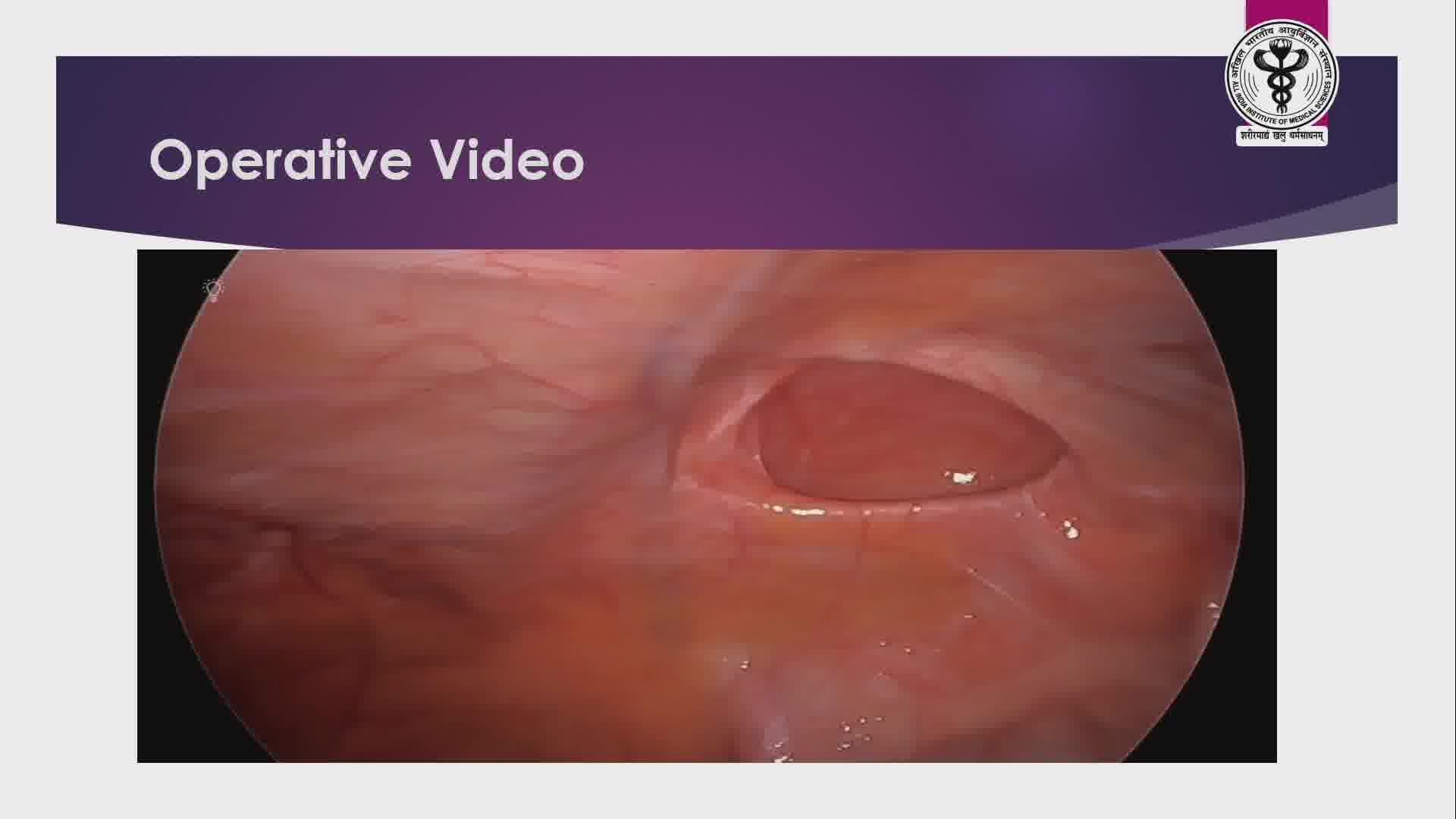
Atypical hernias include suprapubic, iliac, and lumbar hernias, and they are almost always incisional in nature. 1 –3 Laparoscopic management of these hernias is technically challenging due to close proximity to bone and other neurovascular structures. 2 –4 This technical challenge may be overcome by raising the peritoneal flap in the lower half as it would be very difficult and ergonomically challenging to suture the peritoneal flap in the proximal location. This video evaluates the results of laparoscopic transabdominal partially extraperitoneal (TAPE) mesh repair for atypical hernias.
Materials and Methods:
This study comprised five patients with atypical incisional hernias. All patients were managed laparoscopically by TAPE repair at AIIMS, New Delhi, with a follow-up at least 6 months. The inclusion criteria were small and medium (<10 cm) hernias located over the iliac, suprapubic, or lumbar regions. Hernias with defect size >10 cm or features of strangulation were excluded. In TAPE plus repair, an extraperitoneal pocket was created by starting the dissection just above the superior margin of defect horizontally and extending the dissection up to 2 cm below Cooper's ligament inferiorly and laterally along the psoas muscle. The hernia defect was closed with barbed suture, incorporating the overlying abdominal wall to obliterate the cavity. A macroporous, tissue-separating mesh of adequate size was paced partially inside the pocket. Four corner transfascial suturing was used with Polypropylene 1-0 via an epidural needle. Tacks were placed at Cooper's ligament, the superior margin of the dissected peritoneum, and the edges of the mesh.
Results:
Five patients (M:F::1:4) with mean age of 43 years (range 30–59 years) and mean body mass index of 28.6 kg/m2 (range 26.7–31.4 kg/m2) were included. Two patients were postabdominal hysterectomy, one post-lower segment cesarean section, one postappendectomy, and one post left nephrectomy. The average operative time was 104 minutes (range 85–130 minutes). All patients were discharged on postoperative day 1. There were no bowel or bladder injury, surgical site infection, seroma, or recurrence noted over 6 months of follow-up.
Conclusions:
TAPE repair is a safe and feasible option for incisional hernias located at atypical locations including iliac, suprapubic, and lumbar regions.
Patient Consent Statement:
Corresponding author have received and archived patient consent for video recording/publication of the video without exhibiting patient demographic details in advance.
Source of work or study:
This is an original work carried out in a tertiary care public hospital, and there are no conflicts of interest or obligations resulting from it to any of the authors.
There are no commercial associations during the last 3 years that might create a conflict of interest in connection with the video
.
Runtime of video: 8 mins 18 secs


Get full access to this article
View all access options for this article.