






Abstract
Introduction:
Laparoscopic cholecystectomy is one of the most performed procedures in general surgery. Identification of key anatomical structures and obtaining the critical view of safety (CVS) can be challenging in complex cases. Risk factors include adhesions, previous biliary interventions, and unfavorable gallbladder condition caused by infection, mucocele, or contraction. 1 Unclear anatomy increases the risk of biliary leakage and common bile duct (CBD) or vascular injury. In addition, it may lead to subtotal cholecystectomy, which potentially has clinical consequences such as the postcholecystectomy syndrome. 2,3 Indocyanine green (ICG) is a water-soluble molecule that, after intravenous injection, is eliminated by the liver and illuminates bile because of its fluorescent characteristics. It is safe to use and has multiple uses in hepatobiliary surgery, including liver mapping, tumor observation, and cholangiography. 4,5 In this video, ICG is used during a complex cholecystectomy to clarify biliary anatomy and prevent complications.
Materials and Surgical Technique:
A 70-year-old man with a history of hypertension and chronic kidney disease was admitted to the intensive care unit for necrotizing pancreatitis, for which he underwent three minimal invasive debridement procedures. Besides pancreatitis, a computed tomography scan showed cholecystolithiasis and a dilated CBD. During his 3 months of hospitalization, he suffered from a concurrent intestinal perforation caused by ischemia after a dissection of the superior mesenteric artery for which he underwent a right colectomy. One year after discharge, an endoscopic retrograde cholangiopancreatography was performed for recurrent symptomatic choledocholithiasis, which was complicated by a secondary mild pancreatitis. After full recovery the decision was made to—despite a hostile abdomen—perform a laparoscopic cholecystectomy 4 months later, to prevent recurrence with high risk of lethal outcomes. Prophylactic antibiotics and ICG (Verdye, 5 mg) were administered 5 minutes preoperatively. First the subxyphoid optical port was introduced and the pneumoperitoneum was created, after which the second (subcostal, right) port and an additional third port were placed. After identification of anatomical landmarks, adhesiolysis was performed. Near-infrared technology was used to observe hepatic and biliary structures. The CVS was obtained. The cystic artery and duct were dissected using the LaproFlex monopolar hook and subsequently clipped. The gallbladder was extracted with an endobag through the subcostal incision. Finally, a subhepatic drain was placed.
Results:
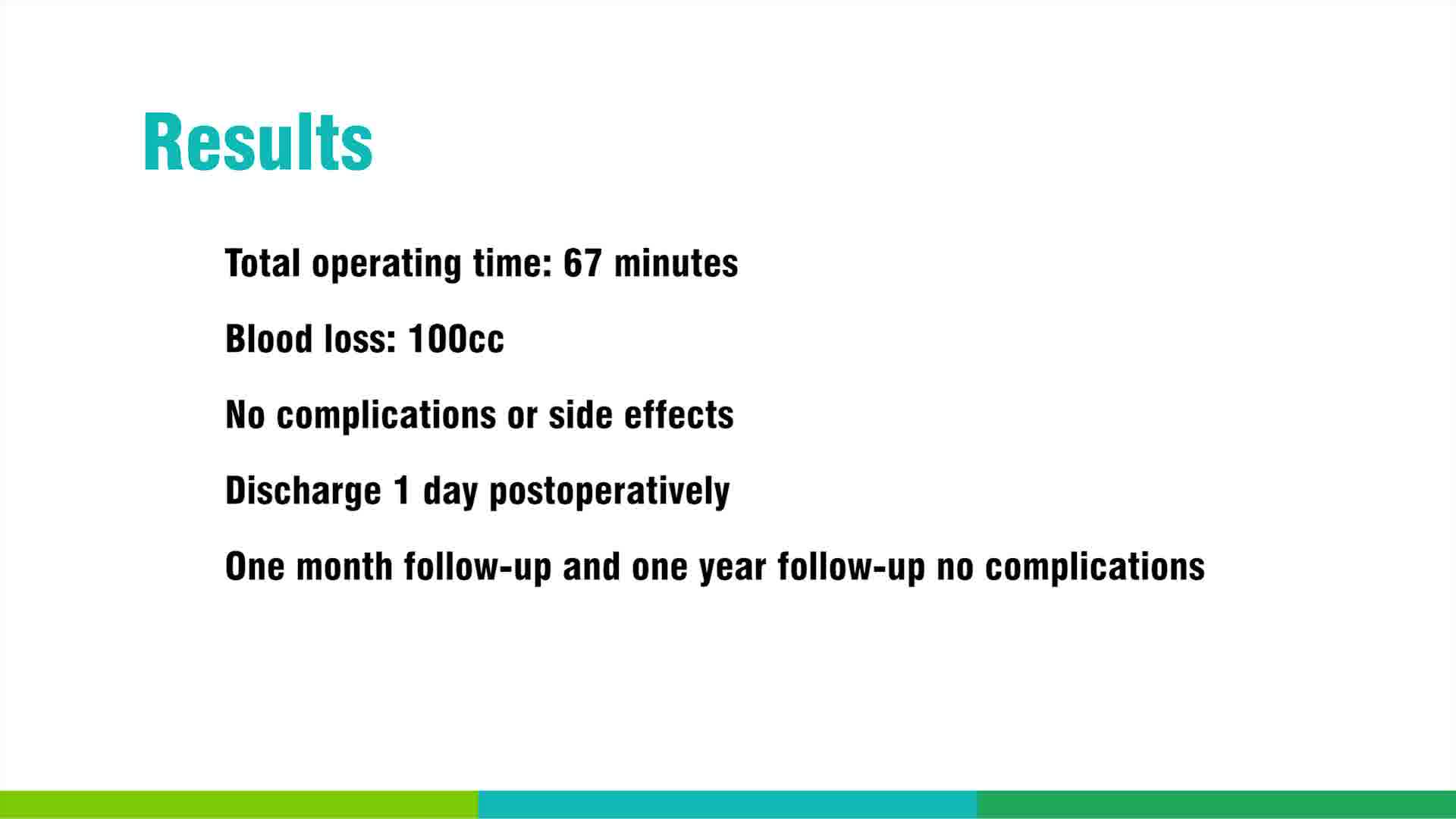
Operating time was 67 minutes with a blood loss of 100 mL. The bile ducts were adequately illuminated by ICG, allowing for complete cholecystectomy. Bile duct illumination additionally prevented a gallbladder remnant to be left behind. No complications occurred intra- or postoperatively and no side effects from ICG administration were observed. Our patient was discharged the day after surgery. At 1-month follow-up the patient had recovered well and could be discharged from further follow-up.
Discussion:
Intraoperative use of ICG is a useful tool in identifying biliary anatomy in complex cholecystectomy caused by adhesions, previous biliary interventions, and inflammation. This potentially reduces the risk of complications and prevents subtotal cholecystectomy.
No competing financial interests exist.
Runtime of video: 7 mins
Patient Consent: Authors have received and archived patient consent for video recording/publication in advance of video recording of procedure.


Get full access to this article
View all access options for this article.