






Abstract
Introduction:
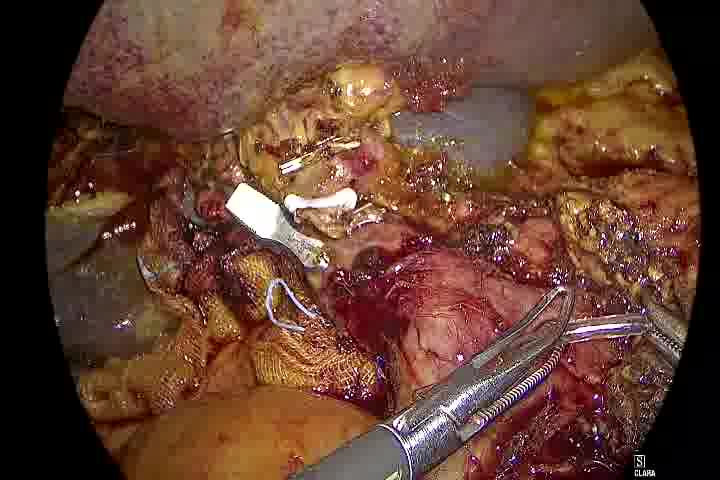
Laparoscopic pancreaticoduodenectomy (L-PD) is a safe procedure in high volume centers. 1 Postoperative pancreatic fistula (POPF) is the most feared complication of PD. 2 Several techniques have been reported to reduce the occurrence of POPF or to mitigate its sequelae. Blumgart pancreaticojejunostomy (PJ) is considered one of the most secure anastomoses. 3 Different laparoscopic modified Blumgart (LMB) techniques have been described 4 –7 : the proper selection of the stitches and their usage remains a critical issue. This video shows an LMB-PJ using a customized suture performed in a 69-year-old man, American Society of Anesthesiologists Status 2, with a distal cholangiocarcinoma.
Methods:
Five trocars were utilized to perform the L-PD reconstruction. 8 Six interrupted sutures were used to perform the duct to mucosa anastomosis. Considering the Wirsung diameter (<3 mm) a biodegradable internal stent was placed. An LMB-PJ was performed with four U interrupted sutures. Two drains were placed.
Results:
The overall operation time was 550 minutes. The LMB PJ time was 70 minutes. Drain amylases at postoperative day (POD) 1 and 3 were 1080 and 955 U/L, respectively. The patient was discharged at POD 9 without drains.
To date, LMB PJ has been performed in nine patients. Mean age at surgery was 71.7 years, male/female ratio was 4/5, seven patients (78%) had an FRS class >low, pancreatic stent was placed in five patients (56%); mean postoperative stay was 18 days, severe complications (Clavien–Dindo >2) were present in three patients (33%), two of which had a clinically relevant POPF. There were no mortalities or readmissions.
Conclusions:
Using a premade customized double armed suture, the LMB anastomosis allows a total invagination of the pancreatic stump edge. The customized double needle suture enables laparoscopic suturing on the jejunal loop, whereas avoiding knotting on the more fragile pancreatic tissue.
Acknowledgments:
The authors thank Davide Soldini for his valuable contribution to video editing.
Patient consent:
Authors have received and archived patient consent for video recording/publication in advance of video recording of procedure.
No competing financial interests exist.
Runtime of video: 9 mins 59 secs


Get full access to this article
View all access options for this article.