






Abstract
Introduction:
Augmentation cystoplasty (AC) has traditionally been used in the treatment of low capacity, poorly compliant, or refractory overactive bladder (OAB). The concept of AC is to use intestinal segments to increase the capacity and compliance of the bladder, thereby protecting the upper tract and relieving the patients of their symptoms. 1 The most frequently used bowel segment for AC is a detubularized patch of ileum. 1,2 Surgical correction of concomitant urethral sphincteric deficiency is required if demonstrated in patients with neurogenic bladder. 3 With the rise of use of anticholinergics, botulinum toxin, and sacral neuromodulation, we have seen a decline in AC in the past two decades. 4 Nonetheless, AC is still indicated whenever the conservative approaches fail and remains a procedure that stood the test of time in terms of long-term durability and high rates of patient satisfaction. 5
Methods:
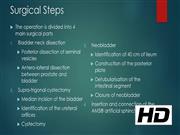
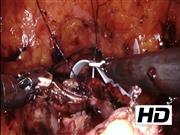
We herein describe the case of a 40-year-old male patient with neurogenic bladder secondary to central nervous system injury. The patient was diagnosed with OAB associated with urinary incontinence refractory to anticholinergics and botulinum toxin injections. A robot-assisted bladder augmentation was performed along with an artificial sphincter placement. No intestinal preparation was required. The surgery began by bladder neck dissection with posterior and anterolateral approaches. Supratrigonal cystectomy was then performed after identification of ureteral orifices. An appropriate 40 cm length of ileum was identified, detubularized along its antimesenteric border, and then sutured to the top of the bladder. After measurement of the bladder neck circumference, the AMS 800™ artificial urinary sphincter was placed and connected to the reservoir balloon.
Results:
The operative time was 548 minutes and estimated blood loss was 800 cc. No postoperative complication was reported. The patient was allowed a free dietary regimen on postoperative day 1, abdominal drain was removed on day 3, and overall hospital stay was 14 days. Herein, we demonstrated a robotic approach to AC along with concomitant placement of artificial urinary sphincter. The patient is at 5 months now from his intervention and reports improvement in symptoms and quality of life.
Conclusion:
AC remains a valid option for treatment of refractory OAB patients with satisfactory functional outcomes. The minimally invasive approach by robot-assisted laparoscopy might contribute in decreasing the morbidity of this complex procedure.
No competing financial interests exist.
Source of Work:
Erasme Hospital, Brussels, Belgium.
Runtime of video:
7 mins 53 secs
Abstract presentation in ERUS-DRUS 20 in November 2020.

Get full access to this article
View all access options for this article.