






Abstract
Introduction:
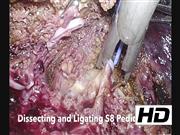
Central hepatectomy is an alternative to extended hemihepatectomy or trisegmetectomy for centrally located hepatocellular carcinoma (HCC). An oncologic resection may be performed while minimizing the risk of posthepatectomy liver failure. 1 With selective Glissonian approach to inflow, further preservation of hepatic parenchyma may be possible while ensuring adequate oncologic anatomical resection. This approach is especially useful in patients with limited functional liver parenchyma. The purpose of this video is to demonstrate the technique of preserving lateral pedicle to segment 5 during a laparoscopic central hepatectomy.
Methods:
This is a case of a 58-year-old lady with segment 8/4 HCC with Child-Pugh class A nonalcoholic steatohepatitis cirrhosis. Preoperative computed tomography (CT) of the liver showed a 6.2 × 5.7 × 5.8 cm LIRADS 5 mass at segment 8 with a contiguous component of 2.6 × 1.8 cm at segment 4A closely related to the origin of the middle hepatic vein. CT volumetry showed a residual liver volume of 61.8% for a planned resection, but if a trisegmentectomy was needed, there would not be sufficient future remnant volume. Preoperative Indocyanine Green was not performed in view of the underlying renal impairment. She underwent a laparoscopic central hepatectomy cholecystectomy with selective preservation of the lateral branch of segment 5 pedicle. Margins of the segment 4/8 lesion were delineated with intraoperative ultrasound and transection of the liver from the left to right was performed with Cavitron Ultrasonic Surgical Aspirator (CUSA). This was followed by the isolation of the anterior pedicle that was dissected to individual subsegmental pedicles to segments 5 and 8. The medial branch to segment 5 and the branches to segment 8 were ligated while preserving the lateral branch to segment 5. The tumor was removed en bloc at the root of the middle hepatic vein with preservation of the right and left hepatic veins.
Results:
Postoperatively, the patient drain was removed on postoperative day 6 and she was discharged. Final histology confirmed HCC. No adjuvant therapy was administered as the margins were clear. The patient has been disease free for 22 months as of March 2021 with normalization of Alpha Fetoprotein.
Conclusion:
Laparoscopic parenchymal sparing anatomical central hepatectomy is feasible and safe in suitable patients. Careful Glissonian first approach with vein-guided resection enables selective segmentectomy with subsegment preservation while ensuring oncologic resection with low morbidity.
No competing financial interests exist
.
Runtime of video: 9 mins 59 secs


Keywords
Get full access to this article
View all access options for this article.