






Abstract
Introduction:
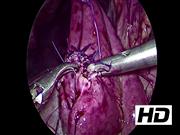
Pediatric chronic pancreatitis is not commonly diagnosed. Most patients with chronic pancreatitis have at least one gene mutation, often CFTR, PRSS1, or SPINK1. 1 Other risk factors include obstructive, toxic/metabolic, and autoimmune. Treatment options include enzyme supplementation, endoscopic retrograde cholangio-pancreatography, and pancreatic surgery. This video shows the technique for a laparoscopic lateral pancreaticojejunostomy. A search of the literature reveals seven cases of this surgery reported in adult literature and none in pediatrics. 2, 3, 4
Materials and Methods:
This video shows a laparoscopic approach to a lateral pancreaticojejunostomy. The patient in this case was an otherwise healthy 13-year-old girl who experienced multiple episodes of acute pancreatitis. Magnetic resonance imaging showed a variably dilated pancreatic duct with a chain of lakes appearance with multiple dilations and strictures. The maximal dilation was 1.1 cm and calcifications were present. Laparoscopy was started using routine trocar insertions and then the main pancreatic duct was dissected after creating a window in the lesser sac. The location of the dilated pancreatic duct was confirmed by aspiration of pancreatic contents. The dilated (approximately two-thirds) proximal portion of the main pancreatic duct was opened. Next, a 25 cm Roux limb was created intracorporeally 20 cm from the ligament of Treitz, using an endo gastro-intestinal anastomosis 45 mm blue load stapler. Subsequently, a side to side jejunal–jejunal anastomosis was created to reconstitute the jejunum. Thereafter a retrocolic window was created and the Roux limb was brought up to the pancreas. First, the posterior wall of the jejunum was anastomosed to the full thickness duct wall, followed by opening the jejunum and then the anterior wall of the jejunum was anastomosed to the anterior duct wall. The posterior anastomosis was jejunal serosa to the duct wall as the mucosa was indiscernible from the serosa. The retrocolic window was then closed around the Roux limb to prevent future herniation.
Results and Conclusions:
This patient had an uncomplicated 3-day hospital stay. Nasogastric tube was removed on postoperative day 2 after the aspirates changed from bilious to clear. The patient remained nil per orally for 48 hours after surgery. Her diet was advanced as tolerated. Amylase, lipase, and liver function studies normalized at follow-up (4 weeks, 3 months, 6 months, and 1 year). We propose laparoscopic pancreaticojejunostomy as a safe and reasonable treatment for chronic pancreatitis in children. Following the steps delineated in the video could ensure success.
Runtime of video: 4 mins 31 secs


Get full access to this article
View all access options for this article.