






Abstract
Introduction
: Idiopathic thrombocytopenic purpura (ITP) causes a progressive thrombocytopenia secondary to the destruction of platelets in the reticuloendothelial system. Splenectomy is the treatment of choice for ITP when medical therapies are ineffective. After splenectomy, up to 15% patients with ITP will relapse postoperatively. In such cases, the presence of an accessory spleen must be excluded. If an accessory spleen is identified, surgical excision is indicated to maintain an acceptable platelet count and avoid pharmacologic treatments. 1 This video presents a laparoscopic radio-guided approach for recurrent ITP in a 66-year-old male with a previously localized accessory spleen. Accessory spleens are usually small and may be difficult to localize. 2 This video demonstrates how to perform a radio-guided surgery with a laparoscopic gamma probe to detect technetium-labeled (99mTc) red blood cells.
Materials and Methods:
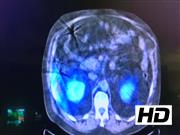
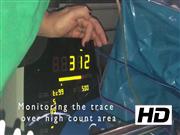
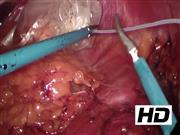
A 66-year-old male with history of long-term ITP refractory to steroid treatment was treated by laparoscopic splenectomy, without intraoperative evidence of an accessory spleen. 3 After a successful increase in his platelet counts, he presented at 10 months after surgery with recurrent ITP. Scintigraphy using heat‐damaged 99mTc‐labeled red blood cells revealed a 1 cm region of uptake adjacent to the left renal fascia suggestive of an accessory spleen. A laparoscopic radio-guided splenectomy was scheduled. On the day of surgery, the patient's blood was obtained, and 99mTc labeling of denatured erythrocytes was performed. The labeled blood was then reinjected before surgery. The patient was placed at 30° in a left decubitus position with the waist flexed. A pneumoperitoneum was created using a Veress needle, and four trocars were placed in the left subcostal region. A targeted dissection by laparoscopic gamma probe was performed. A brownish specimen with a maximum of 550 counts per second with the 99mTc gamma probe was identified. The specimen was excised and placed in a bag. The specimen was extracted and confirmed intraoperatively by a nuclear medicine specialist.
Results:
The entire procedure lasted 65 minutes. The patient was discharged 24 hours after surgery. At 6 months postoperatively, the patient's platelet count was 153,000 and 227,000 at 1 year. The specimen was consistent with splenic tissue.
Conclusion:
Reintervention of patients with recurrent ITP with suspected accessory splenic tissue may be challenging because of the small size of the accessory tissue. A radio-guided surgery with a laparoscopic gamma probe and 99mTc-labeled erythrocytes is a viable minimally invasive approach to identify residual functional splenic tissue for patients with recurrent ITP.
No competing financial interests exist.
Runtime of video: 4 mins 33 secs
Get full access to this article
View all access options for this article.
References
Supplementary Material
Please find the following supplemental material available below.
For Open Access articles published under a Creative Commons License, all supplemental material carries the same license as the article it is associated with.
For non-Open Access articles published, all supplemental material carries a non-exclusive license, and permission requests for re-use of supplemental material or any part of supplemental material shall be sent directly to the copyright owner as specified in the copyright notice associated with the article.
