






Abstract
Background:
In 2018 we started developing simulation-based models as an educational strategy for intrauterine invasive techniques. 1 The approach to fetal surgery includes ultrasound-guided procedures, fetoscopy, and endoscopic suturing. In this video of 3 minutes 54 seconds length, we present two different training boxes for fetal therapy skill acquisition in a safe environment. 2
Materials and Methods:
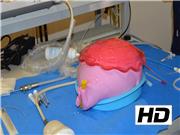
We have proposed and constructed a maternal–fetal trainer: 3 a 1.5 cm height × 25 cm width thermoplastic elastomeric gel plate (reusable by melting and may be plasticized as well) represents the skin, abdominal, and anterior uterine wall. It is placed over a jumbo size balloon containing water to simulate the amniotic sac and cavity. Submerged, there is a gel fetus with a thoracic cyst (4 cm diameter water-filled balloon) attached to a 15 cm umbilical cord (160S size balloon) covered with gel and red-colored liquid content. The jelly umbilical cord reaches and fuses in a gel–placenta stuck to the simulated amniotic sac that can be placed anterior, posterior, or laterally by rotation of the trainer. Through this model, ultrasound-guided cordocentesis, 4 fetal anesthesia injection, shunt placement, and fetoscopic procedures can be performed repeatedly without significant leakage. A second box trainer, inspired by Dr. Gine's fetal myelomeningocele model, has been developed in our simulation center for intrauterine fetoscopic suturing. 5 Our model is a 27 cm “bosu” half ball wrapped up by painted fleece with an 11 cm window sealed by a gel port; it contains a 10-inch silicone vinyl baby with a simulated neural tube defect. The lesion is created with a condom filled with yellowish colloid and a bunch of threads fixed to a gel base to simulate neural placode. The simulated myelomeningocele emerges through a 3 × 1.5 cm perforation of a fabric layer that covers the lower back of the doll. Removal of cystic tissue, detethering, and closure in two layers 6 as described by Dr. López can be performed.
Conclusion:
We look forward to these models contributing to the fetal therapy procedural skill learning curve and patients' outcomes.
The authors have nothing to disclose.
Runtime of video: 3 mins 54 secs


Keywords
Get full access to this article
View all access options for this article.