





Abstract
Introduction:
Pediatric renal tumors are typically resected through a large abdominal incision to prevent tumor rupture. If this occurs, staging will be increased with more therapy needed. However, the large incision can cause significant postoperative pain and a disfiguring scar. Laparoscopic resections of kidney tumors have been reported, however, this is typically after neoadjuvant therapy to decrease tumor size. 1 We present a case of a patient with a kidney tumor resected laparoscopically with adherence to oncologic principles as the initial therapeutic intervention.
Materials and Methods:
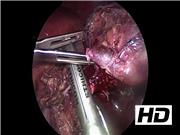
A 13-year-old girl presented with a 3-month history of hematuria and left-sided abdominal pain. A CT scan showed a 5 cm heterogeneous left renal mass centered within the renal pelvis. The mass was concerning for a Wilms tumor or a renal cell carcinoma. A metastatic work-up was negative. A laparoscopic approach was undertaken. Four 5-mm ports were used for the dissection with one port being later upsized to a 10 mm port for the stapler. The operation began by dividing the white line of Toldt and retroperitoneal attachments to retract the left colon away. This exposed the kidney. The ureter was dissected as low as possible in the pelvis. The kidney attachments were then dissected widely to leave the perinephric fat and Gerota's fascia with the specimen in case of any local tumor invasion. While dissecting the renal hilar vessels, the patient was found to have a circumaortic left renal vein. The ureter was then stapled and divided. The renal vessels were individually stapled. After dividing the remaining attachments to the kidney, lymph node sampling was performed for staging purposes. The specimen was removed in an endocatch bag through a Pfannenstiel incision without any rupture.
Results:
The patient recovered well, going home on postoperative day 2. Final pathology report showed a renal cell carcinoma.
Conclusions:
We demonstrate that kidney tumors in children can be safely resected laparoscopically without need for neoadjuvant chemotherapy. Oncologic principles can be followed and the laparoscopic approach can lessen the morbidity of an open incision.
No competing financial interests exist
.
Runtime of video: 5 mins
Presented at International Pediatric Endosurgery Group meeting in London, England, on Friday, July 21, 2017.


Get full access to this article
View all access options for this article.