





Abstract
Introduction:
To demonstrate the laparoscopic rectopexy technique performed for a full thickness rectal prolapse in an ex-26/40 neonate in a 3-minute summary video. Laparoscopic correction of rectal prolapse has been described in older children and after corrective surgery for anorectal malformations but not in a neonatal patient. 1,2
Methods:
A 26/40 neonate with multiple sequelae of prematurity including chronic lung disease and pulmonary hypertension required ongoing therapy with Sidenafil. Previous surgical interventions included bilateral inguinal herniotomies performed at metachronous times under spinal anesthesia. Rectal prolapse had been managed conservatively as there was a reliance on high-frequency ventilation. There was still a dependence on oxygen therapy at operation and he weighed 4 kg from a birth weight of 814 g.
Results:
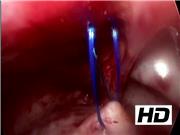
At the time of operative intervention, the rectal prolapse was 14 cm in length and contained areas of ulcerated mucosa. The operation was completed in 30 minutes using 3 mm instruments with a 5 mm 30° laparoscope. Low insufflation pressures were used because of anesthetic respiratory concerns. Laparoscopic reduction of the prolapse was achieved combined with external pressure. Once fully reduced, positions in the left iliac fossa were chosen for incisions to parachute nonabsorbable sutures to the rectosigmoid. There was no recurrence at long-term follow-up at 2 years.
Conclusions:
Laparoscopic rectopexy may be ultilized for this rare condition of a full thickness rectal prolapse in an ex-extremely premature neonate. This is a quick and minimally invasive technique with low morbidity. This technique with its long follow-up is unique.
No competing financial interests exist.
Runtime of video: 3 mins


Get full access to this article
View all access options for this article.