





Abstract
Introduction :
Patients with locally advanced pelvic carcinoma or severe radiation sequelae may be managed with pelvic exenteration, which requires both fecal and urinary diversion. Double-barreled wet colostomy (DBWC) represents a simultaneous diversion through a single ostomy as opposed to a separate terminal colostomy and urostomy. 1 –4 This has been described through an open approach; however, literature on the technique and safety of a robotic approach is scarce. This video shows a combined robotic cystoprostatectomy and abdominoperineal resection with creation of a DBWC for locally recurrent prostate cancer with rectal invasion.
Materials and Methods:
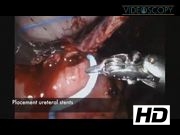
Using a high-definition recording system and iMovie software, we created a video of our technique for robotic cystoprostatectomy and abdomnioperineal resection with creation of a DBWC using the Surgical Intuitive Da Vinci Xi robot. Lithotomy position is used to access the perineum. Four robotic and one assistant port are placed allowing access to the descending colon and pelvic structures. Key steps include (1) mobilizing the sigmoid colon and rectum from the pelvic sidewall and brim to the splenic flexure; (2) bowel transection at the mid descending colon; (3) bilateral pelvic lymph node dissection (PLND), beginning at the bifurcation of the aorta and including the common iliac vessels, external iliac obturator, and hypogastric lymph nodes, including the triangle of Marcille; (4) transecting the bladder pedicles; (5) dropping the bladder and entering the space of Retzius; (6) dissecting the endopelvic fascia and lateral prostate; (7) transecting the dorsal vein complex and urethra; (8) dissecting the posterior plane of the rectum along the sacrum; (9) en bloc removal of the specimen through the perineal incision; (10) creating a ureteroenteric anastomosis with double J ureteral stents placement in the urinary reservoir; and (11) wet colostomy site creation 10–15 cm from the colonic suture line and brought up to the skin.
Results:
The operative time was 480 min (60 min abdominoperineal resection) and estimated blood loss was 250 mL. The final pathology report demonstrated a pT4N1 Gleason 9 prostate cancer and invasion of the rectum, bladder, and pelvic wall. Postoperatively, the DBWC functioned well, without complications of ascending pyelonephritis or electrolyte imbalance. At 6 months follow-up, the PSA is undetectable on leuprolide and the creatinine level is 1.4 (baseline of 1.0).
Conclusions:
This video presents an initial experience with robotic cystoprostatectomy and abdominoperineal resection with creation of a DBWC. Robotic pelvic exenteration and DBWC are feasible and safe for locally advanced pelvic malignancies. The dissection allows excision of the bladder, prostate, sigmoid colon, rectum, and anus en bloc while performing an extensive PLND. The open DBWC literature demonstrates shorter operative time and decreased blood loss and length of stay than separate ostomies. The most common complications include ascending pyelonephritis in 7–16% of cases as well as case reports of metabolic disturbances. Our early follow-up shows good functional outcomes without complications. Patients most likely to benefit from this procedure are those seeking greater ease of care and those patients with a higher risk of fistula as there is no need for further bowel anastomoses.
Runtime of video: 8 mins 14 secs


Get full access to this article
View all access options for this article.