





Abstract
Introduction:
Retroperitoneal schwannoma is rarely excised laparoscopically, and the laparoscopic management of retroperitoneal neural tumors remains controversial. We herein report a case of laparoscopic excision of paravertebral schwannoma.
Patient and Methods:
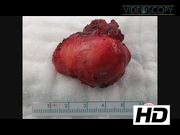
In September 2015, we performed laparoscopic excision of paravertebral mass in a 21-year-old male patient who was admitted to our clinic with right flank pain. Physical examination revealed no evidence of any pathology. Abdominal computed tomography (CT), magnetic resonance imaging, and positron emission tomography (PET) revealed a well-defined 28 × 30 × 44 mm sized tumor in right paravertebral region between the inferior vena cava and the renal vein. Scrotal Doppler ultrasonography was performed to execute any testicular tumor. Testicular tumor markers were negative. Laparoscopic excision was performed to dissect the tumor from adjacent structures using harmonic and blunt maneuvers. The operative time was 70 minutes and the estimated blood loss was 45 mL. The surgery was uneventful, with no operative complications or evidence of intra-abdominal bleeding.
Results:
Histopathologic examination revealed an ancient schwannoma. The patient had an uneventful post-operative course and was discharged on the following day. The patient was well with no signs of peripheral neuropathy or radiculopathy and was still doing well at 1-month follow-up. CT and/or FDG PET/CT will be performed during future follow-up to indicate any evidence of disease.
Conclusions:
Laparoscopic treatment is useful and feasible for retroperitoneal schwannoma, with minimal invasiveness and an early post-operative recovery. Laparoscopic procedure may be preferable for retroperitoneal schwannomas.
No competing financial interests exist.
Runtime of video: 7 mins 47 secs


Get full access to this article
View all access options for this article.
Supplementary Material
Please find the following supplemental material available below.
For Open Access articles published under a Creative Commons License, all supplemental material carries the same license as the article it is associated with.
For non-Open Access articles published, all supplemental material carries a non-exclusive license, and permission requests for re-use of supplemental material or any part of supplemental material shall be sent directly to the copyright owner as specified in the copyright notice associated with the article.
