





Abstract
Introduction:
Robot-assisted laparoscopy (RAL) is a new technology that enables the performance of a wide variety of procedures with a minimally invasive approach. Although still debated, its initial results in pediatric urology 1 are particularly encouraging and small children represent a large number of surgical cases relative to prenatal diagnosis. Herein, we describe with this video (6 minutes 51 seconds) two cases of RAL bladder diverticulectomy with a ureteral reimplantation in a 11- and 15-month-old males.
Materials and Methods:
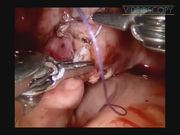
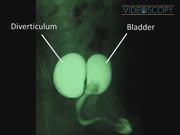
Two toddlers of 11- and 15-month-old (8 and 11 kg, respectively) were evaluated for recurrent febrile urinary tract infections. Ultrasound and voiding cystourethrogram demonstrated a large right paraureteral diverticulum. Benefits, risks, and expectations about RAL were explained in detail to the parents. At the beginning of the procedure, cystoscopy confirmed the presence of a large paraureteral diverticulum. Then, the patients were positioned for a transperitoneal laparoscopic approach. The two procedures were performed using a da Vinci surgical robot (Intuitive Surgical, Inc., Sunnyvale, CA) with three arms: one camera arm (8.5 mm, three-dimensional imaging), two instrument arms (8 mm), and an additional 5-mm nonrobotic accessory port. The diverticulum was identified, thanks to the internal stent. After adequate mobilization, the bladder muscle was mobilized from the urothelium on both sides of the diverticulum. The cyst was completely excised and bladder wall was closed. Extravesical ureteral reimplantation was performed according to the Lich-Grégoire technique after a Double-J stent was introduced in the ureter. At the end of the surgery, a cystoscopy confirmed the good position of the ureter and of the stent. The operative time was 5 and 4 hours, and the patients were discharged on postoperative day 2 and 4. The Double-J stent was removed after 2 months of follow-up, and the patients remain asymptomatic after 1 and 2 years of follow-up.
Results and Conclusions:
There are limited studies in the literature that report on the use of RAL in small children. 2,3 RAL bladder diverticulectomy with ureteral reimplantation have been described in adult population 4 and in a large size boy. 5 To the best of our knowledge, it is the first report for small size children. RAL for toddlers is gaining acceptance particularly in urology. 3,6 Concerning this procedure, the possibility of ureteral or vas deferens injury, especially with large diverticula, is increased as the normal anatomic relationship of the ureter to the bladder may be extremely distorted by the diverticulum. The advantages of 5-mm instruments in pelvic sites were recently reported. 7 However, specific tasks need acute angulations and the 5-mm instruments need more space to operate because of typical joint kinematics. 8 Our two cases demonstrate the advantages of performing RAL pelvic surgery in small size children, especially with the need to perform a reconstructive component to complete the procedure safely. The same procedure is very challenging without the robot. The minimally invasive procedure allowed a brief recovery time, which is shorter than patients usually experience with traditional open bladder procedures.
No competing financial interests exist.
Runtime of video: 6 mins 51 secs

Keywords
Get full access to this article
View all access options for this article.
References
Supplementary Material
Please find the following supplemental material available below.
For Open Access articles published under a Creative Commons License, all supplemental material carries the same license as the article it is associated with.
For non-Open Access articles published, all supplemental material carries a non-exclusive license, and permission requests for re-use of supplemental material or any part of supplemental material shall be sent directly to the copyright owner as specified in the copyright notice associated with the article.
