





Abstract
Introduction:
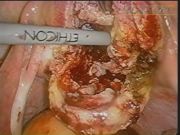
Video presentation of laparoscopic adenomyomectomy demonstrating a highly effective method of adenomyoma excision and suturing.1–3
Objectives:
To investigate the safety and therapeutic outcomes of laparoscopic adenomyomectomy and demonstrate the relevant surgical techniques through a video presentation.
Materials and Methods:
Data of 24 women with symptomatic uterine adenomyosis were analyzed retrospectively at Cheil General Hospital and Women's Healthcare Center, Seoul, Korea, between March 2008 and September 2010. We assessed the mean numerical rating scale for dysmenorrhea and the Mansfield-Voda-Jorgensen menstrual bleeding scale for menorrhagia before and after the treatment.
Video Case:
A 41-year-old woman presented with severe dysmenorrhea and low abdominal pain during defecation. Her gravity and parity were two and two, respectively. Upon visiting our hospital, she was found to have clinically a 4.0-cm adenomyosis that was located focally in the posterior body of the uterus. Her symptoms were refractory to oral contraceptive and nonsteroidal anti-inflammatory drug treatment. The patient wanted to preserve her uterus and was treated by laparoscopic adenomyomectomy to resolve her menstrual symptoms. The aim of the procedure was to remove as much of the adenomyotic lesion as possible, and therefore we performed a debulking procedure (presented in the accompanying video). The total operation time was 60 minutes and the estimated amount of blood loss was 250 mL. There were no complications during the operation. The patient was discharged 3 days after surgery without any complications.
Results:
The mean follow-up period for the 24 patients reviewed in this study was 15.8 months (6–25 months). The mean diameter of the adenomyoma was 3.9 cm (3.2–5.2 cm). The mean surgical time was 60.5 minutes, the mean estimated blood loss was 158.9 mL, and the mean hospital stay after surgery was 3.4 days. The mean decrease of hemoglobin was 1.5 mg/dL. Three months after the completion of surgical treatment of patients with symptomatic adenomyosis, the mean numerical rating scale of dysmenorrhea decreased significantly from 8.1 to 1.9 (p = 0.001), and the mean menstrual bleeding scale score also decreased significantly from 4.3 to 3.2 (p < 0.05). There were no significant complications after surgical treatment.
Conclusions:
Laparoscopic adenomyomectomy should be considered as a therapeutic option for women with symptomatic adenomyosis who wish to preserve the uterus.
The authors have nothing to disclose. No competing financial interests exist.
Heung-Seop Song, M.D., and Kyong-Shil Im, M.D., Ph.D., contributed equally to this work.
Runtime of video: 8 mins 45 secs


Get full access to this article
View all access options for this article.
References
Supplementary Material
Please find the following supplemental material available below.
For Open Access articles published under a Creative Commons License, all supplemental material carries the same license as the article it is associated with.
For non-Open Access articles published, all supplemental material carries a non-exclusive license, and permission requests for re-use of supplemental material or any part of supplemental material shall be sent directly to the copyright owner as specified in the copyright notice associated with the article.
