






Abstract
Introduction:
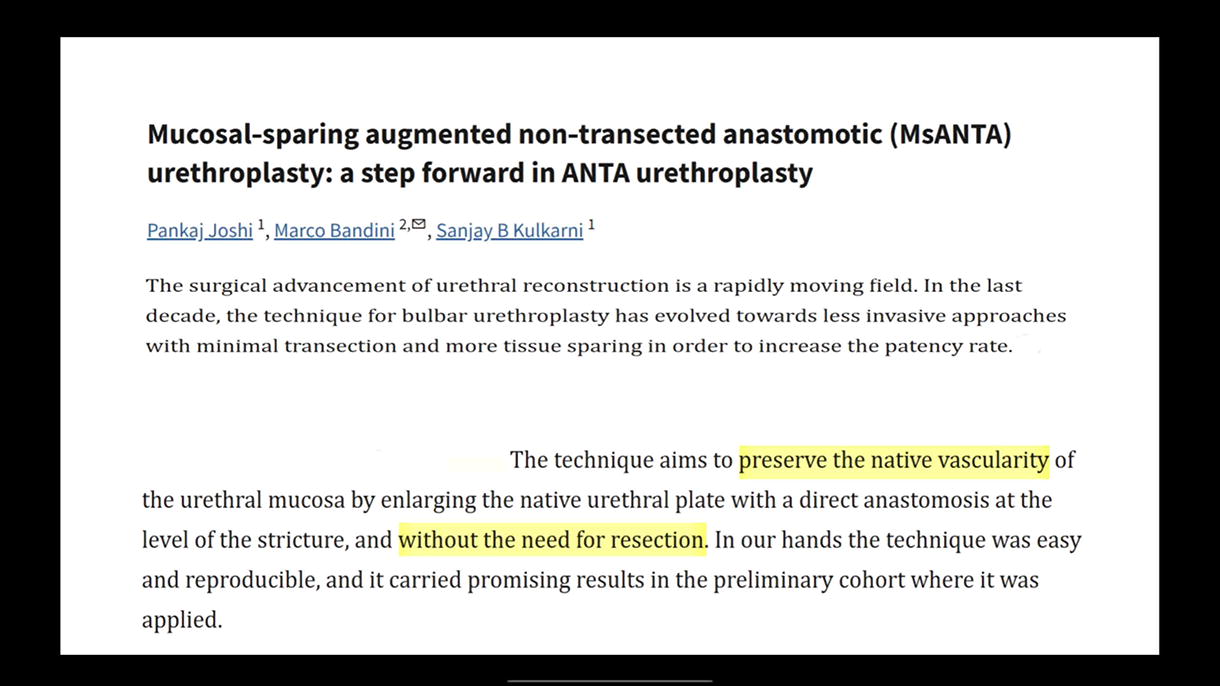
Buccal mucosal graft (BMG) Ureteroplasty has emerged as a viable option for managing complex upper ureteric strictures with robotic-assisted minimally invasive surgery. Though this method is elaborated in literature, it doesn’t address steps necessary when a narrow ureteral plate is encountered. Our novel technique describes a non-transecting approach of mucosa to mucosa at the strictured site and augmentation with buccal mucosa, following the principles of non-transecting urethroplasty in preserving maximal vascularity to the ureter.
Materials and Methods:
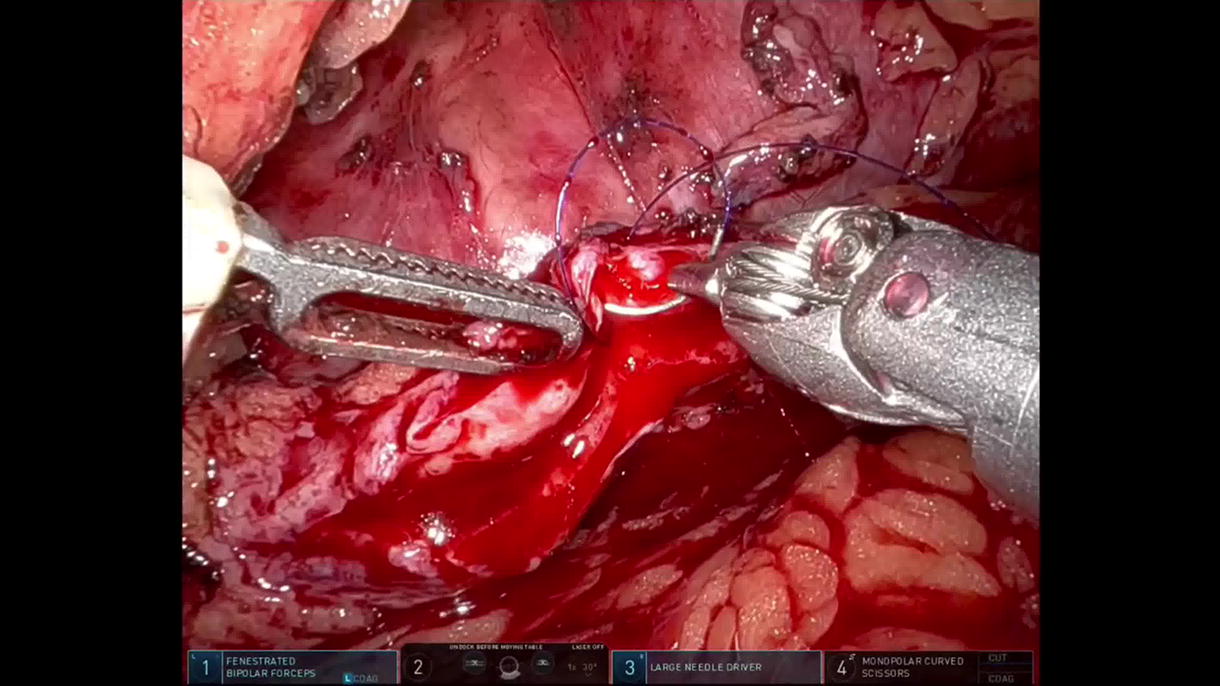
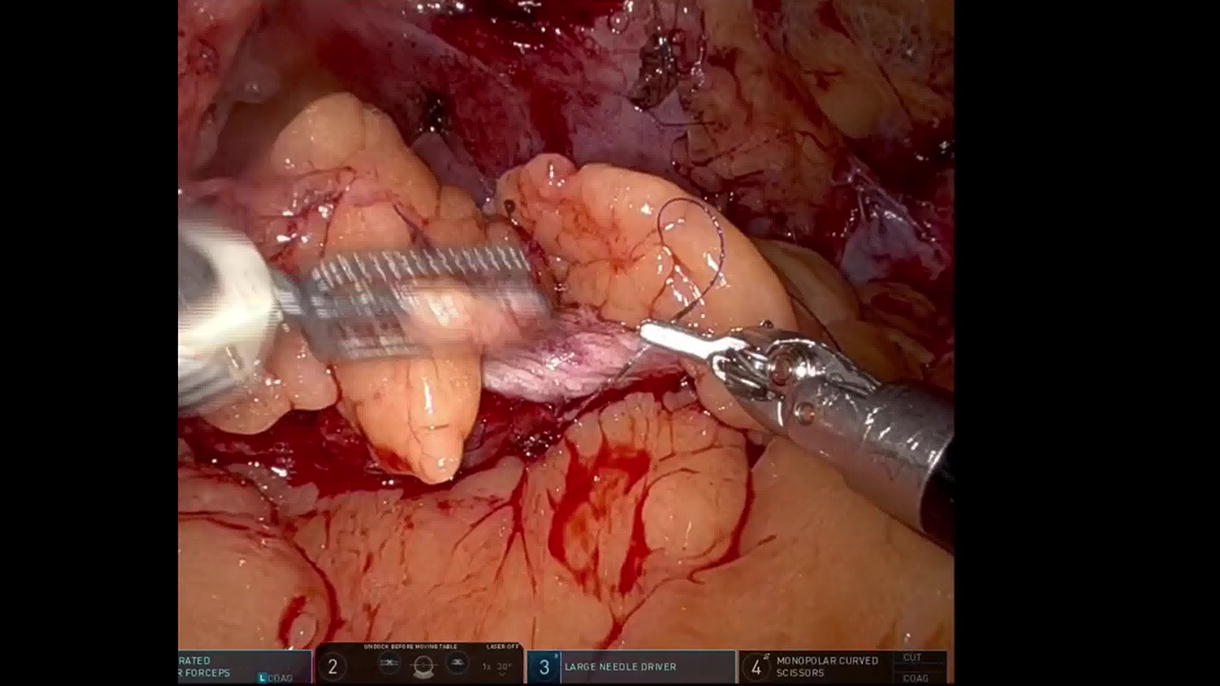
Preoperative evaluation includes detailed imaging studies such as CT intravenous urography and retrograde dye study to assess the stricture’s location and surrounding anatomy. The surgical procedure involves harvesting a buccal mucosal graft, mobilizing the ureter, and addressing any narrow ureteral plates with the non-transecting anastomosis technique. The graft is then placed and anastomosed in a watertight fashion.
Discussion:
The technique involves widening a narrow ureteral plate via a non-transecting mucosal anastomosis prior to graft placement, which helps preserve vascular integrity and avoid complications associated with traditional transecting methods.
Conclusion:
Preserving maximal vascularity in the ureter is of utmost importance, and it can be done following the similar principles of MsANTA in urethroplasty. This simple step can reduce stricture recurrence at the most narrowed site. Long-term studies are needed to compare the efficacy of this method with that of transecting anastomosis and direct graft placement.
The authors declare no conflict of interest or any commercial association in the past 2 years. We have received and archived patient consent for video recording/publication in advance of video recording of the procedure.
Grants or Funding:
There was no funding or grant involved in this study.
Runtime of video: 4 mins 17 secs.
Keywords
Get full access to this article
View all access options for this article.
Supplementary Material
Please find the following supplemental material available below.
For Open Access articles published under a Creative Commons License, all supplemental material carries the same license as the article it is associated with.
For non-Open Access articles published, all supplemental material carries a non-exclusive license, and permission requests for re-use of supplemental material or any part of supplemental material shall be sent directly to the copyright owner as specified in the copyright notice associated with the article.
