




Abstract
Introduction:
Penile cancer is a rare malignancy, accounting for 0.4%–0.6% of all cancers in men in the United States and Europe. 1 Intermediate-risk (T1b) or high-risk (≥T2) patients should undergo either prophylactic bilateral inguinal lymph node dissection (ILND) or sentinel lymph node biopsy. 2 A modified ILND template (i.e., saphenous vein sparing) has been found to reduce lymphedema, wound necrosis, and postoperative superficial surgical skin infections. 3 Recently, two case reports have shown the feasibility of single-port (SP) robot-assisted inguinal lymph node dissection. 4,5 Herein, we describe our technique for the single-port approach to robot-assisted ILND.
Materials and Methods:
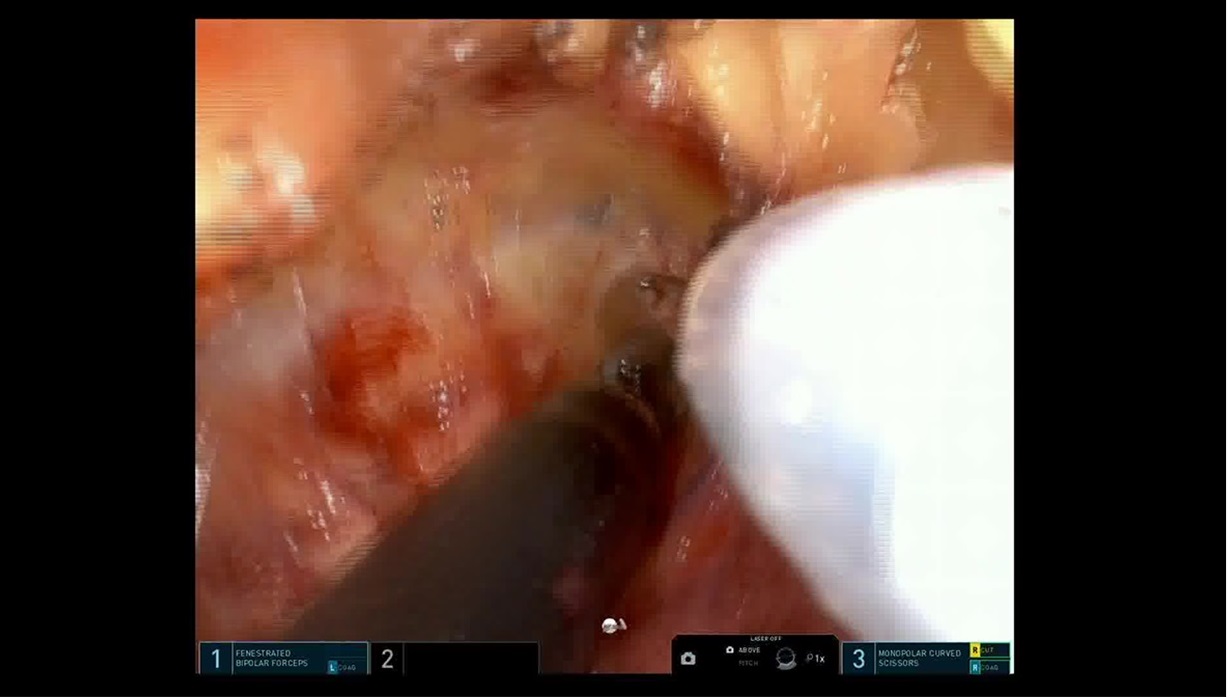
Three patients underwent SP modified ILND by a single surgeon between April 2022 and January 2023. In this technique, all patients were in supine position on a split leg with marked boundaries. A 2.5 cm incision 2 inches (6.35 cm) above the knee was made down to the fascia lata for SP trocar access. The camera was placed at 12 o'clock position, monopolar scissor in the right arm, and fenestrated bipolar in the left arm. The surgical dissection began along the surface of the fascia lata in the cranial direction, with the assistant palpating the borders from lateral to medial border. The saphenous vein was identified and preserved. The packet was dissected off the fascia lata, and downward traction freed it from Scarpa's fascia. These patients' preoperative characteristics and perioperative outcomes were reported based on hospital stay and 30-day complications.
Results:
The mean operative time for bilateral ILND was 210 minutes, and the mean blood loss was 15 mL. The mean length of hospital stay was 1 day, and the mean duration of surgical drain was 53 days. There were no 30-day complications; the mean number of lymph nodes removed was 6, ranging from 4 to 11. The patients have no evidence of disease at follow-up.
Conclusion:
Overall, a robotic approach is noninferior to open approach. The initial higher costs of a robotic approach may be offset by shorter hospitalization and fewer major complications. A single-port approach is a feasible option for patients undergoing INLD, and given the improved cosmesis, it should be strongly considered in treating this debilitating and lethal disease.
Patient Consent Statement:
Authors have received and archived patient consent for video recording/publication before video recording of the procedure.
The author(s) do not have commercial associations during the past 3 years that might create a conflict of interest in connection with the video
.
Runtime of video: 9 mins 42 secs


Get full access to this article
View all access options for this article.