






Abstract
Introduction:
Minimally invasive percutaneous (MIP) nephrolithotomy was initially discredited with assumptions of difficult stone fragment retrieval because of the equipment's smaller size. However, in 2008 Nagele et al. described a hydrodynamic phenomenon that allowed stone retrieval without the aid of endoscopic tools. 1 –3 This study aims to describe the physical principles of the “vortex effect” to better understand its applicability in MIP procedures.
Methods:
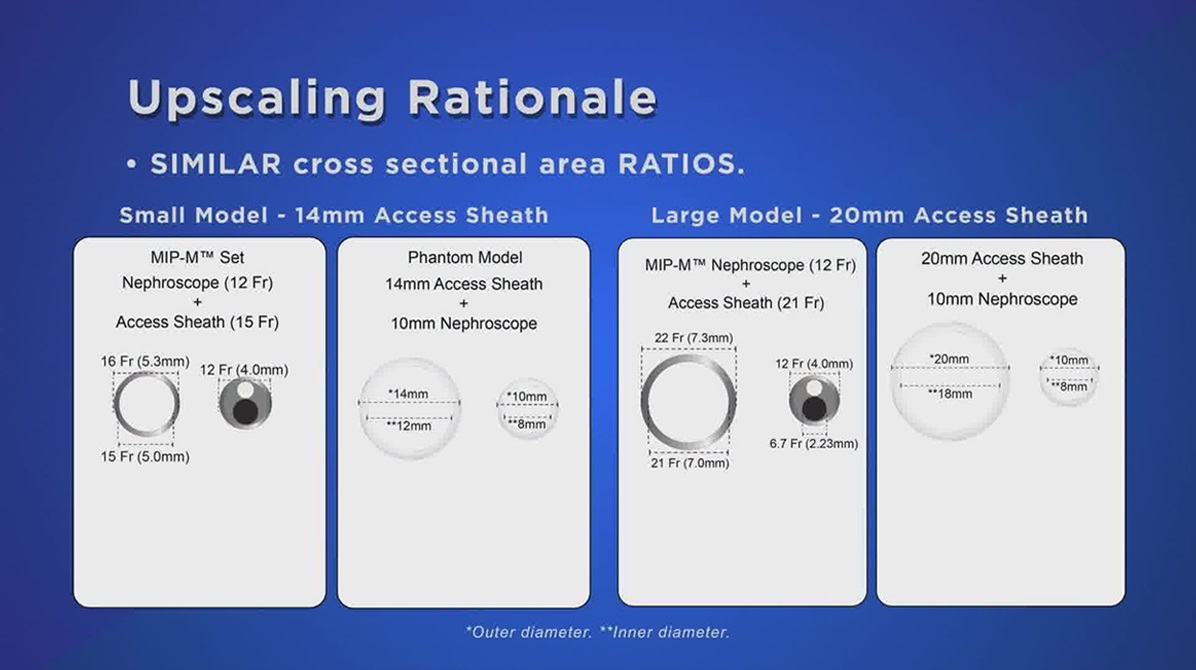
Two acrylic phantom models were built based on the cross-sectional area (CSA) ratio of an MIP nephroscope and access sheaths (15/16F and 21/22F MIP-M™, Karl Storz®). The nephroscope–phantom was 10 mm in diameter. The access sheaths had diameters of 14 mm (CSA ratio: 0.69) and 20 mm (CSA ratio: 0.30). The models were adapted to generate hydrolysis, and hydrogen bubbles enhanced flow observation on a green laser background. After calibration, the experimental flow rate was set to 12.0 mL/sec. Three 30-second trials assessing the flow were performed with each model. Computational fluid dynamic simulations were completed to determine the speed and pressure profiles.
Results:
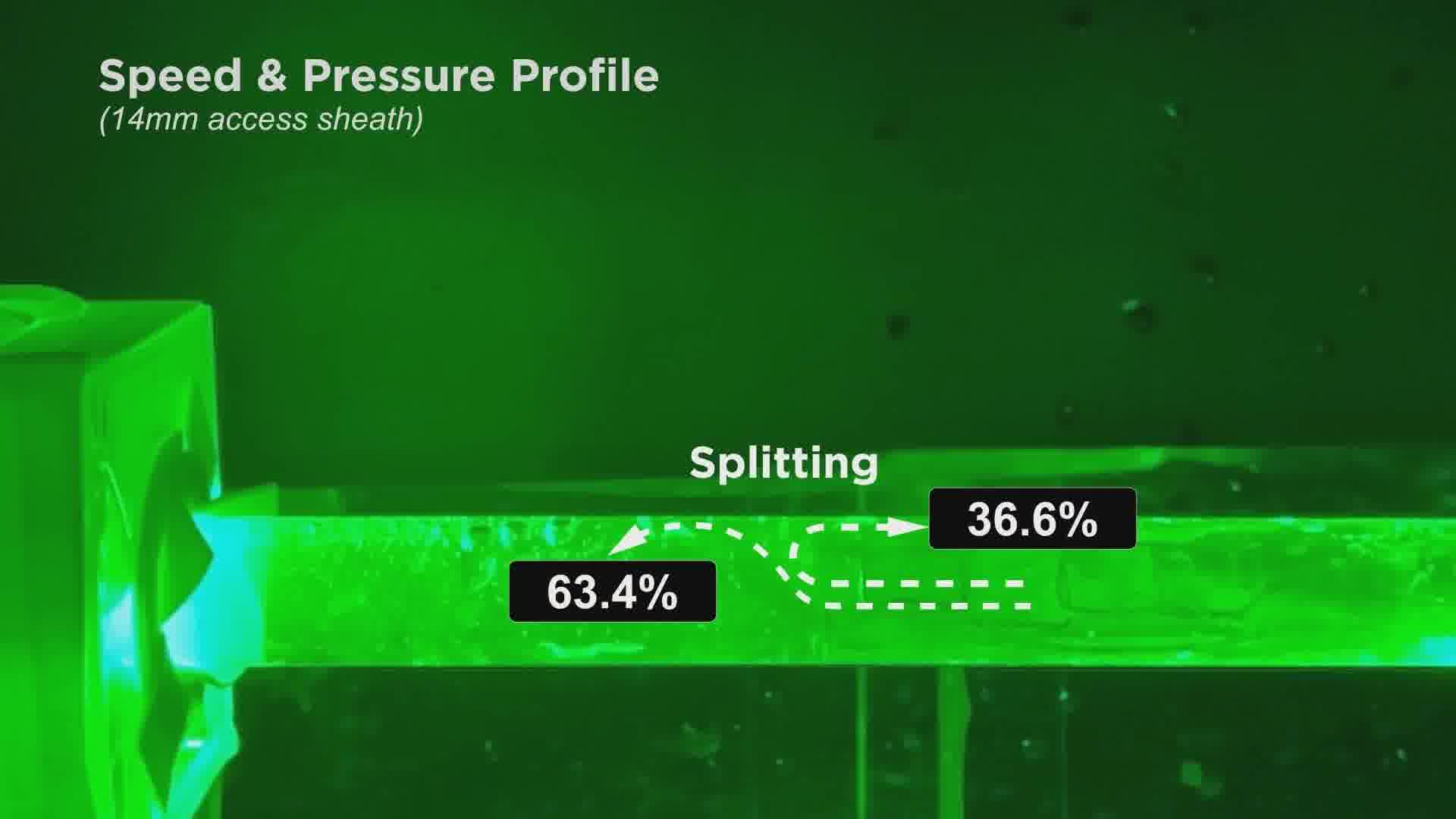
In both models, as the incoming fluid from the nephroscope–phantom attempted to move toward the collecting system, a stagnation point (SP) was demonstrated. No fluid entered the collecting system phantom. Utilizing the 14 mm sheath, we observed a random generation of several vortices and a pressure gradient (PG) of 114.4 Pa between the nephroscope's tip and SP. When the 20 mm sheath was examined, a significantly smaller PG (19.4 Pa) and no noticeable vortices were noted.
Conclusions:
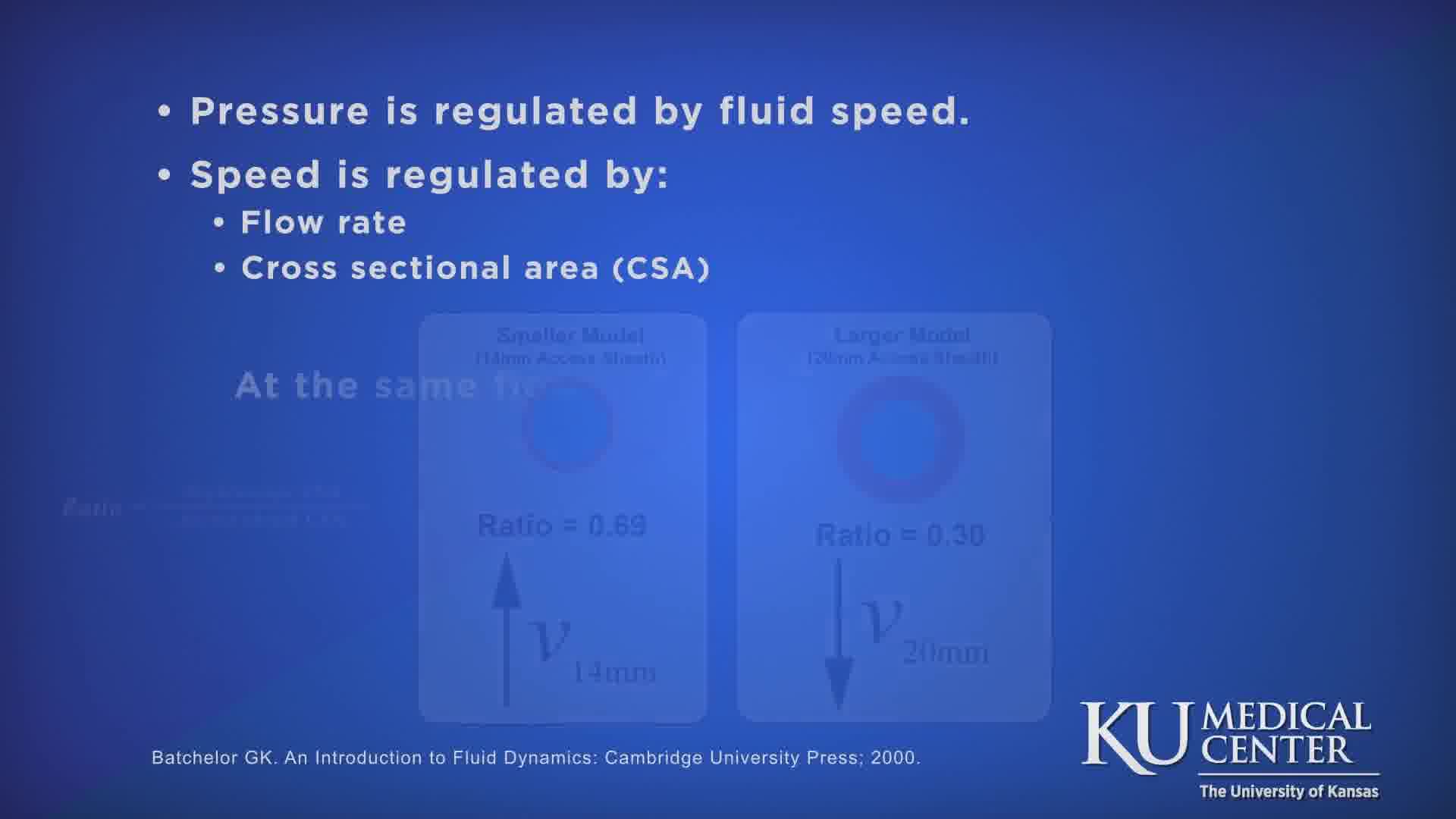
The speed of the fluid and equipment geometry regulate the PG and the vortices field, which are responsible for the production of the vortex effect. Considering the same flow rate, a higher ratio between the CSA of the nephroscope and access sheath results in improved efficacy of the vortex.
Patient Consent Statement:
This is a bench study. No patients were involved in this study. Consent statements are not applicable to this type of study.
W.R.M. reports a relationship with Olympus Surgical Technologies America that includes consulting or advisory, funding grants, and speaking and lecture fees. W.R.M. reports a relationship with Boston Scientific Corp that includes consulting or advisory, funding grants, and speaking and lecture fees. W.R.M. reports a relationship with Fortec that includes consulting or advisory, funding grants, and speaking and lecture fees. W.R.M. reports a relationship with IPG that includes consulting or advisory, funding grants, and speaking and lecture fees. D.A.N. reports a relationship with Boston Scientific Corp that includes consulting or advisory, funding grants, and speaking and lecture fees. D.A.D. reports a relationship with Lumenis Inc Americas that includes consulting or advisory, funding grants, and speaking and lecture fees. All other authors have no disclosures to inform.
Runtime of video: 8 mins 00 secs
This video article was presented at the AUA 2023 in Chicago.
Keywords
Get full access to this article
View all access options for this article.