






Abstract
Introduction:
Inferior vena cava (IVC) thrombosis occurs in <10% of renal cell carcinoma (RCC) patients. 1,2 Up to 25% of these cases will require IVC interruption, yet caval replacement is controversial. 3,4 We present a robotic suprarenal cavectomy without reconstruction in a patient with RCC.
Materials and Methods:
A 50-year-old man was found to have a 9-cm right renal mass and level III thrombosis. The length of IVC thrombus was 112 mm, terminating 3.6 cm below the level of hepatic veins and occluded 100% of the IVC without distal bland thrombosis. CT showed suspicious lesion in liver and contralateral adrenal, although supplementary imaging ruled out liver metastasis. He underwent robotic right radical nephrectomy, IVC thrombectomy, and suprarenal cavectomy.
Results:
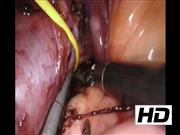
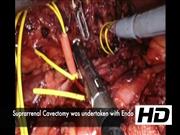
Surgery was completed without intraoperative complication. Operating time was 6 hours and estimated blood loss was 300 mL. Intraoperative ultrasound showed the tip of the thrombus and helped to secure rommel control just above it. After securing down all controls, IVC was opened, and thrombus was removed. Cavectomy was deemed necessary because of tumor adhesions to inner part of IVC. Nephrectomy was completed and all specimens removed through Pfannenstiel incision. Postoperative course was uneventful and discharged home in 4 days. Baseline Glomerular Filtration Rate was 44 and at discharge was 49 mL/min/1.73 m2. Pathology report endorsed clear cell RCC (pT3bN0), negative margins, and adherent tumors in middle section of IVC (noninvasive). No complication was reported within 90 days, postoperatively.
Conclusions:
Robotic right radical nephrectomy and suprarenal cavectomy is feasible, yet more studies are needed.
Patient consent: Authors have received and archived patient consent for video recording/publication in advance of video recording of procedure.
No competing financial interests exist.
Runtime of video: 7 mins 36 secs

Get full access to this article
View all access options for this article.