






Abstract
Introduction:
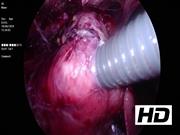
Renal hydatid cyst operation is usually performed laparoscopically. 1 –3 In the laparoscopic treatment of the liver hydatid cysts' various methods of entry and drainage are used such as laparoscopic trocar 4 and Perforator-Grinder-Aspirator Apparatus 5 guided cyst evacuation. Palanivelu Hydatid System is used for the treatment of liver and kidney hydatid cysts for entry and drainage. 6,7 The aim of this study is to demonstrate the application of laparoscopic trocar insertion into the hydatid renal cyst.
Methods:
We present two female patients undergoing laparoscopic treatment of renal hydatid cyst, a 20- and a 19-year-old, who were admitted with flank pain complaints. Both underwent CT scan; one of them had 150 × 143 × 119 mm loculated type 2 hydatid cyst (Gharbi Classification
8
) located at the upper central region of the right kidney and the other one had 69 × 54 × 48 mm loculated type 2 hydatid cyst located at the upper central region of the left kidney. Patients positivity for hydatid cyst has been approved with 1/320 and 1/2800 positive indirect hemagglutination test. The patients received oral albendazole 400 mg twice a day for 1 month before surgery. Trocar blades were inserted into the patients' transperitoneal space. The cysts were seen in the upper central region of the kidneys. The cysts were released from surrounding tissues. The cysts were covered with a gauze soaked in 10% povidone iodine. Skin
Results:
The weights of the patients were 49 and 55 kg and the heights were 158 and 162 cm, respectively. Duration of the surgeries were 62 and 77 minutes. No peri-/postoperative complications occurred. The drains were removed 3 days after from the first patient, 4 days from the second patient, respectively. The patients were discharged with full recovery. Patients used oral albendazole therapy for the following 28 days after the surgery to prevent recurrences. The patients' follow-up periods were 6 and 18 months. They had no further complaints.
Conclusion:
In this method, the cyst content had no contact within the abdominal viscera. The use of a larger lumen aspirator (instead of the Veress needle) prevented the aspirator system from obstruction with the cyst content. Thus, the duration of surgery was shortened. Inserting a trocar into the hydatid renal cyst is a safe and feasible method to remove the cyst contents without spillage.
The study design was approved by the institutional ethics review board. All surgical procedures were performed after obtaining consent from the patients and their siblings. The authors received and archived the patient consent for video recording/publication in advance of the video recording of the procedure.
No competing financial interests exist.
Runtime of video: 4 mins 27 secs
Keywords
Get full access to this article
View all access options for this article.