






Abstract
Introduction:
Struvite stones cause significant morbidity in urologic congenitalism. Although stone-free rates have improved with advances in endoscopy, some anatomic circumstances make complete endoscopic removal impossible. Infusions of renacidin (citric acid, glucono-delta-lactone, and magnesium carbonate irrigation solution) to treat upper tract stones were popular in the 1960s, but after six deaths its use was banned by the FDA and not reapproved until the 1990s. 1,2 We wished to revive this therapy to treat a patient in an extraordinary circumstance, which presented challenges as renacidin therapy had not been used at our institution in 30 years. We present our experience and a step-by-step guide to restarting an infusion program.
Materials and Methods:
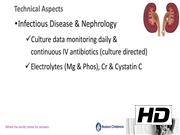
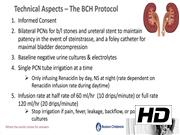
We conducted a literature review and collected national expert opinion. Key stakeholders from nursing, pharmacy, nephrology, infectious diseases, intensive care unit (ICU), and biomedical engineering developed a safe protocol for renacidin infusion. The patient was monitored on a 1:1 staff to patient ratio in the ICU initially. As the medication is in vials with nonsterile exteriors, pharmacy cleaned the vials and pooled it under a sterile hood. The biomedical engineering team recommended a gravity drip, elevated to 30 cm H2O above percutaneous nephrostomy tube entry site infused at 120 mL/hour (20 drips/minute) or 60 mL/hour (drop factor 10 drips/minute). A mock infusion was completed with a multidisciplinary team before the patient's admission. A 27-year-old woman with severe scoliosis, reconstructed bladder, thoracic displacement of the kidneys, and tortuous ureter from prior ureterostomies leading to limited options for renal access had struvite stone recurrence after multiple bilateral percutaneous nephrolithotomy. We established drainage with bilateral nephrostomy tubes, 3 an antegrade ureteral catheter, and a urethral catheter. Daily electrolytes and urine cultures were drawn, and weekly computed tomography scans performed to assess stone burden. Renacidin was infused unilaterally at full or half rate, depending on patient tolerance (pain, fever, leakage, or backflow), during the day and physiologic saline was infused during the night at the same respective rate. Continuous culture directed IV antibiotics were administered throughout the infusion.
Results:
Infusion was carried out for 60 days, initially on the left for 30 days (larger stone burden), and 30 days on the right. Total hospital stay was 71 days. The patient has been stone free since discharge and completion of renacidin therapy for ∼150 days. There were no episodes of mucosal hemorrhage or sepsis.
Conclusions:
Renacidin infusion can be performed safely and effectively and may eliminate the nidus for recurrent struvite stone formation in patients who have failed endoscopic therapy for upper tract stones. An inpatient monitoring program and multidisciplinary collaboration is required for safe infusion.
Patient Consent Statement: Authors have received and archived patient consent for video recording/publication in advance of video recording of procedure.
No competing financial interests exist.
No funding was received for this article.
Runtime of video: 7 mins 54 secs
Get full access to this article
View all access options for this article.