






Abstract
Background:
Until now, laser lithotripsy during ureteroscopy (URS) has mainly been performed using Holmium:Yttrium–Aluminum–Garnet (Ho:YAG) laser. Recently, a new thulium fiber laser (TFL) has been introduced. The pulsed infrared light emitted by the TFL has a wavelength of 1940 nm that is close to the water absorption peak. The energy is, therefore, highly absorbed by water. High water absorption corresponds with a low threshold for tissue ablation and stone lithotripsy. 1 The TFL is, therefore, expected to be very efficient at disintegrating stones. Previous studies have predicted TFL lithotripsy to be up to four times faster than Ho:YAG laser lithotripsy using the same energy settings. 2 In theory, as the threshold for tissue ablation is low, ureteral lesions caused by unintentional laser firing at the mucosa may result in less bleeding than with holmium lasers as bleeders are instantly coagulated. In addition, the TFL has the advantage of having smaller laser fibers enabling better irrigation during URS. As the first hospital in Europe, Haukeland University Hospital (HUH) got access to the new Olympus Soltive Premium SuperPulsed Thulium Laser System. The aim of this video is to share our first experiences using the TFL during URS lithotripsy at HUH.
Materials and methods:
During the first 2 weeks after receiving the TFL, we performed 18 URS lithotripsies at our day-surgery clinic. Wolf 8F/9.8F semirigid ureteroscope and Olympus URF-V3 and P7 flexible ureteroscopes were standard endoscopes. The 150 µm laser fibers were used for stone disintegration in all patients. Video files from these procedures have been edited. Highlights are presented focusing on different characteristics of the TFL.
Results:
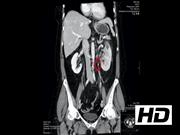
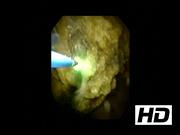
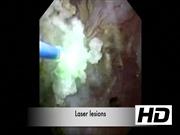
The TFL has been shown to be highly efficient in the treatment of both ureteral and renal stones even at very low energies. Stone burden up to 3.2 cm has been effectively cleared. In a short amount of time, the laser produced very small fragments and fine dust particles that could easily be flushed out through the endoscope. Fragmenting at a setting of 0.6–0.8 J at 30 Hz (18–24 W) produced dust and disintegrated stones faster than dusting at 0.1–0.2 J at 200–240 Hz (20–48 W), even though the latter setting resulted in finer dust. Complete disintegration of a 1 cm stone at 0.6 J at 30 Hz was achieved in <20 minutes. A remarkable characteristic noted when breaking ureteral stones at low energy was the absence of retropulsion. No significant intraoperative complications were registered during the 18 procedures. However, in a few cases, small superficial mucosal lesions were noted. No bleeding impairing endoscopic vision was registered, and adequate vision was maintained in all patients without the use of irrigation pumps. Seven patients (39%) received a Double-J stent postendoscopically. This is significantly less compared to previously published data from our institution where 65%, 3 of the patients were drained postendoscopically, p = 0.026.
Conclusion:
The new TFL seems to be highly efficient and may represent the new gold standard in URS lithotripsy.
Patient consent:
The author has received and archived patient consent for video recording/publication in advance of video recording of the procedure.
Ø.U. is a consultant for Olympus, who was not involved in the design, collection, analyses, interpretation, or reporting of the data.
Runtime of video: 9 mins 43 secs
Get full access to this article
View all access options for this article.