






Abstract
Introduction:
Duplex kidneys are the most common anomaly of the upper urinary tract in childhood, with an incidence of 0.8%. 1 The upper moiety is associated with ectopic ureter, ureterocele, or megaureter, whereas the lower moiety is associated with vesicoureteral reflux (VUR) because of its shorter ureteral sheath. Despite this, scarring and dilation of the lower moiety caused by VUR with a normal upper unit is rare. 1 In duplex collecting systems, low-grade VUR to the lower pole can be managed clinically or endoscopically as primary reflux. For high-grade reflux, it is necessary to evaluate moiety function. For moieties with preserved function, it is possible to perform a ureteral reimplantation or a ureteroureteral anastomosis. Rarely, there is a low functioning moiety, when a lower-pole nephroureterectomy should be performed. 2 –6 Experience with laparoscopic lower-pole heminephrectomy in children with duplex systems has been limited. The objective of this publication is to demonstrate a step-by-step description of laparoscopic lower-pole nephroureterectomy and to review our experience with this procedure in children with duplex kidneys, regarding feasibility and outcome.
Patients and Methods:
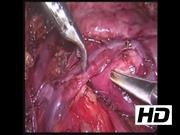
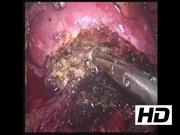
Laparoscopic unilateral partial lower-pole nephroureterectomy was performed in four boys with a mean age of 5.98 years (range 10 months to 13 years 5 months) in a 4-year period. The indication for lower-pole nephrectomy was VUR with advanced nephropathy. In all cases, the ureter was dissected below the pelvic rim, but the most distal segment was left in situ. This video presents the case of a 13-year-old boy with left recurrent pyelonephritis. Ultrasonography showed a hydronephrotic lower-pole moiety in a duplex kidney on the left side and voiding cistourethrogram demonstrated high-grade VUR to the lower pole. Computed tomography scan revealed the anatomy of the duplicated collecting system and dimercaptosuccinic acid renal scintigraphy showed a left lower pole without tubular function. Magnetic resonance urography should be preferred whenever available as it does not use radiation. Laparoscopic lower-pole nephroureterectomy was thus performed.
Results:
Average operative time was 115 minutes (ranging from 90 to 130 minutes). Average hospital stay was 5 days (ranging from 3 to 7 days). Average postoperative follow-up was 21.75 months (ranging from 12 to 48 months). No intra- or postoperative complications occurred. All remnant upper moieties showed postoperative function, and despite the presence of residual ureteral stumps, no patients presented late urinary tract infection or voiding symptoms.
Conclusions:
In children with duplex kidneys and hydronephrotic or nonfunctioning lower moieties, laparoscopic lower-pole heminephrectomy with subtotal ureterectomy is a safe procedure with good results and minimal morbidity. The remaining ureteral stump did not cause any long-term unfavorable symptoms.
No competing financial interests exist.
Runtime of video: 8 mins 00 secs
Consent: Authors have received and archived patient consent for video recording/publication in advance of video recording of procedure.

Get full access to this article
View all access options for this article.