






Abstract
Introduction:
Radical nephroureterectomy represents the treatment of choice for high-risk upper tract urothelial cancers (UTUCs) 1 and in case of low-grade tumors under specific circumstances. In selected patients, such as in cases of solitary kidney, impaired renal function, or relevant medical comorbidities, segmental ureterectomy may be considered. 2 Besides, over the past years, the progress in robotic surgery and utilization of instruments such as FireFly® have increased the chances of achieving at the same time an adequate oncologic and functional result. In this video, we present step by step a robotic segmental ureterectomy with fashioning of ureteroureterostomy, a valuable option in case of patients unfit for a demolitive surgery.
Materials and Methods:
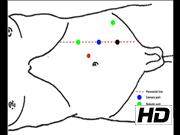
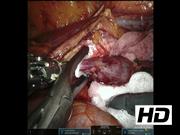
Between 2015 and 2018, 13 robotic segmental ureterectomies for UTUCs have been carried out in our center. The mean age was 77 ± 5.3 years and Charlson Comorbidity Index (CCI) ≥8. In nine cases, the procedure was carried out on the left side and in four on the right side. Two patients had solitary kidney. In 12 cases, the tumor involved the middle third of the ureter, whereas in 1 case, the tumor involved the upper third of the ureter. All surgeries were performed with Da Vinci Xi system. The patient treated in this video was a 79-year-old man, with a medical history of chronic hypertension, uncontrolled diabetes, and COPD. His CCI was 9. He has no history of abdominal surgery. A CT scan showed a left hydronephrosis secondary to a 28 mm enhancing filling defect of the middle third of the ureter. Cystoscopy excluded concomitant bladder tumors, and cold biopsies taken during semirigid ureteroscopy confirmed the diagnosis of low-grade UTUC. Patient positioning, ports placement, and surgical steps are shown in the video.
Results:
Total operative time was 130 minutes (console time was 95 minutes). The estimated blood loss was ≤50 mL. After segmental ureterectomy, the intraoperative frozen section confirmed free surgical margins. The case was uneventful with no perioperative complications. Catheter and abdominal drain were removed on day 1 postoperatively. The patient was discharged on day 3 and the ureteral stent was removed after 4 weeks. Final histology report confirmed low-grade UTUC (LG-pT1), measuring 26x18x06 mm. A CT urogram was performed on the 3rd month postoperation followed by ureteroscopy on the 6th month. Both investigations were negative for recurrences and showed a patent ureter. With regard to our series, mean total operative time was 110 ± 25 min (console time was 80 ± 20 min) and blood loss was ≤50 ml. No major complications occurred. Mean follow-up was 24 ± 9 months. One patient had subsequently an open nephroureterectomy for recurrence. Two patients died during follow-up for other causes.
Conclusions:
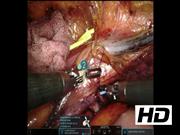
Segmental ureterectomy with ureteroureterostomy represents a valid treatment option for UTUCs, particularly in case of high-risk patients with the need of preserving the renal function. A robotic minimally invasive approach allows to obtain both adequate oncologic and functional results, with a minimized risk of perioperative complications. In these cases, the use of indocyanine green and Firefly System allows to verify blood supply to the ureteral anastomotic margins, reducing the risk of postoperative ureteral stricture.
Author(s) have received and archived patient consent for video recording/publication in advance of video recording of procedure.
No competing financial interests exist
.
Runtime of video: 6 mins 27 secs
Get full access to this article
View all access options for this article.