






Abstract
Introduction:
Approximately 2% of the complications occur during initial abdominal entry, and half of them are major complications. 1 Although >25 different techniques have been defined, there has been no consensus on ideal abdominal entry techniques in laparoscopic surgery. 2 The aim of this video is to describe step by step our new open entry technique of laparoscopic surgery.
Materials and Methods:
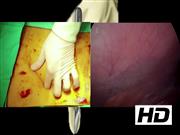
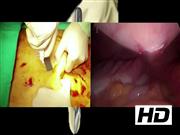
We demonstrated our technique in a patient who underwent a laparoscopic radical prostatectomy. The skin is marked with a 10 mm empty disposable trocar and vertically incised at the boundaries of the marked area until the subcutaneous adipose tissue can be seen. Then, blunt dissection is done with the index finger down until the upper sheet of the abdominal fascia is felt. A 15 mm scalpel is placed on the inside of the index finger and held with the proximal part of the thumb. The tip of the scalpel should not exceed the tip of the finger. After that, the finger and the scalpel are held perpendicular to the fascia while applying mild pressure on the fascia. The finger and scalpel are bent 45° cranially, without moving the tip of the finger or the scalpel. Owing to the softness of the fingertip, the scalpel passes the fingertip by only a few millimeters and incises the fascia. Only mild pressure on the layer during the maneuver is needed to achieve a 3–4 mm incision. Then, the abdominal muscle is dissected bluntly with the index finger. Finally, the peritoneal layer is incised again using the fingertip technique and enlarged bluntly with the index finger to enter the abdomen. Then, the abdominal wall is elevated bilaterally next to the incision, and a 10 mm trocar is inserted bluntly through the incision.
Results:
Twenty-four consecutive patients operated using fingertip technique who underwent transperitoneal laparoscopic surgery were evaluated. The median body mass index was 28.4 kg/m2 (21–42 kg/m2). Three patients have a history of abdominal surgery. The median entry time was 90 seconds (80–120 seconds) from the first skin incision to the entry into the intraperitoneal cavity with the camera. Gas leakage was observed around the trocar in only one (4.1%) patient that needed intervention. There were no vascular injuries or solid organ injury.
Conclusion:
The fingertip technique is a fast, safe, and feasible laparoscopic entry technique without any equipment and assistant. Also, it minimizes gas leakage around the trocar.We have received and archived patient consent for video recording/publication in advance of video recording of the procedure.
No competing financial interests exist.
Runtime of video: 2 mins 4 secs
Get full access to this article
View all access options for this article.