






Abstract
Introduction:
Partial cystectomy has been purported as a less morbid alternative to radical cystectomy in carefully selected patients affected by urothelial carcinoma (UC). 1,2 Selection criteria include solitary lesion without concomitant carcinoma in situ in an otherwise normally functioning bladder. Herein, we present three separate cases of robot-assisted laparoscopic partial cystectomy (RALPC) in which the UC involved the bladder, the bladder diverticulum, and the distal ureter.
Materials and Methods:
The study has been approved by the institutional review board at Wake Forest Baptist Medical Center (WFBMC). We present three surgical scenarios related to localized UC and their subsequent surgical approaches: (1) high-grade muscle invasive bladder tumor involving the right anterolateral aspect of the bladder wall, (2) high-grade localized intradiverticular UC in proximity to the left ureteral orifice, and (3) low-grade urothelial lesion of the distal ureter requiring bladder cuff excision and ureteroneocystostomy. 3
Results:
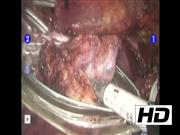
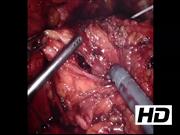
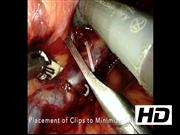
During a standard RALPC, the patient was placed in low lithotomy position. After port placement and robot docking, flexible cystoscopy under pneumovesicum was performed to allow direct observation of the tumor and to guide cystotomy. More recently we have utilized fluorescence imaging with submucosal injection of indocyanine green (ICG) to outline surgical excision site for the surgeon at the console using the Williams cystoscopic injection needle. ICG can also be helpful in directing pelvic lymph node dissection (PLND). 4 To minimize disease contamination, surgical specimen containing the tumor was suspended with the robotic third instrument arm during the excision process. It was then immediately placed within the specimen retrieval bag when completely resected off the rest of the bladder. Frozen sections were obtained from the edges of the cystotomy site to ensure oncologic clearance. The bladder was then closed in two layers using an inner 3-0 absorbable monofilament and an outer 3-0 barbed suture for watertight closure. Bilateral PLND was performed. In the patient with intradiverticular UC, an anterior vertical cystotomy was performed to observe the diverticular neck. A stent was placed to the adjacent ureteral orifice. The mucosa overlying the diverticular ostium was scored and then immediately closed with sutures to minimize tumor spillage. A combination of intra- and extravesical dissection was undertaken to free the sac. Anterior and posterior bladder defects were then closed. For the patient with low-grade distal ureteral disease, the ureter was identified with 30° down-angled endoscope near its crossing over the common iliac artery. Distal ureterectomy with ureteroneocystostomy was performed followed by ipsilateral PLND. A bladder psoas hitch was necessary to facilitate a tension-free reconstruction. The ureteral stent was removed at 4 weeks. Foley catheter was placed for bladder drainage in all cases until outpatient cystogram was obtained on postoperative day 10. No local, regional, and distant disease recurrences were detected for any of the patients on their 12-month follow-up visit.
Conclusions:
RALPC is safe and effective, and can be offered to suitable candidates with little surgical morbidity. Precautions and measures should be undertaken to avoid tumor spillage.
No competing financial interests exist.
Runtime of video: 6 mins 20 secs
Consent: All authors have received and archived patient consent for video recording/publication in advance of video recording of procedure.
Get full access to this article
View all access options for this article.