






Abstract
Introduction:
Transrectal ultrasound (TRUS)-guided prostate biopsy carries known risk of sepsis due primarily to fecal contamination of the biopsy needle. The in-office transperineal approach performed under local anesthesia circumvents this risk altogether but is not yet widely adopted in urologic practice. Perceived hurdles to adoption of transperineal prostate biopsy (TPBx) include concern for patient experience, learning curve, lack of practice infrastructure, capital cost of equipment, and practice workflow. In this study, we demonstrate novel transperineal sampling techniques with variations in ultrasound probe, biopsy template, and perineal access that can be readily adapted to all urologic practices.
Materials and Methods:
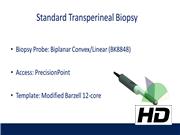
We present a single practice case series of TPBx obtained using a variety of different techniques, from a total of 514 transperineal biopsies performed from January 2017 to December 2019. All biopsies were performed in lithotomy position and all received local anesthesia using 10–20 °cc of 50/50 1% lidocaine and 0.25% bupivacaine. The sampling templates demonstrated include the modified Barzell 12-core template or the extended sextant 12-core template. Ultrasound probe variations included a biplanar or triplanar endocavity ultrasound probe in either sidefire or endfire mode. For transperineal access, the PrecisionPoint™ (Perineologic, Cumberland, MD) or 14-gauge intravenous access catheters were used. Patient setup and key procedural techniques are described. Data on clinical detection rates and complications, with comparisons to TRUS biopsies performed within the same period, are also provided.
Results:
All patients underwent transperineal biopsy and tolerated the procedure well. When compared with TRUS biopsy, there were no significant differences in clinical detection rates for all cancers as well as high-grade cancers, and rates of infectious complications were significantly lower.
Conclusions:
Novel adaptations to TPBx increase its versatility and feasibility for urologists within their existing urology practice infrastructure. Urologists can perform transperineal biopsies with available equipment already commonly used for transrectal prostate biopsies without significant additional cost. Further studies are required to evaluate the learning curve associated with biopsy and validate the early promising results of small series to date.
Consent: Authors have received and archived patient consent for video recording/publication in advance of video recording of procedure.
No competing financial interests exist.
Runtime of video: 8 mins 30 secs

Get full access to this article
View all access options for this article.