






Abstract
Introduction:
Robot-assisted laparoscopic partial nephrectomy, in the majority of cases, is performed with renal hilar vessel(s) clamping and parenchymal renorrhaphy. Clampless laparoscopic partial nephrectomy is associated with bleeding and poor observation of resection margin. The microwave needle ablation system has been effectively used for percutaneous ablation of liver, lung, and renal masses. 1 –3 Microwave needle system is also used during open liver resections. 4 We present the feasibility of clampless renal tumor resection without parenchymal renorrhaphy using microwave assistance.
Materials and Methods:
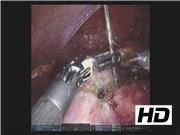
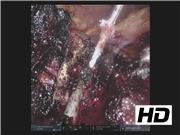
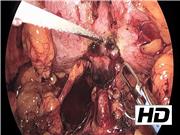
We recruited selected patients with a solitary small renal mass who were candidates for partial nephrectomy. Choice of laparoscopic or robotic partial nephrectomy was performed based on tumor location and surgeon preference. We utilized the Neuwave™ microwave system, Ethicon, WI, at 95 W for 30–45 seconds pulse for renal tissue coagulation and hemostasis. A 17G probe was utilized to create a 1 cm. diameter coagulation zone extending proximally from the tip of the needle. The needle was inserted into normal renal tissue along an ultrasonography-guided premarked line of resection around the tumor. Tumor resection was performed through coagulated renal tissue around the tumor. We avoided use of microwave when close to the collecting system. Collecting system openings were closed with a deep running suture. No parenchymal renorrhaphy or hilar vessel(s) clamping was performed.
Results:
Three patients underwent laparoscopy-assisted partial nephrectomy. Two patients underwent robot-assisted laparoscopic transperitoneal partial nephrectomy and one patient underwent laparoscopic retroperitoneal partial nephrectomy. All three patients were discharged on postoperative day 1 in good condition with an average decrease in hemoglobin of 0.67 g/dL and an average elevation of creatinine at 0.24 mg/dL. The average estimated blood loss was 60 mL with an average operative time of 168.33 minutes. Size of mass ranged from 1.3 to 3.4 cm on pathology and all patients had negative tumor margins. At a median follow-up of 12 weeks, all patients were doing well without complications.
Conclusions:
It was feasible to perform clampless laparoscopic/robotic partial nephrectomy utilizing needle microwave assistance without parenchymal renorrhaphy in selected patients. Needle microwave-assisted tissue coagulation, except near the collecting system, provided effective hemostasis without any urine leak/fistula. Use of intraoperative Doppler ultrasonography may facilitate more precise coagulation of peritumoral blood vessels.
Patient Consent Statement:
Authors have received and archived patient consent for video recording/publication in advance of video recording of procedure.
No competing financial interests exist.
Runtime of video: 7 mins 13 secs
Get full access to this article
View all access options for this article.