






Abstract
Introduction:
We introduce the application of multiparametric magnetic resonance imaging (MRI) Vesical Imaging Reporting and Data System (VIRADS) in bladder tumor–endoscopic submucosal dissection (BT–ESD). Bladder cancer is not an uncommon disease. About 75% of the cancers are nonmuscle invasive bladder cancers (NMIBCs). Transurethral resection of bladder tumor is currently the gold standard treatment of NMIBC. Multiparametric MRI VIRADS from grades 1 to 5 predicts the likelihood of muscle invasiveness of the bladder cancer. BT–ESD enables complete resection of mucosa and submucosal layers for pathologists to assess the depth of tumor invasion.
Materials and Methods:
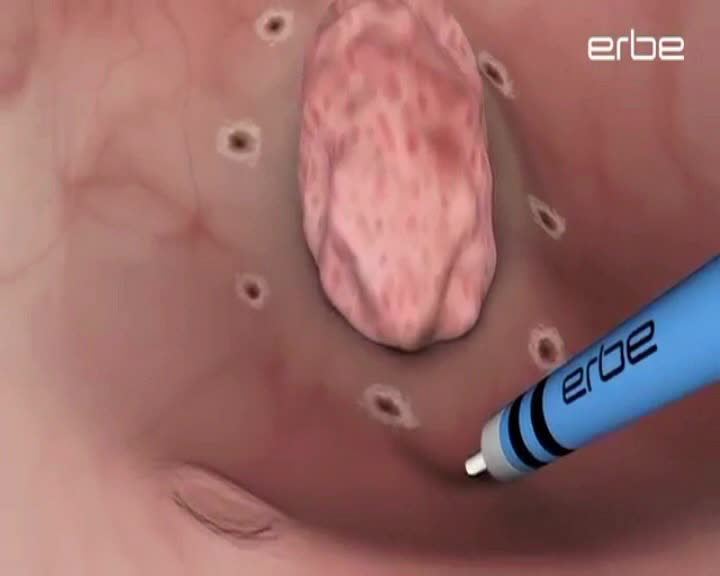
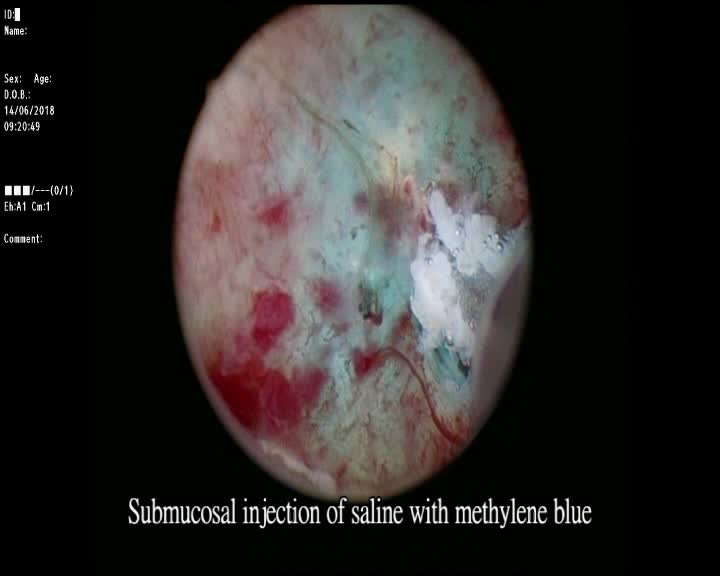
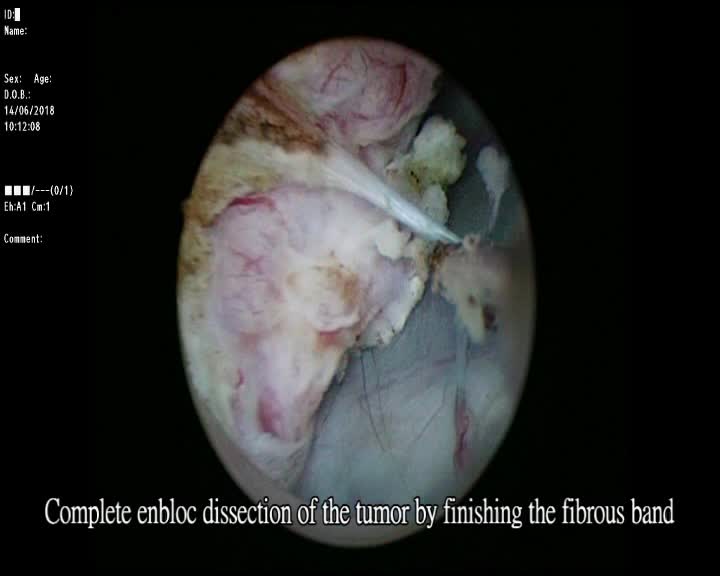
BT–ESD is an en bloc resection of bladder cancer using ERBE HybridKnife system. It consists of a flexible electrode with waterjet in the middle of the lumen. There are I-type and T-type electrodes. With the use of monopolar system, the electrode first marks at least 5 mm clear margin circumferentially, then submucosal injection of saline to elevate the tumor, and it is followed by cutting the mucosa of the previous markings circumferentially. During en bloc dissection of the tumor, cauterization of the bleeding vessel is done at the same time, and finally the tumor is resected completely and removed by specimen endobag.
Results:
From March 2018 to July 2018, 10 patients underwent BT–ESDs. Six, one, and three patients had single, two, and three tumors, respectively. Tumor size ranged from 0.5 to 4 cm (mean size = 2 cm). Tumors were distributed over lateral wall (four tumors), posterior wall (five tumors), posterolateral wall (three tumors), bladder neck (one tumor), and dome (four tumors). Tumors ≥2 cm had either preoperative contrast computed tomography (three cases) or multiparametric MRI (two cases). Multiparametric MRI VIRADS gave us more information about muscle invasiveness of the tumors without radiation. Mean operation time was 35 minutes. Estimated blood loss was <10 mL. No bladder perforation or obturator jerk was detected. Foley catheter was removed and patients were discharged on postoperative day 1. Pathology analyses included T1 high-grade transitional cell carcinoma (TCC) with muscularis propria (two cases), Ta high-grade TCC (two cases), Ta low-grade TCC (five cases), and inverted papilloma (one case). Two patients had postoperative 3-month cystoscopy surveillance that showed no bladder tumor recurrence.
Conclusions:
Before BT–ESD, multiparametric MRI VIRADS guides us the muscle invasiveness of the bladder cancer. BT–ESD is a safe and effective en bloc resection of Ta/T1 bladder cancer.
No competing financial interests exist.
Runtime of video: 8 mins 12 secs
Authors have received and archived patient consent for video recording/publication in advance of video recording of the procedure.
Keywords
Get full access to this article
View all access options for this article.