






Abstract
Purpose:
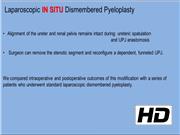
This video demonstrates the technique of laparoscopic in situ dismembered pyeloplasty as a modified technique during which the alignment of ureter and renal pelvis remains intact during ureteropelvic junction (UPJ) anastomosis. We also showed the intraoperative and postoperative outcomes of this modification in comparison with standard laparoscopic dismembered pyeloplasty.
Methods:
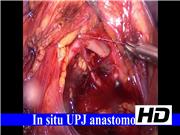
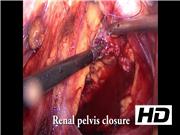
Patients with significant primary UPJ obstruction without any history of abdominal surgery, high ureter insertion, or renal anomalies were considered. After dissection and mobilization of the UPJ, a 1-cm longitudinal incision was made over the lateral aspect of the proximal ureter distal to the site of obstruction. Another 2-cm oblique incision was made on the lateral aspect of the renal pelvis at its most dependent portion to divide the posterior and anterior walls of the renal pelvis. The most dependent part of the incised renal pelvis was sutured to the distal end of the ureterotomy incision. Then both anterior and posterior anastomotic suture lines were completed over a Double-J stent. Once the dependent funnel-shaped anastomosis was completed, the ureter was divided above the site of anastomosis and the stenotic UPJ segment was removed. If required, pelvic trimming was done and the renal pelvis was then closed. Demographic data, intraoperative timings, and postoperative and follow-up outcomes were compared between the two cohorts of laparoscopic classic (Group I) vs laparoscopic in situ (Group II) dismembered pyeloplasty.
Results:
Patients in Group I (n = 23) and Group II (n = 14) had similar demographic characteristics. Mean operative time was significantly longer in Group I (103.8 ± 19.95 minutes vs 89.5 ± 18.90 minutes, p = 0.038). Total duration of UPJ repair and anastomosis was also significantly longer in Group I (92.7 ± 15.82 minutes vs 78.4 ± 14.76 minutes, p = 0.021). The method of pyeloplasty significantly affected the time required to prepare ureter and renal pelvis (18.7 ± 7.92 minutes vs 12.5 ± 5.98 minutes, p = 0.017) and the duration of UPJ anastomosis (40 ± 9.77 minutes vs 31.9 ± 7.23 minutes, p = 0.014). Both were shorter in Group II. Mean follow-up period was 14.4 ± 7.42 months in Group I and 14.05 ± 7.93 months in Group II (p = 0.88). Success rate was 95.6% in Group I and 100% in Group II (p = 0.42).
Conclusion:
Laparoscopic in situ pyeloplasty is a safe and effective approach that can help simplify laparoscopic pyeloplasty, especially at teaching centers where surgeons with variable levels of experience perform laparoscopic procedures.
No competing financial interests exist.
More details about this procedure were discussed in the Journal of Endourology article end.2017.0538, available at
Runtime of video: 7 mins 6 secs
Keywords
Get full access to this article
View all access options for this article.