






Abstract
Objective:
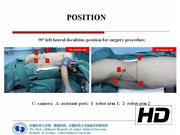
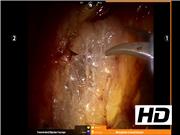
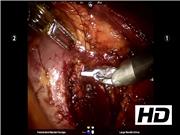
To demonstrate combined retroperitoneoscopic and transperitoneoscopic accesses for robot-assisted partial nephrectomy technique and outcomes.
Materials and Methods:
A total of 109 consecutive combined retroperitoneoscopic and transperitoneoscopic accesses for robot-assisted partial nephrectomies were performed from September 2014 to August 2016. The positive margins and cancer recurrence were both assessed after surgery. The complications, estimated blood loss, warm ischemia time (WIT), operation time, and postoperative length of stay were analyzed.
Results:
Totally, 109 patients (mean age: 60.45 (standard deviation [SD]: 13.79 years), mean body mass index: 24.07 kg/m2 (SD: 6.84)), were recruited in this study. Mean tumor size was 4.11 cm (SD: 1.66) and mean RENAL score was 7.76 (SD: 1.93). Mean total operative time was 111.69 minutes (SD: 26.74) and mean WIT was 13.67 minutes (SD: 3.35). Mean estimated blood loss was 63.26 mL (SD: 59.88) and mean postoperative length of stay was 6.83 days (SD: 1.79). Renal cell carcinoma represented the malignant diagnosis (94 cases). Six postoperative complications occurred, which were wound infections. At a mean overall follow-up of 14 months (12–24 months), there was a little decline of creatinine (p = 0.13). None was a recurrence. This study is limited by the small sample.
Conclusions:
The combined retroperitoneoscopic and transperitoneoscopic accesses for robot-assisted partial nephrectomy had acceptable feasibility and oncologic outcomes, and the standardization of the surgical step has allowed for optimization of this novel surgery approach.
Acknowledgments:
The video was edited by Dr. Sheng Tai. The video was voiced by Dr. Shubham Mahamuni. The authors acknowledge The National clinical key specialty project and The Natural Science Foundation of China (NSFC) (Grant No. 81500576).
No competing financial interests exist.
Runtime of video: 6 mins
Get full access to this article
View all access options for this article.