





Abstract
Introduction:
A major secondary goal of robotic radical prostatectomy (RARP) is continence. We report a new technique of RARP with a combined anterior–posterior approach involving anatomic preservation of the continence mechanism. This phase 1 study was designed to assess the safety and feasibility of the new procedure.
Materials and Methods:
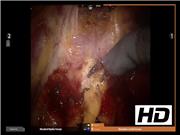
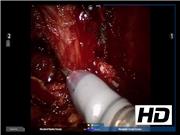
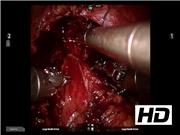
Eight patients with localized prostate cancer underwent this procedure and completed a minimum of 1 year of follow-up. The surgical steps are as follows: 1. The procedure starts posterior to the bladder. The vasa are identified and cut. Seminal vesicles from either side are then dissected out. Bilateral lymphadenectomy, wherever indicated, and Retzius space dissection are done in a standard manner. 2. The bladder neck is then divided without opening the endopelvic fascia. The prostate is left attached to all its surrounding anatomical supports. Posterior bladder neck is then incised, revealing the already dissected vas and seminal vesicles, which are delivered out. 3. Posterior plane is then developed between the Denonvillier's fascia and the prostate, unless indicated otherwise. This posterior plane is developed until the urethra in midline and to the neurovascular bundles on either side of the prostate. 4. Anterolateral plane is then developed underneath the pelvic fascia, preserving all tissue around the prostate. This, in fact, is the Bocciardi's plane described with the Retzius-sparing approach. Access to this plane from the anterior side provides larger working space. With subsequent division of prostate pedicles, rest of the dissection proceeds in this plane without division of puboprostatic collar or the Santorini's plexus. 5. Unilateral or bilateral nerve-sparing procedures are done depending upon the preoperative and intraoperative findings. 6. Reconstruction is started with a Rocco stitch using a barbed suture. Urethrovesical anastomosis is then done in a standard manner with a barbed suture. Anterior reconstruction is done at the end of the procedure, approximating the detrusor apron to the bladder as a second layer around the urethrovesical anastomosis.
Complications were reported using the Clavien–Dindo classification. Continence was assessed using 0-pad, and 1-pad definitions at 1 month, 2 months, 3 months, 6 months, and 1 year after the procedure.
Results:
Out of the eight patients with a minimum follow-up of 1 year, distribution of the clinical stage of the patients was T2a (n = 1), T2b (n = 3), T2c (n = 1), and T3a (n = 3). Median (IQR) prostate specific antigen was 23.09 (9.85–48.61) ng/dL. The mean console time was 178.5 minutes; median estimated blood loss was 100 mL. None of the patients had Clavien grade 2 or above complications. Margins were positive in three cases, each of them having clinical T2a, T2c, and T3a disease at baseline. Apical margin was positive in one case. Six out of eight (75%) patients were continent (0 pad) at 3 months and seven (87.5%) were continent (0 pad) at 6 months. All patients were continent (1 pad) at 6 months of follow-up.
Conclusions:
Combined anterior–posterior approach of RARP with anatomic preservation of continence mechanism is feasible and safe. This initial series also demonstrates excellent early continence outcomes.
Patient consent:
Author(s) have received and archived patient consent for video recording/publication in advance of video recording of the procedure.
No competing financial interests exist.
Run time of video: 7 mins 37 secs
Keywords
Get full access to this article
View all access options for this article.