





Abstract
Introduction:
Warm ischemia remains the major modifiable factor for renal function postpartial nephrectomy. 1 The evolution of partial nephrectomy technique, driven by the goal of reducing warm ischemia, has resulted in a paradigm shift from reducing warm ischemia time to eliminating it altogether. The technique of hydrodissection utilizes an appropriately pressurized jet of saline to selectively dissect, sparing vessels and nerves, and boasts the potential to minimize blood loss, improve observation of vital structures, and reduce trauma to surrounding tissue, all of which are attractive benefits in the context of partial nephrectomy with zero ischemia. As a new technique in laparoscopic partial nephrectomy, its safety and efficacy have yet to be fully evaluated and there is a paucity of studies and data in the literature currently to report the outcomes of patients who undergo this technique, despite encouraging results in animal studies. 2 –4 We present our early experience with laparoscopic zero-ischemia partial nephrectomy using hydrodissection in both the Asian and European population.
Materials and Methods:
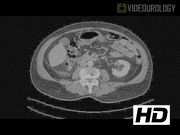
A retrospective review of all laparoscopic partial nephrectomies with zero ischemia using hydrodissection performed at two institutions was carried out. Perioperative parameters such as operative time and blood loss as well as tumor size and nephrometry score were recorded. Functional outcomes were measured as mean change in serum creatinine at 6 months postoperation and oncological outcomes such as surgical margin status and recurrence rate at 6 months (defined as radiological recurrence) were analyzed. All patients had a CT scan at 6 months postoperation.
Results:
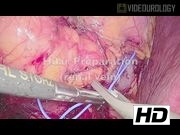
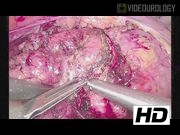
Laparoscopic port placements were done in accordance with principles of triangulation. Hilar preparation was first performed in preparation for emergent vascular control. Tumor location and scoring were done with laparoscopic ultrasonography. Combination of hydrodissection and dissection with energy device was used for extirpation of tumor without hilar clamping. The mean age of the 11 patients was 65.8 years (45–78), mean operative time was 156 minutes (45–240), and median estimated blood loss was 250 mL (100–700). Median duration of hospitalization was 4 days. Mean tumor size was 3.4 cm (2.2–6.1) and median nephrometry score was 6 (5–8). Majority of tumors (8/11) were clear renal-cell carcinoma and the median Fuhrman grade was 2. Surgical margins were negative in all cases and there were no major or minor complications. There was no significant difference in baseline renal function postoperation at 6 months and repeat CT showed no recurrence for all cases at 6 months. There were no cases with major (Clavien–Dindo grades III–V) complications.
Conclusions:
Zero-ischemia laparoscopic partial nephrectomy using hydrodissection is a useful adjunct especially in absence of hilar clamping and appears to be a safe technique as well. Its benefits should be validated in a larger prospective study.
No competing financial interests exist.
Runtime of video: 5 mins 28 secs
Abstract presentation: 27th World Congress on Videourology and Advances in Clinical Urology 2016.
Abstract presentation: 14th Urological Association of Asia Congress 2016–Best video presentation.
Get full access to this article
View all access options for this article.