





Abstract
Introduction:
Traditionally, high ligation is performed through an inguinal incision. The open approach is a proven procedure associated with a low recurrence rate, but it requires dissection of the vas deferens and vessels, is associated with a risk of injury, and can be technically difficult to perform in small babies or children with a thin processus vaginalis. Laparoscopic surgery is a relatively new technique in pediatric urology; however, it has been increasingly used to manage pediatric hydrocele/hernia. This study describes our experience performing single-port laparoscope-assisted extraperitoneal closure of patent processus vaginalis using a J-shaped bent spinal needle in patients with a hydrocele.
Materials and Methods:
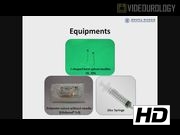
From June 2014, 72 boys (91 U of hydrocele) underwent laparoscopic transcutaneous extraperitoneal (LTE) repair of hydroceles at our institution. During the operation, a 2.7-mm, 30° laparoscope was inserted through an umbilical incision. The patent processus vaginalis was closed extraperitoneally by using two J-shaped bent spinal needles (18 and 20 gauge [G]), with a 3-0 polyester suture and preperitoneal hydrodissection. As the needle passed over the spermatic cord, hydrodissection was performed simultaneously. A 3-0 polyester suture was threaded through an 18-G spinal needle. The same 3-0 polyester suture was threaded through the tip of a 20-G spinal needle. A 20-G spinal needle was passed through the upper margin of the internal ring, and the 20-G needle tip was pulled out of the initial 18-G needle puncture opening. After performing all these procedures, the internal inguinal ring was completely encircled and tied extracorporeally. The knot was buried in the subcutaneous area.
Results:
During this procedure, only one umbilical incision was created. All patients were discharged on the same day postoperatively without any complication. The mean operative times were 10.5 and 13.8 minutes for the unilateral and bilateral operation, respectively. During a mean follow-up period of 22 months (range 2–29 months), no recurrence was observed, except in the first two patients, and no iatrogenic ascending testis occurred. Nineteen extra procedures were performed for the simultaneous repair of potential contralateral patent processus vaginalis.
Conclusion:
During this procedure, an additional assistant, instrument, or device was unnecessary. This LTE technique is a simple, fast, and safe cosmetic procedure for repairing pediatric hydroceles.
Patient Consent Statement:
Authors have received and archived patient consent for video recording/publication in advance of video recording of procedure.
Acknowledgment:
This research was supported by the Bisa Research Grant of Keimyung University in 2014.
No competing financial interests exist.
Runtime of video: 3 mins 18 secs
A version of the abstract was presented at the European Society for Pediatric Urology Congress on June 24, 2016 and at the International Society of Urology annual meeting on October 21, 2016.


Keywords
Get full access to this article
View all access options for this article.