





Abstract
Introduction:
Laparoscopic donor nephrectomy has become the standard method of retrieval of donor kidneys from living donors. However, it has the disadvantage of breaching the peritoneal cavity with attendant risks of injury to intraperitoneal organs as well as long-term risk of adhesive intestinal obstruction. Retroperitoneal laparoscopic donor nephrectomy (RPLDN) is not popular, as it requires a muscle cutting incision for retrieval of donor kidney, thereby minimizing the benefits of laparoscopy. However, a single port RPLDN performed through lumbotomy can provide a nearly ideal approach to donor kidneys. 1 This study provides the first experience in the literature of performing a single port RPLDN through lumbotomy incision.
Methods:
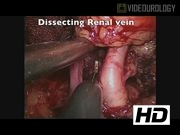
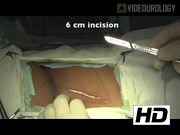
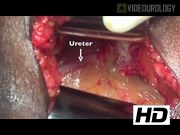
Between November 2014 and December 2015, 231 patients underwent laparoscopic donor nephrectomy at our institute. Of the 231 patients, 50 voluntary kidney donors were offered translumbar RPLDN. And 12 of the 50 patients consented for single port translumbar RPLDN. Mean donor age was 39.6±7.7, M:F 3:9, left: right 10:2, and mean body mass index was 21.86±2.64. Technique of nephrectomy—Kidney was approached through 6 cm curved lumbotomy incision nearly parallel to sacrospinalis muscle with donor in lateral position. Alexis® port with rubber glove was used as a single port with two 10 mm and two 5 mm ports placed in the finger of gloves. 2 Renal vessels and ureter were ligated with double Hemolok® clips as a standard policy for all donors at our institute. Kidney was taken out through the Alexis retractor after removing the glove. Visual analogue score (VAS) was used to evaluate severity of pain in the postop period.
Results:
RPLDN was effectively carried out in all patients. No patient required conversion to open or transperitoneal approach. An additional port for retraction was required in the two of the first three cases. No special angulated instruments were required. Only one patient had double renal artery (8.3%) and all patients had single renal vein and ureter. No intra/perioperative complications were encountered. Mean operating time was 200.7+65 minutes (range 130–322). There was significant reduction in operative time after the initial experience. Mean warm ischemia time was 5+1.28 minutes (range 3–8 minutes). Average blood loss during surgery was 55.4+18 mL (range 30–100 mL). Mean graft kidney weight was 129.5+25 g (range 85–168 g). Mean analgesic requirement (tramadol) in postoperative period was 281.8+189.4 mg (range 100–800 mg). Mean VAS on postop day (POD) 0 and POD 1 was 5.6+1.5 and 3.9+0.9, respectively. Mean hospital stay was 2.5 days (range 2–3 days). All recipients had good initial renal function and the mean creatinine at discharge was 1.34+0.4 mg/dL.
Conclusions:
Single site translumbar RPLDN is a feasible alternative approach to donor surgery and can avoid inherent risks associated with the transperitoneal technique. A larger comparative study is required to know the potential benefits of this route over the transperitoneal approach.
Runtime of video: 9 mins 58 secs
Keywords
Get full access to this article
View all access options for this article.