





Abstract
Introduction and Objectives:
Open pyeloplasty has been the gold standard for ureteropelvic junction obstruction (UPJO) repair and achieves success rates exceeding 90%. Laparoscopic pyeloplasty (LP) provides a minimally invasive alternative to repair UPJO and has been developed world wide as the first minimally invasive option to match success rate of open pyeloplasty. We present our technique and clinical experience of transperitoneal LP in UPJO with associated congenital anomalies and secondary calculi.
Materials and Methods:
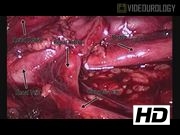
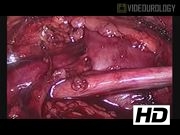
One hundred fifty consecutive patients underwent LP for UPJO performed by one surgeon from January 2012 to August 2015. Of these, 81 patients had associated other congenital anomalies and secondary calculus, 11 patients had horseshoe kidney (5 also had secondary calculus), 33 patients had crossing vessels (2 patients had main renal artery and vein as crossing vessels), 27 patients had secondary calculi, and 10 patients had lateral kidney malrotation anomaly. A four-port transperitoneal approach was used in all cases. Patient demographic and perioperative data were recorded prospectively. Outcome measures were demographic data, perioperative data, perioperative complications, and success rate at follow-up of 12 months.
Results:
The mean operative time was 175 minutes (range 130–215 minutes) and average blood loss was 60 mL. There was no conversion to open surgery. Antegrade stenting was done in all the cases. There were six (4%) complications, namely hematuria in three patients and urinary tract infection in three patients. The mean drain removal time was 2.1 days (range 1.8–2.8 days), whereas the mean catheter removal time and mean hospital stay were 3.1 days each (range 2.5–3.6 and 2.6–3.9 days, respectively). The success rate in our cohort was 100% defined by resolution of symptoms and documentation of nonobstructive drainage on intravenous pyelography and nuclear renogram at 3 and 12 months.
Conclusions:
Transperitoneal LP is feasible with good results for managing UPJO even in patients with associated other congenital anomalies and secondary calculus with low morbidity, quick recovery, and a durable success rate.
No competing financial interests exist.
Runtime of video: 9 mins 39 secs
Get full access to this article
View all access options for this article.