





Abstract
Purpose:
To evaluate the feasibility of our tubeless percutaneous nephrolithotomy (tPCNL) technique with application of Tachosil® as sealing material.
Material and Methods:
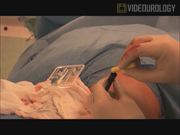
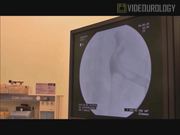
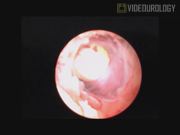
Between December 2013 and February 2016, 53 patients were operated due to kidney stones more than 2 cm in diameter with tPCNL technique. Procedure starts with the same steps as classic PCNL. At the end of lithotripsy, it is crucial to assess whether there are no contraindications for the tubeless technique such as severe bleeding, incomplete stone clearance, or contrast leakage in pyelography. TPCNL starts with positioning the distal end of access sheath at the border of kidney parenchyma and pyelocaliceal system. We use TachoSil as a sealant. TachoSil is a kind of a patch and has two adherent layers. The outer layer is composed of fibrinogen and thrombin that promote coagulation process. The inner layer has a honeycomb structure and is composed of equine collagen. Platelets with coagulation factors form clot in the yellow layer that is surrounded and attached to kidney parenchyma on one side and equine collagen on the other side. Such mechanism of action ensures good hemostasis. First, TachoSil is drenched in normal saline. It should be promptly inserted into the access sheath as it gets floppy very quickly. TachoSil is pushed with grasper under fluoroscopic guidance while injecting contrast through ureteral catheter. It is easily distinguishable from the background and positioned properly. Five hours after operation, hemoglobin concentration and hematocrit were assessed as equivalents of safety. Other parameters such as operating room time, hospitalization time, visual analog scale (VAS) of pain, presence of fever >38.5°C, and pain treatment were also assessed.
Results:
Complete data are available for 48 patients. The average hemoglobin and hematocrit drop after operation was 1 g/dL and 4.7%, respectively. Blood transfusions were required only in two (4.1%) patients. VAS at the day after operation was on average 2.5. Operating room time was on average 65.6 (standard deviation = 23.8) min. Fever more than 38.5°C after procedure was present in six (12.5%) patients. Mean hospital stay was 2.5 days. Additional pain treatment lasted on average 1.2 days.
Conclusion:
Our technique of tPCNL with application of TachoSil is safe and effective. The safety outcomes are comparable to standard PCNL, but other parameters such as hospitalization time and intensity of pain are favorable for tPCNL.
No competing financial interests exist.
Runtime of video: 8 mins 28 secs
Get full access to this article
View all access options for this article.