





Abstract
Introduction:
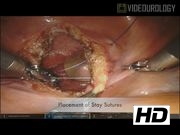
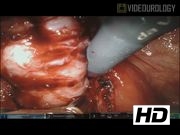
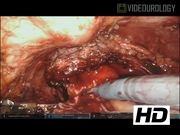
Multiple surgical techniques can be employed to accomplish robotic simple prostatectomy. After having gone through our own experience of open, laparoscopic, and different robotic approaches, we developed complete anatomical robotic simple prostatectomy preserving bladder neck and complete vesicourethral anastomosis, which can supplant the traditional open simple prostatectomy at centers using robotic assistance. In this video, we the classically describe techniques for robotic simple prostatectomy and describe our technique for the anatomic approach.
Materials and Methods:
From May 2009 through 2015, a single surgeon performed robotic-assisted simple prostatectomy (RASP) on more than 30 patients, who were referred with large prostate glands not amenable to transurethral resection of the prostate. We performed robot-assisted simple prostatectomy using the traditional Millin's retropubic approach, the traditional Frayer's approach, the posterior approach, and our anatomic approach. 1 –3
Results:
The mean patient age was 70.8 years (range 61–86) and postvoid residual (PVR) was 414 cc (range 123–750). Mean preoperative AUA Symptom Score (AUA-SS) was 14.75 (range 9–21). The average length of stay was 1.7 days (range 1–5). There were two complications during our series with one Clavien I and one Clavien II. Pathology analysis demonstrated Gleason 3 + 3 = 6 prostate cancer in 20% of cases. Concomitant diverticulectomy and bladder stone removal were performed in two cases. All patients underwent urethrovesical reconstruction with either running monocryl suture or the use of a polyglactin barbed suture. Continuous bladder irrigation was not utilized and no transfusions were necessary. Postoperatively, AUA-SSs were significantly improved to a mean of 4.25 at 6 months postoperatively and all patients were able to void with PVR less than 200 cc. 4
Conclusions:
RASP can be considered as a viable surgical alternative in cases of large prostatic adenomas. Using this technique, concomitant procedures such as cystolithotomy, diverticulectomy, and hernia repair can be performed quickly and avoid another procedure. Among all robotic techniques, we prefer complete anatomical robotic simple prostatectomy preserving bladder neck and complete vesicourethral anastomosis.
No competing financial interests exist.
Runtime of video: 8 mins 20 secs
Get full access to this article
View all access options for this article.