





Abstract
Objectives:
With the goal of reducing morbidity and expediting recovery following vasectomy reversal (VR), this video highlights the single incision vasectomy reversal (SIVR). The SIVR offers an innovative approach to VR by which the entire procedure is performed through a single midline mini-incision in the scrotum.
Materials and Methods:
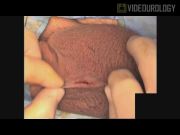
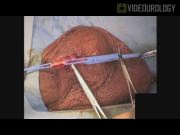
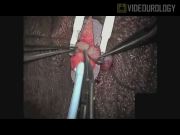
A SIVR may be considered in the absence of significant vasal gaps, sperm granulomas, and/or limited mobility of the scrotal contents. As in the no-scalpel vasectomy (NSV), the SIVR begins by stabilizing the vas directly under the scrotal skin at the midline raphe. The NSV ring clamp is used to capture the vas in the midline at the vasectomy occlusion site. A small (<1 cm) opening in the scrotal skin is created and vas is gently exposed and delivered through the midline incision. The mobile and compliant scrotal skin allows the midline incision to be shifted and brought to the vas, as opposed to the vas being mobilized to the anatomical midline. Once both the testicular and abdominal ends of the vas have been mobilized and delivered through the midline incision, each end is stabilized using a vas approximator. The surgical microscope is used to complete the anastomosis according to the surgeon's preference. The contralateral vas is approached through the same skin incision, but through separate opening in the dartos muscle. This fosters a tension-free anastomosis bilaterally with each vas remaining in its respective hemiscrotal space. The small opening in the skin is closed with a single dissolvable suture. The single midline mini-incision consistently measures <1 cm. If the single midline incision does not allow for the necessary exposure to comfortably complete the VR or a vasoepididymostomy is indicated, the midline incision can simply be extended or a second incision can be performed where appropriate.
Results:
Of 145 consecutive primary bilateral vasovasostomy VRs performed by a single fellowship-trained reproductive microsurgeon (E.D.G.), a SIVR approach was successfully completed in 35 (24%) patients with a mean age of 39 years (range: 29–48 years) and mean vasal obstructive interval of 5.3 years (range: 3 months–11 years). In one patient, a SIVR was attempted but subsequently converted to a bilateral mini-incision VR due to concern regarding excess tension on the anastomosis. Postoperative semen parameters and/or a confirmed pregnancy were available in 23 men. Among them, postoperative patency with motile sperm returning to the ejaculate was established in all patients. Mean postoperative sperm concentrations and percent motile sperm were 35 million/mL and 49%, respectively. The operative time was reduced due to efficiency of wound closure. In one patient, a superficial hematoma was identified and resolved with conservative management.
Conclusions:
A SIVR is technically feasible in approximately 20% of men undergoing vasovasostomy and does not appear to compromise patency outcomes or semen parameters compared with more traditional approaches to VR. Minimizing the number and size of the incisions, as well as the degree of dissection of the spermatic cord and testis, may result in less postoperative discomfort and quicker functional recovery. In appropriately selected patients, urologists who perform VR can easily adopt this innovative technique.
The authors have no commercial or financial associations that might create a conflict of interest in connection with this manuscript submission.
Running time: 7 mins, 56 secs
Keywords
Get full access to this article
View all access options for this article.