





Abstract
Introduction:
Pelvic organ prolapse (POP) adversely affects the quality of life for women through pelvic pain, sexual and bowel dysfunction, urinary incontinence, infections, genital skin rashes, and psychosocial factors. Transvaginal procedures for repair of POP utilizing mesh have come under legal scrutiny due to severe complications of mesh erosion, pelvic pain, and fistula formation. POP repairs performed transvaginally without mesh have high recurrence rates. Comprehensive repair of POP through open sacrocolpopexy has a high success rate for durable cure, but has a prolonged recovery from surgical morbidity. Laparoscopic and robotic sacrocolpopexy offer women a comprehensive repair of POP with less morbidity. In this video, we describe a technique for robotic sacrocolpopexy with uterus preservation offered to women who do not require nor wish to have a hysterectomy, but who have a high-grade, symptomatic POP. Reasons for uterus preservation include sexuality, female identity, confidence, self-esteem, and body image. Other patients refuse hysterectomy based upon religious concerns, or they simply do not wish to have unnecessary removal of an otherwise normal uterus with normal PAP smears and normal pelvic ultrasounds.
Materials and Methods:
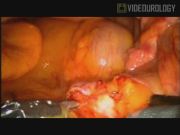
This patient had a POP-Q Stage 4 prolapse and a desire for uterus preservation. A da Vinci S robot was side-docked with one right arm and two left arms. Robotic instruments included the monopolar cutting scissors, plasma kinetic dissecting forceps, and a prograsp instrument. Assistant grasper and vaginal EEA sizer are utilized throughout the case.
Surgery Steps:
(1) Identify the sacral promontory. Dissect the anterior longitudinal ligament. (2) Placement of two CV-26 Gore-tex sutures. (3) Creation of the posterior peritoneal tunnel. (4) Dissection of the anterior vaginal wall. (5) Preparation of the 23×4 cm polypropylene mesh. (6) Placement of the anterior Y-shaped mesh with a double arms 0 polydioxanone monofilament synthetic absorbable knotless tissue-closure suture (14×14 cm). (7) Dissection of the posterior wall and placement of the posterior rectangular mesh with double arms 0 polydioxanone monofilament synthetic absorbable knotless tissue-closure suture (14×14 cm). (8) All three segments of the polypropylene mesh are pulled through the posterior peritoneal tunnel with the help of an assistant grasper. (9) Anchor the three segments of mesh to the anterior longitudinal ligament. (10) Closure of the peritoneum.
Results and Conclusions:
Eight patients underwent uterus sparing robot-assisted sacrocolpopexy with a mean age of 65.9 years, mean body mass index 26.7, and mean operative time. All patients had complete reduction of prolapse with restoration of total vaginal length to 8 cm. There is an increasing trend for women to request or demand uterus preservation at the time of POP repair. For women who have no medical necessity for hysterectomy and who desire uterus preservation, this procedure allows for a comprehensive repair addressing cystocele, rectocele, and enterocele components comparable to standard sacrocolpopexy. The preservation of the uterus achieves maximal vaginal length and maintains the correct axis and feel of the vagina for optimal sexual function. This procedure protects the female, undergoing prolapse repair, from the unnecessary risk of vaginal scarring and foreshortening that may occur with incidental hysterectomy.
Runtime of video: 9 mins 26 secs


Keywords
Get full access to this article
View all access options for this article.