





Abstract
Purpose:
To report our experiences in performing advanced laparoendoscopic single-site (LESS) upper urinary tract reconstruction with conventional laparoscopic instruments.
Materials and Methods:
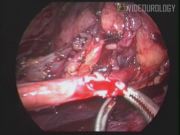
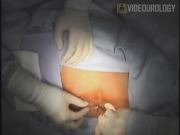
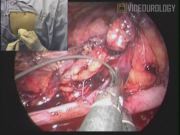
Between September 2010 and March 2011, we retrospectively reviewed our prospectively collected data from five patients who underwent LESS urinary tract reconstructions. The reconstructive LESS performed, including pyeoureterostomy (n = 1), dismembered pyeloplasty (n = 2), ureteroneocystostomy (n = 1), and ureteroplasty for a bifid blind-ending ureter (n = 1). The peri- and postoperative parameters were collected for analysis. This video included a brief presentation of a case of obstructed duplex kidney undergoing LESS ureteropyelostomy with homemade single port and conventional laparoscopic instruments. 1 To perform LESS with conventional straight laparoscopic instruments, the instruments and the laparoscope have to cross instead of being parallel to each other to gain more space for movement. An angle-viewed (30 degree) laparoscope is the solution for such circumstances because the angle-viewed scope is always at an angle to the target and thus crosses with the instruments. Besides, to minimize the chances of instrument clashing and enhance procedure efficiency when two or more instruments are being used, we have to keep one instrument static for tissue traction to provide enough space for movement of the other dynamic instruments used for dissection. 2
Results:
All reconstructive LESS procedures were completed successfully without open or laparoscopic conversion. Ancillary ports or ancillary instruments were not applied in all cases. The mean patient age was 40.4 years. The mean operative time was 213 ± 69 minutes, estimated blood loss ranged from minimal to 50 mL, and mean hospital stay was 4.4 ± 4 days. No operation-related complications occurred. The upper urinary tract drainage status after operation was followed by renal ultrasongraphy and/or intravenous pyelography. Improvement of hydronephrosis or patency of the reconstructed urinary tract was confirmed in all our cases.
Conclusions:
According to our experiences, the conventional laparoscopic instruments are feasible and safe for use in LESS upper urinary tract reconstructive procedures.
All authors have declared no conflicts of interest exist.
Runtime of video: 8 mins
Keywords
Get full access to this article
View all access options for this article.