





Abstract
Introduction:
There is a paucity of realistic simulators for robot-assisted radical prostatectomy (RARP) despite the realization that they can shorten the well-known learning curve. Existing ex vivo models focus only on the vesicourethral anastomosis, failing to provide training for other steps. Our goal was to create a high-fidelity, ex vivo tissue-based simulator that allows practice of key steps of RARP in a sequential fashion.
Materials and Methods (including a description of the video):
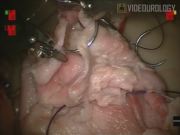
A mock-up of the human male genitourinary system as relevant to RARP was created from female porcine genitourinary tract tissue to represent the urethra, bladder, prostate, pedicles, seminal vesicles, rectum, dorsal venous complex, and neurovascular bundles. This model was placed into a replica of the human pelvis and positioned under the da Vinci Surgical System. The following steps of RARP can be simulated: ligation of the dorsal venous complex, division of the vesicoprostatic junction, dissection of the seminal vesicles, ligation of the prostatic pedicles with preservation of the neurovascular bundles, division of the urethra, bladder neck reconstruction, and vesicourethral anastomosis.
Results:
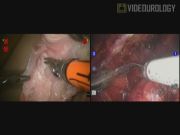
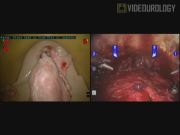
All of the aforementioned steps were performed sequentially using the RARP simulator and are demonstrated in the video with a side-by-side comparison to a real RARP. The model required about 30 min to create once the process was streamlined, and it took about 2 h to complete the simulation.
Conclusions:
We created a high-fidelity, ex vivo, tissue-based simulator to allow for training of key surgical steps of RARP in a sequential fashion. Ultimately, this simulator could be incorporated into urology residency/fellowship training or facilitate surgeons transitioning from open prostatectomy to RARP.
All authors have declared no conflicts of interest exist.
Runtime of video: 7 mins
Keywords
Get full access to this article
View all access options for this article.