





Abstract
Introduction:
Laparoscopic partial nephrectomy (LPN) is an option in the treatment of T1a kidney tumor. We study the feasibility of LPN with segmental renal artery clamping for T1a-T1b kidney carcinoma and evaluate its outcomes.
Methods:
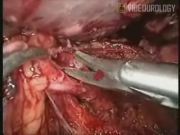
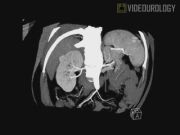
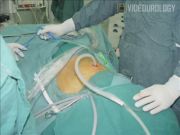
Retroperitoneal laparoscopic partial nephrectomies were performed in 31 patients. All the patients received the preoperative computed tomography or computed tomography for angiography examination. Radioimaging studies revealed that all the patients had normal contra-lateral kidney. Bilateral renal functions were evaluated in most of cases through glomerular filtration ratio (GFR) studies before and 1 month after the operation. Four ports were applied for the procedure, and retroperitoneal approach was employed. The first port (10 mm) for the lens was placed 2 cm above the iliac crest in middle axillary line through which the balloon was inserted to create the retroperitoneal space. Another two ports (5 mm) were placed in the anterior axillary line and one port (12 mm) below the 12th rib under the guiding of the finger for the laparoscopic instruments. The main renal artery was exposed, and further dissection was performed to observe the segmental artery. The tumor was fully exposed through isolating the kidney along of the renal capsule. The feeding branch could be determined by observation of bloodless field under laparoscopy after clamping one of the branches with the bulldog. The parenchyma was incised keeping 0.5–1 cm distance to the tumor capsule. The calices were closed with 3-0 Vicryl suture and renal parenchymal was reconstructed by suturing with 2-0 Vicryl in running manner. The mean diameter of tumors was 4.3 cm (3.6–5.5 cm).
Results:
Thirty-one cases (17 men and 14 women) were performed with no open conversion. The mean tumor size was 3.4 cm (1.9–4.1 cm). Tumor located in renal lower pole exophytic in 11 cases, higher pole exophytic in 8 cases, posterior side of kidney exophytic in 6 cases, anterior side in 4 cases, and close to hilum exophytic in 2 cases. The mean operative duration was 85 min (60–125 min). The ischemic time after clamping of the artery was 24 min (19–43 min) and the blood loss was 150 mL (50–800 mL). The margin were negative in all cases, and pathologic studies revealed 24 cases in T1a and 7 cases in T1b. Complications included 4 cases of mild hematuria postoperation. No bleeding and urine leakage occurred postoperative. There was no significant difference of GFR level of affected kidney preoperative among 44 patients who underwent traditional LPN (group A) and these 31 patients who received retroperitoneal laparoscopic partial nephrectomics (group B) (p = 0.13). The decreased percentage of GFR level of affected kidney postoperative was 26.1% in group A and 16.2% in group B, respectively. The difference showed that recovery of affected kidney in group B was better than that in group A (p < 0.001).
Conclusion:
LPN with segmental renal artery clamping is feasible in selected cases with kidney tumor. The influence on renal function caused by warm ischemia damage is minimized significantly by this procedure compared with conventional method. This procedure is technically challenging and the long-term outcome is await.
No competing financial interests exist.
Runtime of video: 8 mins 58 secs
Keywords
Get full access to this article
View all access options for this article.